
Doom: The FPS Revolution That Changed Video Games Forever
Anúncios
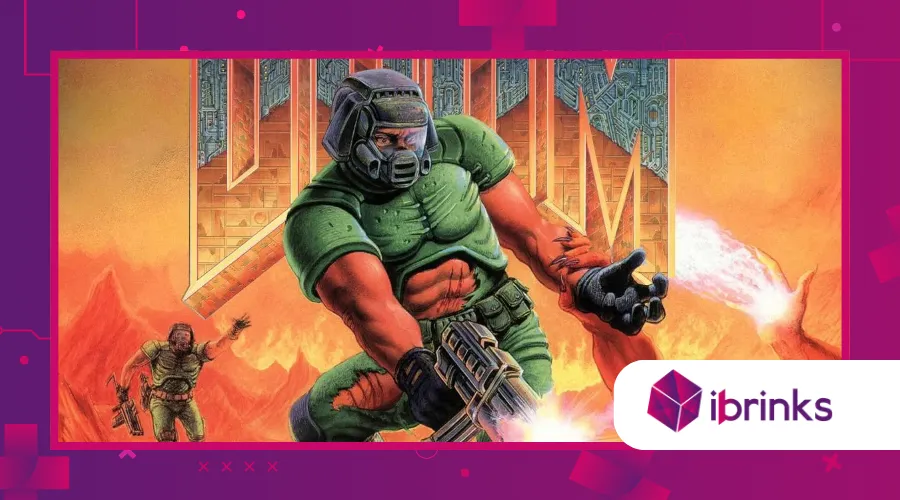
In 1993, a game called Doom exploded onto the scene, redefining what video games could be.
It wasn’t just a game; it was a cultural earthquake, shaking the foundations of interactive entertainment.
Before its release, first-person shooters (FPS) were niche, clunky experiments.
After Doom, they became a dominant force, shaping genres, technology, and player expectations.
This article dives into how this groundbreaking title sparked a revolution, exploring its technical innovations, cultural impact, and enduring legacy with fresh perspectives and sharp insights.
Anúncios
Why does a 30-year-old game still hold such sway over modern gaming?
As we explore this phenomenon, it’s essential to recognize how Doom paved the way for future innovations in gameplay and design.
The lessons learned from its development continue to resonate in the gaming industry today.
The Dawn of a New Era
Imagine a dimly lit arcade in the early ’90s, where pixelated sprites flickered on CRT monitors.
Early shooters like Catacomb 3-D existed, but they were slow, limited by hardware and imagination.
Then came Doom, crafted by id Software’s maverick team, led by John Carmack and John Romero.
It wasn’t just a step forward; it was a quantum leap.
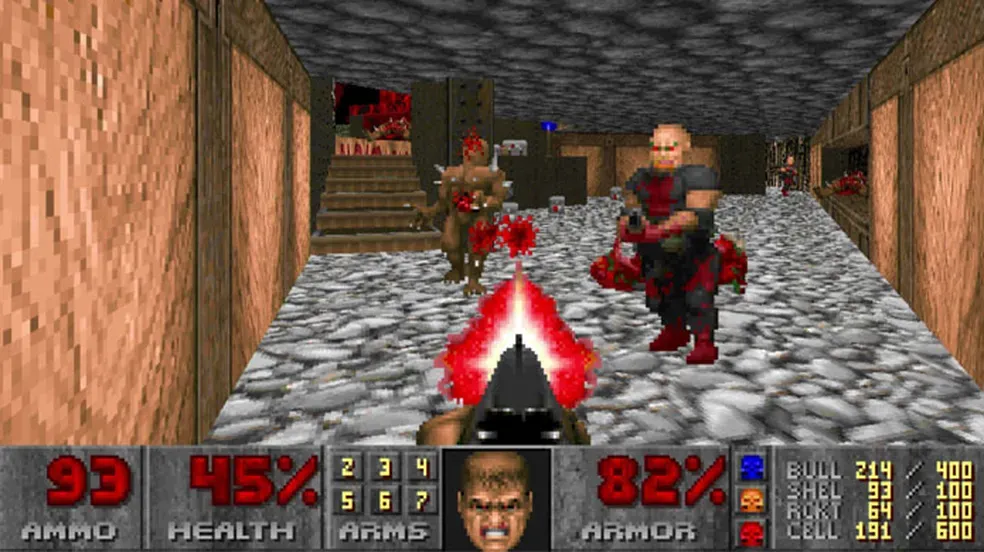
The game’s 2.5D engine delivered a sense of immersion that felt like stepping into a sci-fi horror movie.
Players weren’t just controlling a character—they were the nameless marine, blasting demons on Mars with a shotgun that roared with visceral satisfaction.
What set this title apart was its accessibility.
Unlike its predecessor, Wolfenstein 3D, which id Software also developed, Doom offered a shareware model.
The first episode was free, hooking millions who then clamored for more.
By 1994, an estimated 10 million players had downloaded the game, according to a PC Gamer retrospective from 2018.
This distribution strategy didn’t just sell copies; it built a community, fostering a culture of modding and sharing that still thrives today.
Moreover, the accessibility of Doom encouraged a new generation of gamers to explore the FPS genre, breaking down barriers that previously limited participation.
This democratization of gaming was crucial for the industry’s growth.
Technical Wizardry: A Game Ahead of Its Time
The brilliance of Doom lay in its technical underpinnings.
John Carmack’s programming genius created a game engine that pushed the limits of 1990s hardware.
The engine used binary space partitioning to render environments quickly, allowing for complex levels that felt alive.
Unlike flat, grid-based maps of earlier games, Doom’s levels had height variations, dynamic lighting, and textured walls, creating a sense of depth that was revolutionary.
Consider this analogy: if early FPS games were like sketches on a napkin, Doom was a vivid oil painting.
Its engine wasn’t just a tool for id Software—it became a foundation for the industry.
Developers licensed it for games like Heretic and Hexen, spreading its influence.
The table below highlights key technical features that distinguished Doom from its contemporaries:
| Feature | Doom (1993) | Contemporary FPS (e.g., Catacomb 3-D) |
|---|---|---|
| Rendering Technique | Binary Space Partitioning | Basic raycasting |
| Level Design | Multi-level, textured environments | Flat, grid-based maps |
| Multiplayer | LAN deathmatch support | None |
| Modding Support | WAD file editing | Limited or none |
This technical prowess wasn’t just for show—it democratized game creation.
The modding community exploded, with players crafting custom levels, weapons, and even total conversions.
For example, a 1994 mod called Aliens TC transformed Doom into a survival horror experience inspired by the Alien franchise, proving the game’s versatility.
This openness fostered a DIY ethos that influenced modern indie gaming.
Additionally, the innovations introduced by Doom have laid the groundwork for advancements in graphics and gameplay mechanics that continue to evolve in the gaming industry.
As developers build upon this foundation, the legacy of Doom remains a touchstone for creativity and technical excellence.
+ The History of Captain Commando: From the Super Nintendo to Today
Cultural Impact: More Than a Game
Beyond code, Doom reshaped gaming culture.
It introduced the concept of “deathmatch,” where players could battle each other over local networks.
Picture a group of college students in 1994, huddled around bulky PCs, shouting as they fragged each other in virtual arenas.
This multiplayer mode wasn’t just fun—it laid the groundwork for esports.
Games like Quake and Counter-Strike owe their competitive DNA to Doom’s pioneering multiplayer.
The game also stirred controversy.
Its graphic violence—demons exploding into pixelated gore—sparked debates about video games’ impact on youth.
Yet, this only amplified its allure.
Doom became a symbol of rebellion, attracting players who craved its raw, unapologetic energy.
It wasn’t just a game; it was a statement, challenging the idea that video games were just for kids.
Furthermore, Doom’s impact extended into mainstream media, influencing films and music, and solidifying its status as a cultural icon.
Its presence in popular culture serves as a reminder of the power of video games to shape societal conversations.
A Legacy That Endures
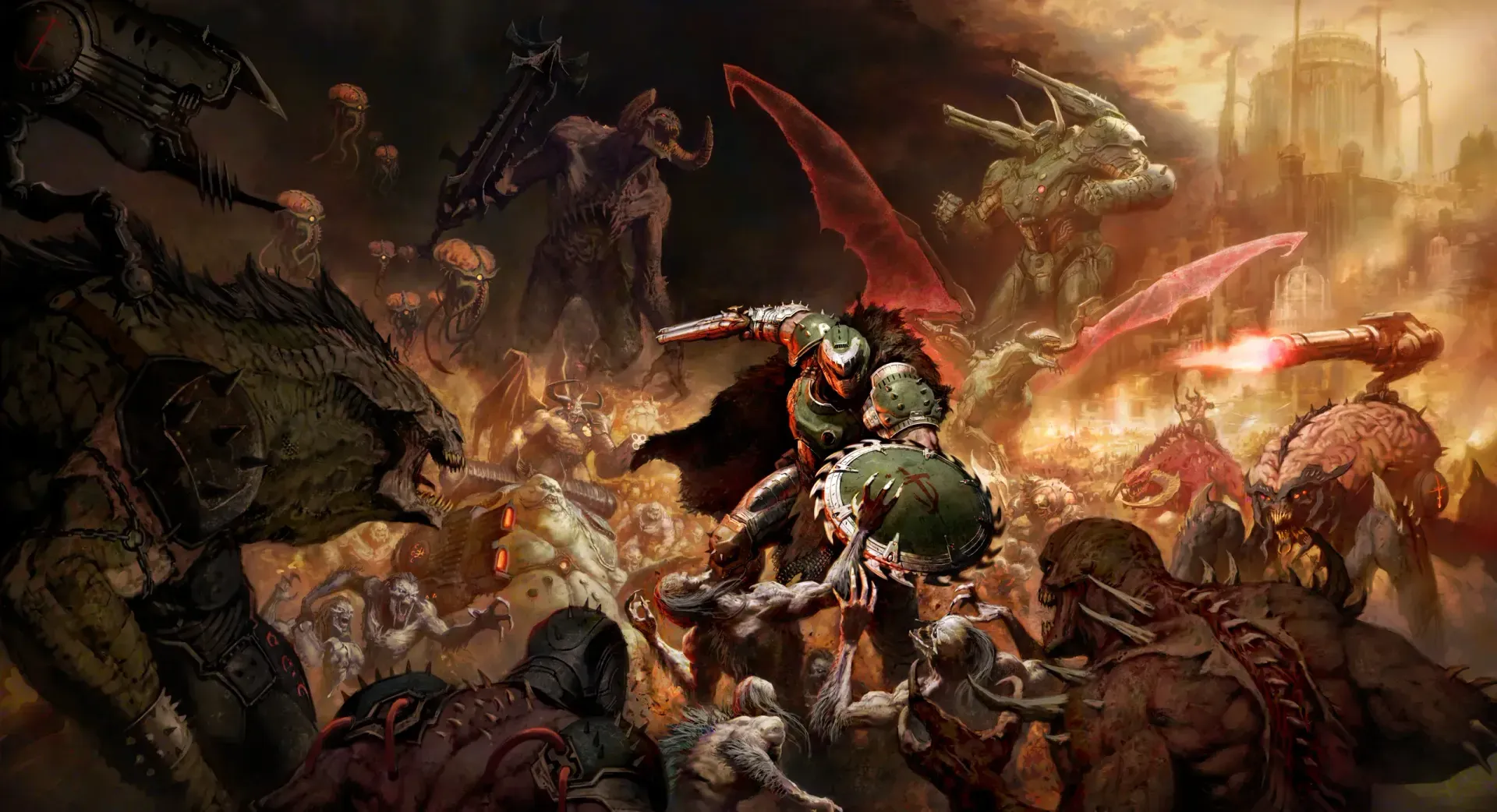
Fast-forward to 2025, and Doom’s influence is undeniable.
Modern FPS giants like Call of Duty and Halo trace their lineage back to id Software’s creation.
The 2016 reboot by Bethesda Softworks and the 2020 sequel, Doom Eternal, prove the franchise’s staying power.
These games blend nostalgic elements—like fast-paced combat—with modern polish, showing how the original’s formula remains relevant.
But its legacy isn’t just in sequels.
The modding culture it birthed lives on in platforms like Steam Workshop and Nexus Mods.
For instance, a 2023 mod called Brutal Doom enhances the original with modern graphics and mechanics, keeping it fresh for new generations.
The table below compares the original Doom to its 2016 reboot, highlighting how core elements evolved:
| Aspect | Doom (1993) | Doom (2016) |
|---|---|---|
| Graphics | 2.5D, pixelated sprites | Fully 3D, high-resolution textures |
| Gameplay Speed | Fast-paced, run-and-gun | Enhanced with glory kills, mobility |
| Sound Design | MIDI tracks, iconic sound effects | Orchestral score, dynamic audio |
| Modding Availability | Extensive WAD support | Limited, but SnapMap tool included |
This adaptability is why Doom remains a touchstone.
It’s not just a game—it’s a platform for creativity, a catalyst for innovation, and a benchmark for what FPS games can achieve.
Moreover, the ongoing interest in Doom has led to various adaptations and remakes, showcasing its timeless appeal and relevance in a constantly evolving gaming landscape.
This enduring legacy ensures that Doom will continue to inspire future generations of developers and gamers alike.
++ Foolproof Tips for Yu-Gi-Oh! Forbidden Memories on PlayStation 1
The Community That Keeps It Alive
What keeps a game from 1993 relevant in 2025?
The answer lies in its community.
Fans have preserved Doom through ports like GZDoom, which let it run on modern systems.
Speedrunning, where players compete to finish levels as fast as possible, is another pillar of its longevity.
Events like QuakeCon still feature Doom speedrunning competitions, with players completing the game in under 20 minutes—a testament to its enduring challenge.
The community’s creativity shines in mods that push boundaries.
Take Reelism 2, a 2022 mod that turns Doom into a chaotic slot-machine-style shooter with randomized enemies and weapons.
This kind of innovation shows how the game’s framework supports endless reinvention.
It’s a living artifact, constantly reshaped by players who refuse to let it fade.
Additionally, the community-driven approach to modding has fostered a collaborative environment where fans can share their creations and experiences, further enriching the Doom legacy.
This vibrant ecosystem keeps the spirit of the game alive and thriving.
Why It Matters Today
In an era of sprawling open-world games and cinematic narratives, Doom’s simplicity is its strength.
Its focus on raw, unfiltered action reminds developers and players that gameplay trumps all.
Modern titles like Ultrakill and Dusk channel its spirit, blending retro aesthetics with contemporary flair.
These “boomer shooters” prove that the FPS genre still draws inspiration from id Software’s masterpiece.
Moreover, Doom’s influence extends beyond gaming.
Its aesthetic—gritty, intense, unapologetic—has seeped into pop culture, from music (Mick Gordon’s 2016 soundtrack) to movies (though the 2005 film adaptation missed the mark).
It’s a reminder that a single game can redefine an industry, much like a spark igniting a wildfire.
The impact of Doom can also be seen in the rise of indie games that embrace its core principles, focusing on fast-paced action and straightforward mechanics.
This resurgence of interest in retro-style gameplay highlights the timelessness of Doom’s design philosophy.
For more insights into the impact of Doom and its community, you can visit Doom Wiki.
A Question of Legacy
What makes a game immortal?
For Doom, it’s the perfect storm of innovation, accessibility, and community.
It didn’t just create a genre; it built a blueprint for how games could evolve.
From its technical breakthroughs to its cultural footprint, it remains a titan.
As we look to the future of gaming—VR, AI-driven worlds, cloud streaming—Doom’s lesson is clear: great games don’t just entertain; they inspire.
Its impact is measurable.
A 2020 study by the Entertainment Software Association noted that 64% of gamers cite fast-paced action as a key reason for playing FPS titles—a preference Doom cemented.
Whether you’re a modder crafting new levels, a speedrunner chasing records, or a casual player revisiting E1M1, this game’s DNA runs deep.
It’s not just a relic; it’s a revolution that keeps unfolding.
Additionally, as we consider the future of gaming, the influence of Doom serves as a reminder of the importance of innovation and creativity in the industry.
Its legacy continues to inspire new generations of game developers and players, ensuring that the spirit of Doom will endure.
This resource provides a comprehensive overview of the game’s history, mods, and ongoing influence.
