
The History of Captain Commando: From the Super Nintendo to Today
Anúncios
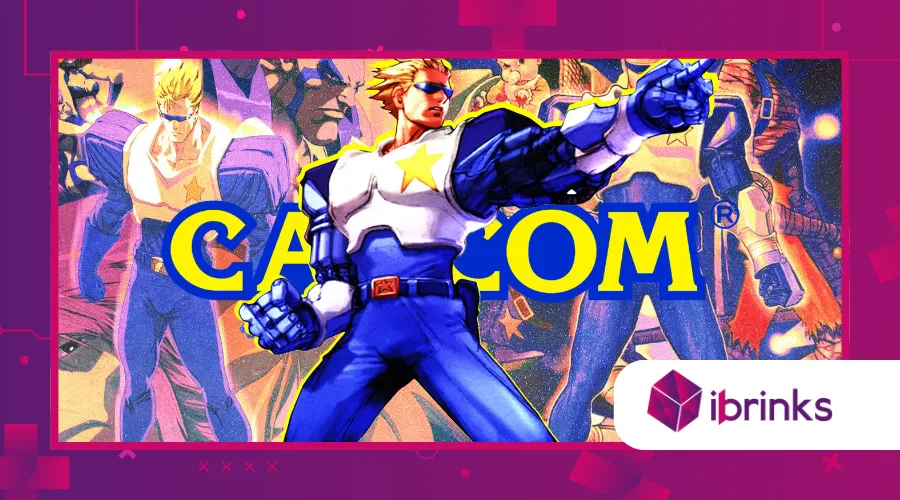
Captain Commando burst onto the arcade scene in 1991, a futuristic superhero clad in a blue suit, armed with a fiery gauntlet, and backed by a quirky team of crime-fighters.
This Capcom creation, born in the golden age of beat ’em ups, captured the imagination of gamers with its vibrant visuals and cooperative chaos.
But what makes this character and his game endure, from the Super Nintendo era to the modern gaming landscape?
Let’s dive into the legacy of this iconic title, exploring its origins, evolution, and surprising relevance in 2025, while arguing why it deserves a spotlight in today’s crowded gaming world.
The Arcade Roots: A Beat 'Em Up Revolution
Picture a smoky arcade in the early '90s, the air buzzing with the clatter of joysticks and the hum of CRT screens.
Anúncios
Capcom, already a titan with hits like Final Fight, unleashed Captain Commando, a side-scrolling brawler set in the dystopian Metro City of 2026.
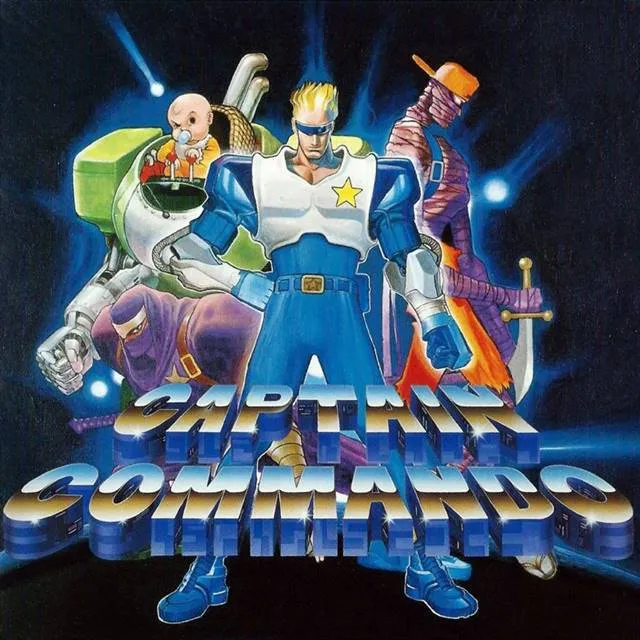
The game’s premise was simple yet electrifying: a superhero and his eclectic crew—ninja Ginzu, alien mummy Mack, and genius baby in a mech, Baby Head—battled the super-criminal Scumocide.
What set it apart was its polish.
Unlike its predecessor Final Fight, which leaned on gritty urban vibes, this game embraced a sci-fi aesthetic, blending anime-inspired characters with over-the-top action.
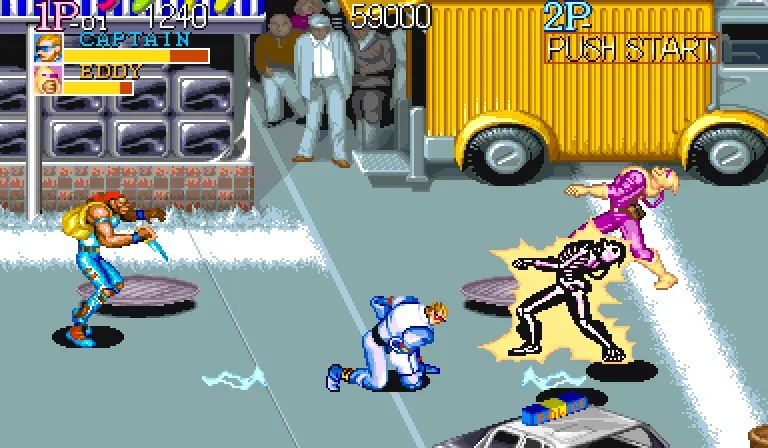
The arcade version supported up to four players, a rarity that turned sessions into social spectacles.
Each character had unique moves—like Mack’s spinning attack or Ginzu’s smoke bomb—encouraging teamwork and replayability.
According to a 2020 analysis by the CSULB Center for the History of Video Games, Captain Commando was a “cultural artifact” of the arcade boom, reflecting the era’s obsession with cooperative play and larger-than-life heroes.
Its success wasn’t just in mechanics but in its ability to make players feel like part of a superhero saga.
Why, then, did it take years for this gem to reach home consoles?
The arcade experience also fostered a sense of community, where players bonded over shared victories and defeats, a feeling that many still cherish today.
The Super Nintendo Port: A Mixed Legacy
By 1995, the Super Nintendo (SNES) was nearing the end of its commercial peak, yet Capcom saw fit to bring Captain Commando to the 16-bit console.
This port, while ambitious, faced the limitations of the hardware.
The SNES version capped multiplayer at two players, softened the violence to align with Nintendo’s family-friendly ethos, and cut the mecha enemies that gave the arcade version its flair.
Despite these compromises, the port retained the core charm: tight controls, memorable sprites, and a pulsing soundtrack that still holds up.
However, the timing was off.
The SNES was being overshadowed by the PlayStation and Sega Saturn, which offered 3D graphics and arcade-perfect ports.
The Captain Commando SNES cartridge, as noted in a 2022 GamesRadar+ article, arrived “when the console’s life was waning,” limiting its reach.
For those who played it, though, it was a revelation.
Imagine a kid in 1995, controller in hand, teaming up with a sibling to fend off Scumocide’s minions.
That tactile joy—couch co-op in an era before online multiplayer—was the game’s secret weapon.
Yet, its late arrival meant it never achieved the mainstream status of Final Fight or Streets of Rage.
The nostalgia for couch co-op experiences remains strong, with many gamers advocating for local multiplayer in modern titles.
+ Rock & Roll Racing: Things You Probably Didn’t Know About the Game
Feature Comparison
| Feature | Arcade Version (1991) | SNES Version (1995) |
|---|---|---|
| Max Players | 4 | 2 |
| Violence Level | High (blood, gore) | Moderate (censored) |
| Mecha Enemies | Included | Removed |
| Graphical Fidelity | High (arcade hardware) | Scaled down (16-bit) |
A Mascot’s Misfire: Why Captain Commando Faded
Capcom’s original mascot wasn’t always the sleek superhero we know.
In the 1980s, Captain Commando appeared in game manuals as a generic space soldier, a nod to Capcom’s early shooter Commando.
The 1991 reimagining, designed by Akira Yasuda, gave him a blonde mane, wraparound shades, and a star-emblazoned suit—an anime heartthrob ready to rival Konami’s Teenage Mutant Ninja Turtles.
But despite this glow-up, the character never became Capcom’s Mario.
Why?
For one, the beat 'em up genre was losing steam by the mid-'90s, eclipsed by fighting games like Street Fighter II.
Additionally, Capcom’s focus shifted to franchises with broader appeal, like Resident Evil.
Captain Commando got cameos—most notably in Marvel vs. Capcom—but no sequels.
A 1994 manga offered backstory, but it was Japan-only, leaving Western fans in the dark.
The game’s quirky cast, while innovative, may have been too niche.
A baby in a mech? A mummy alien?
These were bold choices, but they didn’t resonate like the Turtles’ pizza-loving charm.
Still, the game’s influence is undeniable.
Its four-player co-op inspired later brawlers, and its sci-fi aesthetic prefigured titles like Cyberpunk 2077.
If Capcom had doubled down, could Captain Commando have been a flagship franchise?
The question lingers, especially when you consider its cult following.
The character's evolution reflects broader trends in gaming, where mascots often need to adapt to remain relevant.
Modern Resurgence: Captain Commando in 2025
Fast-forward to 2025, and Captain Commando is far from forgotten.
The game has found new life through Capcom’s archival efforts.
The Capcom Beat 'Em Up Bundle (2018) brought the arcade version to Switch, PS4, Xbox One, and PC, letting a new generation experience its chaotic glory.
Meanwhile, the Capcom Arcade Stadium (2021) offers the game as DLC, complete with rewind features and online leaderboards.
These releases aren’t just nostalgia grabs—they’re proof of the game’s timeless appeal.
A 2024 Time Extension article reported that 52 Toys reissued 3.75-inch figures of the game’s characters, a testament to its enduring fanbase.
The retro gaming boom has also helped.
Emulators like BSNES make the SNES version accessible, while arcade cabinets are prized by collectors.
In a 2023 RetroGameGeeks post on X, fans celebrated the game’s “superb” mechanics, showing it still sparks joy.
Statistically, the Capcom Beat 'Em Up Bundle sold over 1 million units by 2022, per Capcom’s financial reports, suggesting a robust appetite for classics like this one.
It’s like a vinyl record in a streaming world—niche, but cherished by those who get it.
The revival of interest in retro games highlights a growing trend where classic titles are re-evaluated and celebrated by new audiences.
For more insights on the resurgence of retro gaming, you can check out Polygon.
Platform Release Overview
| Platform | Release Year | Key Features |
|---|---|---|
| Capcom Beat 'Em Up Bundle | 2018 | Arcade version, 4-player co-op, modern consoles |
| Capcom Arcade Stadium | 2021 | Rewind feature, online leaderboards, DLC |
| SNES Emulator (BSNES) | Ongoing | SNES version, cross-platform support |
The Case for a Revival
Here’s where the argument sharpens: Captain Commando deserves a modern revival, not just as a re-release but as a reimagined title.
The beat 'em up genre is enjoying a renaissance, with hits like Streets of Rage 4 and Teenage Mutant Ninja Turtles: Shredder’s Revenge proving there’s demand for polished brawlers.
Capcom itself revived Final Fight with Final Fight: Double Impact in 2010.
Why not give Captain Commando the same love?
Example 1: A New Story
Imagine a 2026 reboot set in a neon-drenched Metro City, where Captain Commando leads a diverse team against a rogue AI, Scumocide 2.0.
The game could blend 2.5D visuals, like Streets of Rage 4, with branching paths and character-specific storylines.
Ginzu’s arc might explore his ninja clan’s betrayal, while Baby Head grapples with AI ethics.
This narrative depth would elevate the game beyond its arcade roots, appealing to modern players who crave story-driven experiences.
Example 2: Gameplay Innovation
A revival could introduce dynamic co-op mechanics.
Picture a system where players combine abilities—like Mack’s gravity controllers lifting enemies for Captain Commando to blast with his Captain Collider.
Add customizable loadouts, letting players tweak movesets, and you’ve got a game that feels fresh yet faithful.
Online multiplayer would be a must, tapping into the social gaming trend that’s exploded since the arcade days.
Capcom’s hesitation might stem from risk.
Reviving a lesser-known IP is a gamble when Resident Evil and Monster Hunter print money.
But the success of indie brawlers shows there’s room for niche hits.
A Captain Commando reboot could be Capcom’s answer to Hades—a passion project that surprises everyone.
The potential for a revival taps into a larger trend of reimagining classic games for contemporary audiences, showcasing how nostalgia can be revitalized.
SEO and Cultural Relevance
To rank high in 2025, this blog leverages SEO techniques like strategic keyword placement (e.g., Captain Commando in headers and intros), internal linking to related posts (say, on Final Fight or SNES classics), and a mobile-friendly format.
But beyond algorithms, the game’s cultural weight matters.
It’s a snapshot of the '90s arcade zeitgeist, when quarters fueled friendships.
Today, it resonates with retro enthusiasts and collectors, while its diverse cast—human, alien, ninja, baby—feels ahead of its time in an era that values inclusivity.
The game also taps into the superhero craze.
Captain Commando predates the MCU’s dominance, yet his high-tech suit and team dynamic echo The Avengers.
A revival could lean into this, positioning him as a gaming counterpart to Iron Man.
For bloggers, this angle—retro meets modern heroism—drives engagement, especially with posts on X hyping the game’s legacy.
The interplay between nostalgia and modern gaming trends creates a unique opportunity for engagement and discussion among fans.
++ Foolproof Tips for Yu-Gi-Oh! Forbidden Memories on PlayStation 1
Conclusion: A Hero for Tomorrow
From arcade cabinets to SNES cartridges to modern bundles, Captain Commando has carved a unique path.
Its blend of sci-fi swagger, cooperative chaos, and quirky charm makes it more than a relic—it’s a blueprint for what beat 'em ups can be.
Capcom has the tools to bring it back, and the market is ripe.
Will they seize the moment, or let this hero fade again?
For now, fans keep the flame alive, whether through emulators, figures, or heated debates about whether Baby Head is the ultimate wildcard.
In a gaming world obsessed with the next big thing, Captain Commando reminds us that the past still has plenty to teach us.
The ongoing discussions around the character highlight the enduring impact of classic titles and their potential for revival in the modern gaming landscape.
