
The silent death of traditional tutorials in modern game design
Anúncios
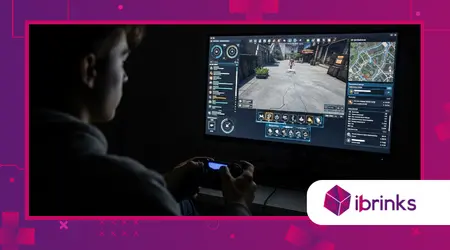
Silent death of traditional tutorials in modern game design is a phenomenon currently reshaping how we interact with digital worlds in 2026.
Gone are the days of intrusive pop-up windows and frozen screens that forced players to read lengthy instruction manuals before starting their journey.
Modern developers now favor organic discovery, where mechanics are taught through environmental cues and adaptive AI rather than static text boxes.
This shift respects the player’s intelligence and maintains the crucial sense of immersion that defines the current generation of immersive blockbuster titles.
Essential Industry Insights
- Invisible Teaching: The art of guiding players through level design without them ever realizing they are being taught a new skill.
- Contextual UI: How modern interfaces only reveal necessary information exactly when the player needs to perform a specific action.
- Diegetic Learning: Integrating tutorial elements directly into the game world, such as a character shouting advice during a frantic battle.
- Player Retention: Analyzing how removing “tutorial fatigue” at the start of a game significantly lowers early abandonment rates.
Why are static tutorials disappearing from AAA titles?
The silent death of traditional tutorials in modern game design was accelerated by the success of titles that trusted players to experiment.
Anúncios
When a game halts the action to explain a button, it shatters the emotional connection the player has built with the protagonist.
Developers have realized that “doing” is infinitely more memorable than “reading,” leading to the rise of the “playable prologue.”
These sequences introduce mechanics gradually, wrapping them in a high-stakes narrative that makes the learning process feel like actual gameplay.
What is the impact of diegetic learning?
Diegetic learning places the instructions within the fiction of the game world, such as an in-game holographic trainer or a physical manual.
This approach ensures that the player never feels like they are interacting with a piece of software, but rather a living world.
By keeping the player “in character,” designers can teach complex systems without breaking the fourth wall or annoying the audience.
This method has become the gold standard for high-fidelity RPGs and simulation games released in the last few months.
++ How cross-genre design is redefining what a “game category” means
How does environmental storytelling replace text?
A well-placed light or a trail of blood can guide a player more effectively than an arrow on a mini-map ever could.
This technique, often called “guiding the eye,” uses the game’s art direction to communicate objectives and mechanics silently.
If a player encounters a locked door and sees an open window above it, they learn about verticality without a single word of text.
This intuitive design is the primary driver behind the silent death of traditional tutorials in modern game design.

Why is player intuition more valuable than instructions?
Modern gamers have developed a universal “gaming literacy” that allows them to recognize common patterns across different genres and platforms.
Designers now leverage this collective knowledge to skip the basics and jump straight into the unique aspects of their specific title.
Trusting player intuition creates a rewarding “Aha!” moment that strengthens the bond between the user and the game’s mechanical systems.
This sense of personal discovery is a powerful psychological hook that keeps players engaged far longer than a guided tour.
Also read: The environmental impact of server-heavy games
What is the “Nintendo Method” of teaching?
This strategy involves introducing a mechanic in a safe environment, then adding a small twist, and finally testing the player in a challenge.
It is a three-step dance that has been refined over decades and is now being adopted by developers globally.
Because the player learns through action, they feel a genuine sense of mastery when they overcome a difficult obstacle later in the game.
This organic growth is a direct result of the silent death of traditional tutorials in modern game design.
Read more: Future of multilingual voice acting in games
Can AI assist in the learning process?
In 2026, adaptive AI monitors player performance in real-time to provide subtle hints only if the player is genuinely stuck or struggling.
This “invisible hand” ensures that experienced players are never bored, while newcomers never feel overwhelmed or abandoned by the game.
By adjusting the difficulty or the frequency of tips dynamically, the game tailors the tutorial experience to each individual’s unique skill level.
This personalized approach makes the old “one-size-fits-all” tutorial screen look like an ancient relic of the 8-bit era.
How does modern design improve player retention?

The first thirty minutes of a game are the most critical for keeping a player interested enough to reach the end credits.
The silent death of traditional tutorials in modern game design has led to higher completion rates by removing early-game friction.
Players who are allowed to play immediately are more likely to become invested in the story and the world’s unique mechanics.
A fast start is the best defense against the growing library of competing titles vying for the player’s limited attention.
Why is the “First User Experience” (FTUE) changing?
Designers now focus on “Flow,” a state where the challenge of the game perfectly matches the player’s increasing level of skill.
Traditional tutorials often interrupt this flow, creating a stop-and-start experience that can be frustrating for modern audiences.
By weaving the tutorial into the narrative, developers ensure that the player is always moving forward, both in skill and in story.
This seamless integration is the ultimate goal of the silent death of traditional tutorials in modern game design.
What is the future of onboarding?
Future games will likely use haptic feedback and spatial audio to teach mechanics, relying on physical senses rather than visual UI elements.
Imagine feeling a slight vibration in your trigger finger to learn the perfect timing for a heavy sword strike.
As hardware becomes more sophisticated, the need for written instructions will continue to diminish until they disappear entirely from the medium.
We are moving toward a future where games are felt and understood instinctively, rather than studied like a textbook.
Tutorial Evolution Comparison (2016 – 2026)
| Feature | Legacy Design (2016) | Modern Design (2026) | Impact on Player |
| Instruction Style | Static Pop-up Windows | Adaptive AI Hints | Reduced Frustration |
| Pacing | Mandatory Stop-and-Read | Contextual Flow | Higher Immersion |
| Guidance | Arrows and Waypoints | Environmental Cues | Improved Exploration |
| Mechanic Reveal | Front-loaded at Start | Gradual Narrative Reveal | Better Retention |
| Learning Mode | Explicit (Text-based) | Implicit (Action-based) | Genuine Mastery |
The End of the Instruction Era
The silent death of traditional tutorials in modern game design is not just a trend; it is a fundamental maturation of the medium.
We have seen how developers are trading rigid, forced instructions for a more fluid and respectful dialogue with the player.
By using the environment, narrative, and AI to teach, games have become more immersive and accessible than ever before in history.
This evolution proves that the best teacher is the world itself, guiding the player through a journey of self-discovery and skill.
As we look forward, the games that succeed will be those that let us play first and ask questions later. Why should we read about a world when we can simply live in it?
Do you miss the classic manuals, or do you prefer the modern “sink or swim” approach to gaming? Share your experience in the comments below!
Frequent Questions
Will complex games still have manuals in 2026?
Most complex titles now use “Integrated Wikis” or “Codexes” that you can access without leaving the game world.
These serve as a reference for deep mechanics but are never forced upon the player during the initial hours of the experience.
How do disabled players benefit from this shift?
Modern “Invisible Tutorials” are often paired with robust accessibility settings, allowing players to customize the amount of guidance they receive.
This ensures that everyone, regardless of their physical or cognitive needs, can enjoy the same level of discovery.
Does this mean games are becoming easier?
Not necessarily; it means the barrier to entry is lower, but the skill ceiling remains as high as ever for those who want it.
By teaching mechanics more efficiently, designers can actually create more complex challenges later in the game.
Is the “silent death” happening in mobile games too?
Actually, mobile games were the pioneers of this movement due to their shorter play sessions and limited screen real estate.
The techniques used on phones to keep people playing have finally trickled up to major console and PC developments.
What happens if a player misses an environmental cue?
This is where the adaptive AI comes in; if the system detects that you’ve walked past a necessary tool three times, it will provide a more obvious hint.
This safety net prevents the frustration that could arise from a design that is “too silent” for its own good.
