
How community-built experiences extend a game’s lifespan
Anúncios
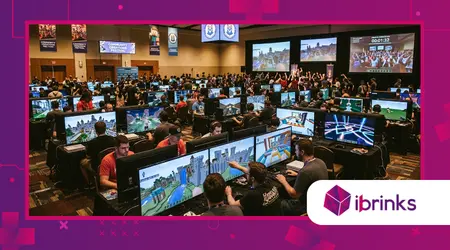
Community-built experiences reshape how we perceive modern gaming, turning static software into evolving, generational digital sandboxes.
When developers ship a game today, they no longer deliver a finished product, but rather launch a co-creative ecosystem.
Players transform from passive consumers into active architects, generating thousands of gameplay hours that no single studio could budget or produce.
This collaborative shift captures the raw essence of internet culture, where the line between creator and consumer blurs completely.
Gamers invest their time and passion into modifying, expanding, and redefining their favorite virtual worlds.
Anúncios
Consequently, this organic phenomenon directly solves the biggest crisis facing modern publishers: the insatiable player demand for fresh content.
Key Highlights of This Analysis
- The Player-Creator Shift: How audiences evolve from consumers into developers.
- The Longevity Formula: The exact metrics behind decades-long game relevancy.
- Economic Ecosystems: How user content builds real-world financial value.
What Drives the Infinite Lifespan of Modern Games?
The traditional gaming lifecycle used to be brutally linear, often lasting only a few months after launch. A studio would release a title, players would finish the campaign, and the disc would collect dust on a shelf.
Today, open-ended toolsets allow players to build entirely new genres inside existing frameworks, effectively making games immortal.
Think of a base game as an empty plot of land; developers provide the foundation, but the community builds the skyscrapers.
This endless cycle of innovation creates a powerful network effect that keeps titles relevant for decades. When a community takes ownership of a game’s universe, they inject local cultural trends, unique challenges, and specialized mechanics.
As a result, the game transforms into a living digital hub that constantly morphs to match the desires of its current player base.
A prime example of this evolution is Valve’s Counter-Strike franchise, which famously started as a humble Half-Life modification.
Players designed custom maps, fine-tuned the physics, and established competitive rulesets that eventually birthed modern esports.
By allowing the community to steer the ship, Valve captured lightning in a bottle, proving that players often know what they want before studios do.
++ Games that adapt to player mood using biometric and behavioral signals
How Do Community-Built Experiences Monetize and Scale?
The economic engine behind player-generated content has grown into a multi-billion-dollar industry.
Platforms like Roblox and Fortnite (via Unreal Editor for Fortnite) pay out hundreds of millions annually to independent creators.
These creators use professional development suites to launch standalone games within the host ecosystem, turning hobbies into full-time careers.
When players build profitable ventures, the host game secures an unshakeable market position.
These community-built experiences foster intense loyalty, as users are financially and emotionally invested in the platform’s long-term survival.
The relationship becomes symbiotic, driving player retention metrics up while significantly lowering the developer’s internal content production costs.
| Platform / Game | Primary Creator Tool | Iconic Community Creation | Estimated Active Mods/Maps |
| Minecraft | Java/Bedrock API | Pixelmon, Hypixel Network | Over 100,000+ public mods |
| Fortnite | UEFN (Unreal Editor) | Rocket Racing prototypes, Survival Tycoons | 10,000+ active creative maps |
| Roblox | Roblox Studio | Adopt Me!, Blox Fruits | Millions of user-made places |
| Grand Theft Auto V | FiveM Framework | GTA RP (NoPixel Server) | Thousands of custom scripts |
Consider the massive resurgence of Grand Theft Auto V on streaming platforms over the last few years. The base game is over a decade old, yet it regularly tops Twitch viewership charts due to custom roleplay servers.
Independent programmers built entire economic, legal, and social systems from scratch, creating a living soap opera that keeps millions hooked daily.
Why Do Studios Fail When Resisting Modding Ecosystems?

Control is a dangerous illusion for modern game publishers trying to maximize their product’s shelf life.
Studios that lock down their source code and sue modders frequently watch their player bases evaporate within a year.
Without user-generated content, a game rests solely on official updates, which can rarely keep pace with human consumption.
Why would an audience wait six months for a corporate DLC pack when a rival game offers fresh user content daily?
When developers embrace a hands-off, supportive approach, they essentially gain a global, decentralized R&D department for free.
Crowdsourcing innovation allows weird, niche, and brilliant ideas to surface naturally through player feedback loops.
Studios can then observe what succeeds organically in the community and integrate those elements into official sequels or expansions.
“Games that embrace community creativity don’t just survive the years they become the cultural foundations for the next generation of developers.”
If a publisher treats their community as threats rather than collaborators, they stifle the exact organic marketing that drives long-term sales.
Word-of-mouth growth thrives on viral user creations, wacky custom modes, and community-driven inside jokes. Denying players the right to tinker is equivalent to silencing your most passionate brand ambassadors.
Read more: The rise of sandbox biomechanics in sports games
How Do Custom Sub-Genres Evolve Into Standalone Industries?
History proves that the most successful video game genres of the modern era were born in community workshops.
The Multiplayer Online Battle Arena (MOBA) genre, which commands hundreds of millions of players, didn’t originate in a board room.
It started as Defense of the Ancients (DotA), a custom map built by players using the Warcraft III map editor.
These brilliant community-built experiences take the solid, polished engine of a AAA game and strip away its creative limitations.
Players mix genres, combine conflicting mechanics, and ignore traditional market constraints to build raw, unadulterated fun.
This iterative process acts as a brutal, natural selection simulator for game design, where only the most engaging concepts survive.
Another striking example is the Auto Battler genre, which exploded in popularity globally during the late 2010s. It began as Dota Auto Chess, a custom mod created by a small Chinese studio within Valve’s Dota 2 client.
Within weeks, millions of players flooded the servers, forcing major publishers to quickly develop standalone versions like Teamfight Tactics.
Also read: How AI-generated questlines are changing replay value in modern games
What Are the Technical Hurdles in Creating Player Sandboxes?
Building stable, accessible development tools for everyday gamers requires massive upfront engineering investment from a studio.
A developer must construct intuitive user interfaces that hide complex coding architecture while still offering deep creative freedom.
If the tools are too simple, creators grow bored; if they are too complex, the barrier to entry scares away the masses.
Safety, moderation, and intellectual property management represent another massive operational hurdle for studios hosting user content.
When millions of players generate assets, monitoring for offensive material, copyright infringement, and malicious code becomes a constant battle.
Developers must deploy advanced automated moderation AI alongside human curation teams to keep the digital environment safe and legally compliant.
Furthermore, updating the core game engine without breaking thousands of existing community mods is an engineering tightrope walk.
A single optimization patch can instantly corrupt years of player work, leading to intense community backlash and fractured trust.
Successful studios maintain long-term test branches and communicate transparently with top creators months before deploying major structural updates.
Why Do Players Invest Millions of Hours for Free?
Human psychology thrives on autonomy, competence, and relatedness the three core pillars of Self-Determination Theory.
Modding tools satisfy these core needs perfectly by offering players a canvas to express their unique identities and ideas.
Cultivating community-built experiences gives gamers a profound sense of ownership over the digital spaces they inhabit daily.
This deep emotional connection transforms a casual video game into a meaningful social community and creative outlet.
Gamers do not view modding as unpaid labor, but rather as a collaborative art form shared with friends.
The prestige of designing a popular custom map or fixing a broken game mechanic provides immense social capital within the community.
According to recent industry player engagement reports, over 60% of active PC gamers regularly download user-generated content.
This staggering statistic highlights a fundamental shift in consumer expectations across the entire global entertainment landscape.
Players no longer just want to play a story; they want to live in it, break it, rebuild it, and leave their permanent mark.
Unlocking the Future of Shared Digital Realities
The undeniable longevity of platforms like Minecraft proves that human creativity is the ultimate engine for infinite replayability.
By relinquishing absolute control, smart developers transform their games into self-sustaining platforms that outlast traditional industry cycles.
These vibrant community-built experiences bridge the gap between technical design and pure player imagination, ensuring the game never truly ends.
Are you ready to stop just playing games and start actively reshaping them? The tools are already at your fingertips, waiting for your unique vision to spark the next global gaming phenomenon.
Join a modding forum, open a creative editor, and share your experience in the comments below to help build the future of play.
Frequently Asked Questions
What exactly defines user-generated content in video games?
User-generated content (UGC) encompasses any material created by players rather than the game’s official developers.
This includes custom maps, character skins, gameplay scripts, total conversion mods, and entirely new game modes built using in-game editors.
How do developers benefit from allowing players to modify their games?
Developers see massive increases in player retention, continuous organic word-of-mouth marketing, and extended sales life cycles without additional production costs.
They also gain a direct window into what features and mechanics their audience desires most.
Can independent creators make real money building custom game modes?
Yes, modern platforms like Roblox and Fortnite feature robust developer payout systems that reward top creators based on player engagement.
Many independent teams have evolved into legitimate, profitable game studios using these internal ecosystems.
