
The Impact of Retro Games on Modern Titles
The gaming industry has come a long way since the days of pixelated characters and simple soundtracks. Yet, the influence of classic video games on modern titles is undeniable. Nostalgia plays a significant role in shaping today’s gaming landscape, with retrogames inspiring developers across the board.
Anúncios
From indie studios to major publishers, game creators are tapping into the charm of pixel art and vintage gameplay mechanics. This resurgence of retro-inspired elements has sparked a renewed interest in the golden age of gaming, reminding players of the timeless appeal of classic titles.
Key Takeaways
- Retrogames continue to shape modern game design
- Nostalgia drives innovative gameplay mechanics
- Pixel art aesthetics remain popular in contemporary titles
- Classic video games inspire both indie and AAA developers
- The gaming industry embraces its roots for fresh experiences
The Evolution of Gaming: From Pixels to Polygons
Gaming history has seen a remarkable journey from simple pixels to complex 3D graphics. This evolution spans decades, marked by technological advancements that have transformed how we play and experience games.
The Golden Age of Arcade Gaming
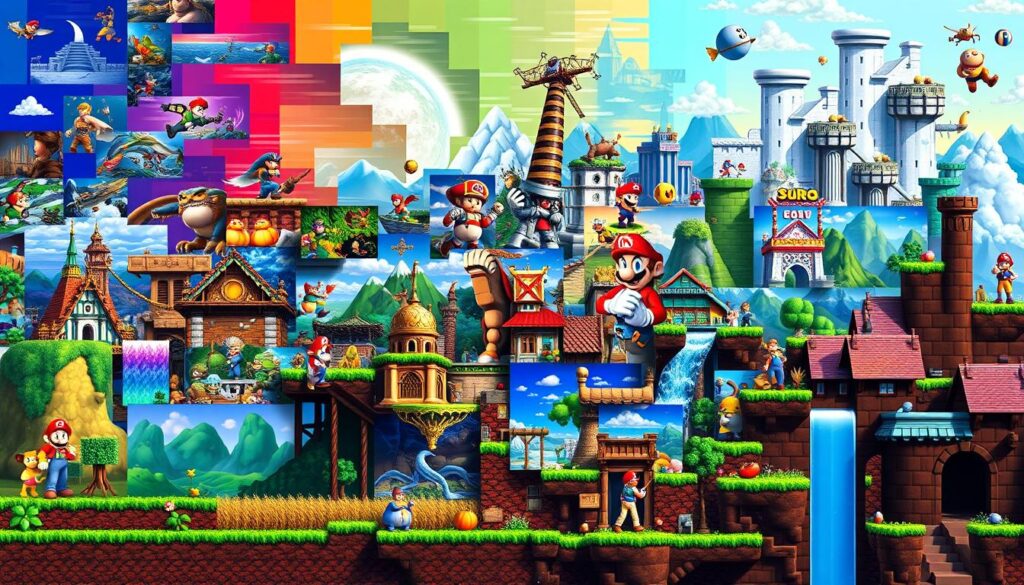
Arcade games ruled the 1980s. Colorful cabinets lined up in dimly lit spaces, beckoning players with their flashing lights and catchy tunes. Games like Pac-Man and Space Invaders became cultural icons, sparking a gaming revolution that would shape the industry for years to come.
The Rise of Home Consoles
As technology progressed, gaming moved from arcades into living rooms. Home consoles like the Nintendo Entertainment System and Sega Genesis brought arcade-quality experiences to families worldwide. These systems paved the way for more complex games and storytelling, setting the stage for the industry’s rapid growth.
The Transition to 3D Graphics
The mid-1990s saw a seismic shift in gaming with the introduction of 3D graphics. Consoles like the PlayStation and Nintendo 64 ushered in a new era of immersive gameplay. Games such as Super Mario 64 and Tomb Raider showcased the potential of 3D environments, forever changing player expectations and game design principles.
This evolution from simple arcade games to complex 3D worlds represents a fascinating chapter in gaming history. It highlights the industry’s constant push for innovation and the enduring appeal of interactive entertainment.
Nostalgia and Retrogames: Understanding the Cultural Phenomenon
Gaming nostalgia has swept through the industry, sparking a retro revival that’s reshaping modern gaming. This cultural phenomenon taps into our cherished memories, transporting us back to simpler times. Vintage gaming experiences offer a comforting escape from today’s complex world, reminding us of childhood joys and shared experiences.
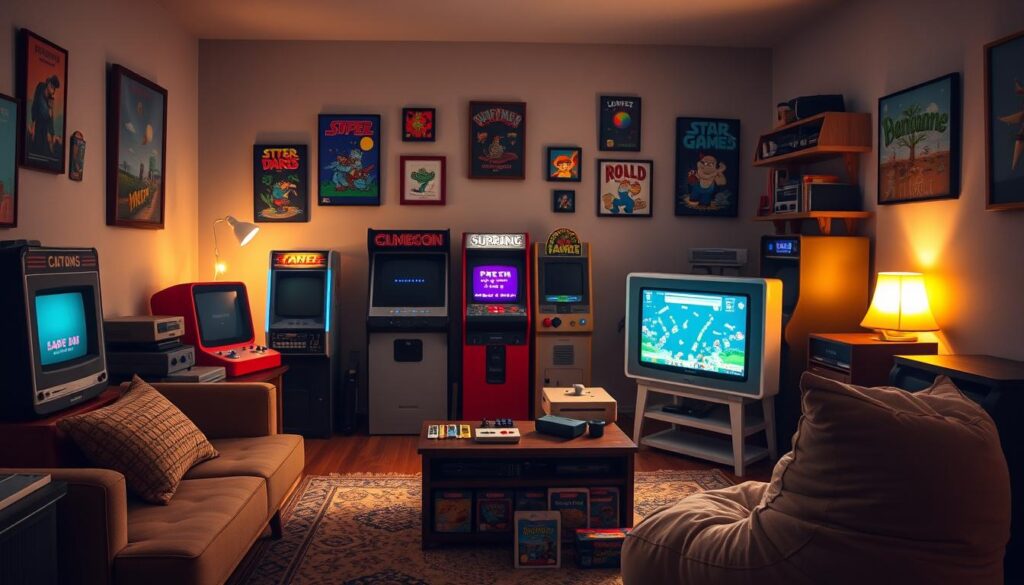
The cultural impact of retrogaming extends far beyond personal memories. It’s fostered vibrant gaming communities where enthusiasts gather to celebrate classic titles. These groups organize events, share stories, and preserve gaming history, ensuring that beloved games live on for future generations.
“Retro games remind us of the magic we felt when we first picked up a controller. They’re not just games; they’re time machines.”
This retro revival has influenced modern game development, with many titles incorporating pixelated graphics or chiptune soundtracks. Indie developers often draw inspiration from classic games, creating new experiences that blend nostalgia with innovative gameplay mechanics.
- Retrogaming conventions attract thousands of fans yearly
- Online forums dedicated to vintage gaming boast millions of members
- Classic game remasters and remakes consistently top sales charts
The enduring appeal of retro games lies in their simplicity and charm. They remind us of gaming’s roots and the pure joy of play. As the industry evolves, this nostalgic connection to our gaming past continues to shape its future, bridging generations of players through shared experiences and timeless fun.
Design Principles That Stand the Test of Time
Game design evolves, but certain principles remain timeless. These enduring mechanics captivate players across generations, shaping unforgettable gaming experiences.
Simplicity in Game Mechanics
Timeless mechanics often rely on simplicity. Games like Tetris prove that easy-to-learn rules can lead to deep, engaging gameplay. This approach allows players to focus on mastery rather than struggling with complex controls.
Challenging Yet Rewarding Gameplay
The best games strike a balance between difficulty and satisfaction. A well-designed challenge keeps players engaged, pushing them to improve their skills. This principle is evident in classics like Super Mario Bros., where each level presents new obstacles to overcome.
Memorable Character Design
Character creation is crucial for player engagement. Iconic figures like Pac-Man or Mario have simple yet distinctive designs that stick in players’ minds. These characters often embody the game’s core mechanics, making them instantly recognizable.
Level Design Philosophy
Effective level design guides players through the game world while teaching them new skills. It introduces concepts gradually, allowing players to experiment and learn. The original Legend of Zelda exemplifies this, with each dungeon building upon previous lessons.
| Design Principle | Classic Example | Modern Application |
|---|---|---|
| Simple Mechanics | Tetris | Candy Crush Saga |
| Challenging Gameplay | Super Mario Bros. | Dark Souls |
| Memorable Characters | Pac-Man | Among Us Crewmates |
| Thoughtful Level Design | Legend of Zelda | Portal |
These timeless design principles continue to shape modern games, proving that good game design transcends technological advancements. By understanding and applying these concepts, developers can create experiences that resonate with players for years to come.
Modern Games with Retro Influences
The gaming world has come full circle, with many new titles drawing inspiration from the classics. This trend spans across indie games, AAA titles, and popular franchises, breathing new life into retro concepts.
Indie Games Leading the Retro Revival
Indie developers are at the forefront of the retro revival in modern gaming. Games like “Stardew Valley” and “Shovel Knight” capture the essence of 8-bit and 16-bit eras while adding fresh gameplay elements. These indie games prove that pixelated graphics and chiptune music still resonate with today’s players.
AAA Titles Embracing Classic Elements
Even big-budget AAA titles are tapping into retro-inspired game design. The “Doom” reboot series combines modern graphics with old-school fast-paced gameplay. “Sonic Mania” brings Sega’s iconic hedgehog back to his 2D roots, delighting fans old and new. These games show that retro elements can enhance modern gaming experiences.
Successful Retro-Inspired Franchises
Some game franchises have found success by reimagining retro concepts for current audiences. “Minecraft” took the simplicity of block-building games and turned it into a global phenomenon. The “Mega Man” series continues to evolve while maintaining its classic charm. These examples highlight how retro-inspired games can become beloved franchises in the modern gaming landscape.
FAQ
What are retro games?
How do retro games influence modern titles?
What was the Golden Age of Arcade Gaming?
How did the transition from 2D to 3D graphics impact gaming?
Why are people drawn to retro games?
What are some timeless game design principles?
How are indie games contributing to the retro revival?
Can you name some successful retro-inspired franchises?
