
Realism vs. Fantasy: Gamers’ Preferences Today
The gaming world stands at a crossroads. On one side, we have hyper-realistic graphics that blur the line between virtual and real. On the other, fantastical realms that push the boundaries of imagination. This clash of styles shapes modern video game design and drives player preferences.
Anúncios
Game developers face a tough choice. Should they aim for photo-realistic environments or create unique, stylized worlds? The answer lies in understanding what gamers truly want. Recent gaming trends show a mix of both styles gaining popularity.
Immersive gameplay remains a key factor in player enjoyment. But immersion means different things to different people. Some find it in lifelike details, while others lose themselves in fantastical settings. This divide influences how games are made and marketed today.
The Evolution of Gaming: From Pixels to Photorealism
Gaming history shows a remarkable journey from simple pixels to stunning photorealism. This transformation has revolutionized how we play and experience virtual worlds.
Early Video Game Graphics and Imagination
In the dawn of video games, pixelated characters sparked our imagination. Games like Pong and Space Invaders relied on basic shapes to create engaging experiences. Despite limited technology, these games laid the foundation for future graphical advancements.
The Rise of 3D Graphics and Immersive Worlds
The 1990s saw a leap in gaming with the introduction of 3D graphics. Games like Doom and Quake pushed boundaries, offering more immersive environments. This era marked a turning point, as 3D worlds became the new standard in game design.
Today’s Hyper-Realistic Game Environments
Modern games showcase photorealism that blurs the line between virtual and real. Titles like Red Dead Redemption 2 and The Last of Us Part II demonstrate breathtaking detail. These games use advanced lighting, textures, and physics to create lifelike worlds.
| Era | Graphics Type | Example Game | Key Features |
|---|---|---|---|
| 1970s-1980s | 2D Pixels | Pac-Man | Simple shapes, limited colors |
| 1990s | Early 3D | Doom | Polygon-based environments |
| 2000s | Advanced 3D | Half-Life 2 | Improved textures, physics |
| 2010s-Present | Photorealism | Red Dead Redemption 2 | Lifelike environments, advanced lighting |
The evolution of gaming graphics reflects rapid technological progress. From simple pixels to photorealism in games, each era has brought new ways to captivate players and push the boundaries of virtual experiences.
Defining Realism and Fantasy in Video Games
Video games span a wide spectrum of game genres, each offering unique experiences. On one end, we have realistic simulations that aim to recreate real-world scenarios with stunning accuracy. On the other, we find fantasy worlds that transport players to realms of pure imagination.
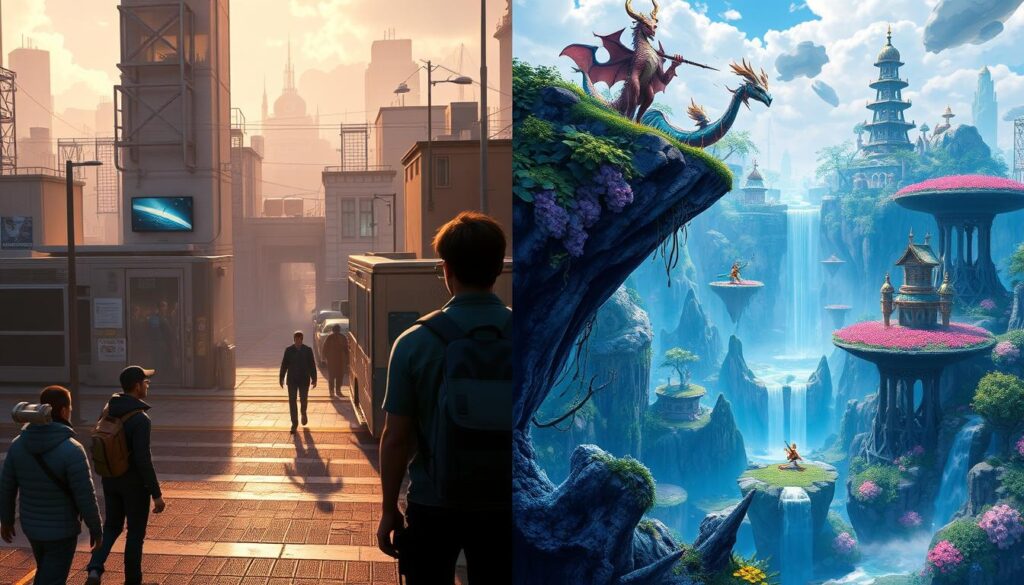
Realistic games strive to mimic life-like environments and behaviors. They often feature detailed graphics, physics-based interactions, and true-to-life scenarios. Racing simulators, military shooters, and sports games frequently fall into this category.
Fantasy games, in contrast, embrace the extraordinary. They create worlds filled with magic, mythical creatures, and impossible landscapes. Role-playing games and adventure titles often lean heavily into fantasy elements, allowing players to escape reality.
Game design philosophy plays a crucial role in balancing these elements. Many successful titles blend aspects of both realism and fantasy to create engaging experiences. For example, a game set in a historical period might include realistic weapons and architecture while incorporating fantastical elements like dragons or magic.
“The art of game design lies in knowing when to adhere to reality and when to break free from its constraints.”
Understanding player preferences helps developers craft games that resonate with their audience. Some gamers crave the immersion of realistic simulations, while others seek the escapism of fantasy worlds. By carefully blending these elements, game designers can create rich, compelling experiences that appeal to a wide range of players.
The Appeal of Realism: Why Gamers Crave Authenticity
Gamers today seek more than just entertainment. They crave experiences that mirror real life, pushing the boundaries of virtual worlds. This desire for authenticity drives the gaming industry to new heights.
Immersion Through Realistic Mechanics
Authentic game mechanics transport players into believable scenarios. Games like “Red Dead Redemption 2” showcase immersive gameplay with lifelike horse riding and gun maintenance. These details make virtual worlds feel tangible and alive.
The Thrill of Life-Like Visuals
Realistic graphics captivate players, blurring the line between game and reality. Titles such as “The Last of Us Part II” demonstrate stunning visual fidelity. From facial expressions to environmental details, these games create a sense of presence that keeps players engaged for hours.
Emotional Connection in True-to-Life Narratives
Narrative design plays a crucial role in creating emotional bonds. Games like “Detroit: Become Human” present complex moral dilemmas and character relationships. These stories resonate with players on a deep level, making the gaming experience more meaningful and impactful.
| Game Element | Impact on Player Experience | Example Game |
|---|---|---|
| Authentic Mechanics | Enhanced immersion and believability | Red Dead Redemption 2 |
| Realistic Graphics | Visual engagement and sense of presence | The Last of Us Part II |
| True-to-Life Narratives | Emotional connection and moral engagement | Detroit: Become Human |
The combination of these elements creates a powerful gaming experience. As technology advances, the line between virtual and real continues to blur, offering gamers increasingly authentic and immersive worlds to explore.
Fantasy’s Enduring Charm: Escaping Reality Through Gaming
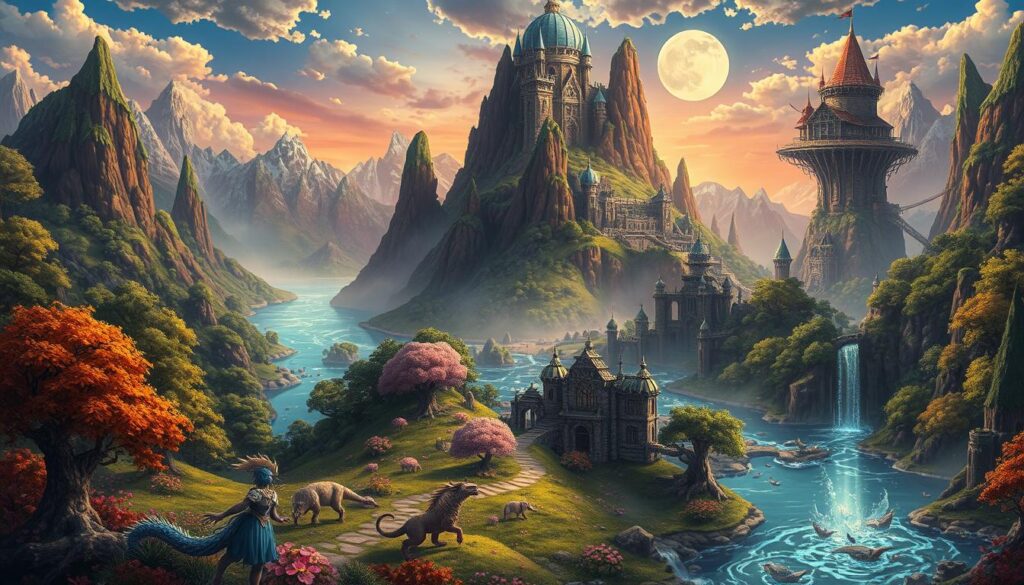
Fantasy gaming continues to captivate players across generations. The allure of stepping into magical realms and wielding otherworldly powers remains strong in the gaming industry. This enduring appeal stems from the unique ability of fantasy games to transport players far beyond their everyday lives.
Creative world-building lies at the heart of fantasy gaming’s charm. Game developers craft intricate universes filled with mythical creatures, ancient magic, and breathtaking landscapes. These richly detailed worlds offer endless possibilities for exploration and discovery, keeping players engaged for hours on end.
Escapism plays a crucial role in the popularity of fantasy games. In these virtual realms, players can become powerful heroes, embark on epic quests, and shape the fate of entire kingdoms. This break from reality provides a much-needed respite from the stresses of daily life, allowing gamers to immerse themselves in extraordinary adventures.
Imaginative gameplay mechanics further enhance the fantasy experience. From casting spells to taming dragons, these unique interactions go beyond what’s possible in reality. This creative freedom allows players to experiment with different strategies and playstyles, adding depth and replayability to fantasy titles.
| Fantasy Gaming Element | Player Appeal | Example Franchises |
|---|---|---|
| Magical Powers | Sense of empowerment | The Elder Scrolls, Dragon Age |
| Mythical Creatures | Fascination with the extraordinary | Monster Hunter, Pokémon |
| Epic Quests | Feeling of heroism and purpose | The Legend of Zelda, Final Fantasy |
| Vast Worlds | Exploration and discovery | World of Warcraft, The Witcher |
The enduring popularity of fantasy gaming franchises showcases the genre’s strong appeal. From long-running series like Final Fantasy to newer hits like Genshin Impact, these games continue to attract millions of players worldwide. Their success demonstrates that the desire for fantastical experiences remains as strong as ever in the gaming community.
Realism vs. Fantasy: What Do Gamers Value in Modern Titles?
Understanding gamer preferences shapes game design trends. Recent market research dives into what players value in modern games, exploring the balance between realism and fantasy.
Survey Results: Player Preferences Across Genres
A comprehensive study of player demographics reveals interesting patterns in genre preferences. Role-playing games (RPGs) tend to favor fantasy elements, while first-person shooters (FPS) lean towards realism.
| Genre | Preference for Realism | Preference for Fantasy |
|---|---|---|
| RPG | 35% | 65% |
| FPS | 70% | 30% |
| Strategy | 50% | 50% |
The Impact of Age and Gaming Experience on Preferences
Age plays a significant role in shaping gamer preferences. Younger players often gravitate towards fantastical worlds, while older gamers appreciate realistic scenarios. This trend aligns with studies on realism in gaming, which explore how game designers approach narrative and representation.
Balancing Realism and Fantasy: The Sweet Spot
Game developers strive to find the perfect balance between realism and fantasy. This sweet spot varies by genre and target audience. For instance, sports games benefit from realistic physics, while action-adventure titles often blend lifelike environments with fantastical elements.
By understanding these nuanced gamer preferences, developers can create experiences that resonate with their audience, driving innovation in game design trends.
The Future of Gaming: Trends in Realism and Fantasy
Gaming is on the brink of a revolution. New technologies are pushing the boundaries of what’s possible, blurring the lines between reality and fantasy. Let’s explore some exciting developments shaping the future of gaming.
Advancements in VR and AR Technology
Virtual reality (VR) and augmented reality (AR) are set to transform gaming experiences. VR gaming immerses players in lifelike digital worlds, while AR overlays digital elements onto the real world. These technologies promise to make games more immersive and interactive than ever before.
AI-Driven Narratives and World-Building
Artificial intelligence is revolutionizing game design. AI in games can create dynamic storylines and ever-changing worlds that respond to player actions. This innovative game design approach allows for unique experiences each time you play, keeping games fresh and exciting.
The Potential for Hybrid Realism-Fantasy Experiences
The future of gaming might not be about choosing between realism and fantasy, but combining them. Imagine a game where you can switch between a realistic city and a magical realm at will. These hybrid experiences could offer the best of both worlds, satisfying players who enjoy both realistic simulations and fantastical adventures.
