
Narrative in Games: The Rise of Immersive Stories
Video game storytelling has come a long way since the early days of pixelated characters and simple plots. Today, games offer rich, interactive narratives that rival the best Hollywood blockbusters. This shift towards immersive gaming experiences has changed how we think about entertainment.
Anúncios
Game plots now weave intricate tales that keep players glued to their screens for hours. From epic fantasy quests to gritty crime dramas, these stories transport us to new worlds. The rise of narrative-driven games has opened up exciting possibilities for both developers and players alike.
As we dive into the world of interactive narratives, we’ll explore how they’ve transformed the gaming landscape. Get ready to discover the magic behind the stories that make modern games truly unforgettable.
The Evolution of Storytelling in Video Games
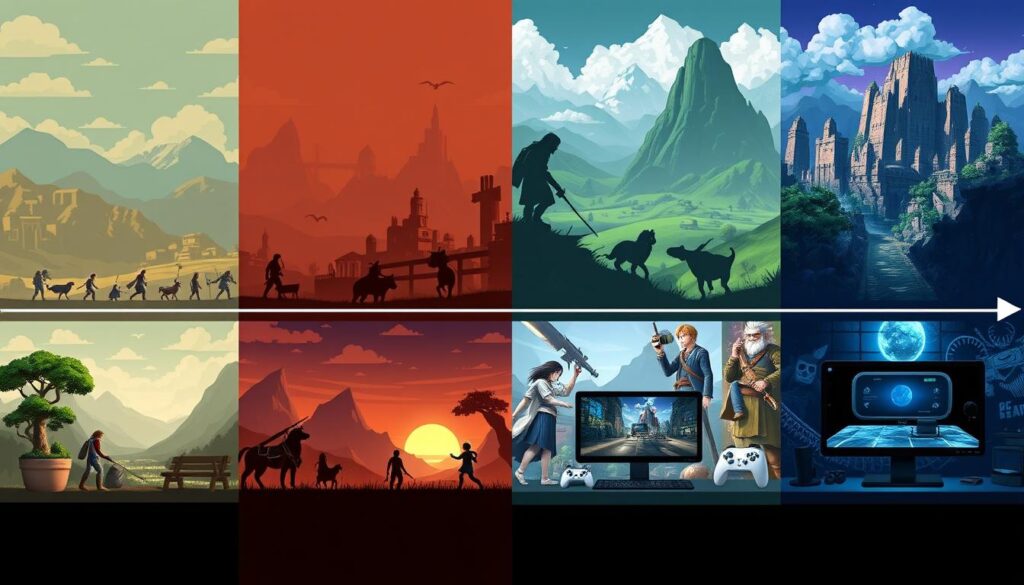
Game storytelling history spans decades, transforming from simple text adventures to complex, cinematic experiences. This journey showcases the power of interactive fiction and its impact on the gaming world.
From Text Adventures to Cinematic Experiences
The early days of video game narratives were dominated by text adventures. Players typed commands to progress through stories, using their imagination to fill in the visual gaps. As technology advanced, games incorporated graphics, voice acting, and cutscenes, creating more immersive experiences.
The Impact of Technology on Game Narratives
Technological advancements have revolutionized game storytelling. High-definition graphics, motion capture, and advanced AI have allowed developers to create lifelike characters and worlds. This leap in technology has blurred the line between games and interactive movies, offering players unprecedented immersion.
Player Agency and Narrative Choices
Modern games often feature branching narratives, giving players the power to shape the story. These player-driven stories create unique experiences for each individual, increasing replay value and emotional investment. The rise of open-world games has further expanded this concept, allowing players to craft their own narratives within vast, interactive environments.
| Era | Narrative Style | Player Involvement |
|---|---|---|
| 1970s-1980s | Text Adventures | Text Input |
| 1990s-2000s | Linear Stories | Limited Choices |
| 2010s-Present | Branching Narratives | Multiple Endings |
The evolution of game storytelling continues to push boundaries, offering players increasingly complex and engaging narrative experiences. As technology advances, we can expect even more innovative approaches to interactive fiction and player-driven stories in the future.
Narrative in Games: The Rise of Games Focused on Immersive Stories
Story-driven games have taken center stage in recent years. Players crave deep, engaging narratives that transport them to immersive game worlds. This shift has led to a boom in narrative-focused gameplay experiences that prioritize emotional engagement over traditional mechanics.

Games like “The Last of Us” and “Red Dead Redemption 2” showcase the power of storytelling in interactive media. These titles blend cinematic narratives with player-driven exploration, creating unforgettable journeys. The success of such games has inspired developers to push the boundaries of interactive storytelling.
Narrative-focused gameplay often relies on:
- Complex character arcs
- Rich, detailed environments
- Player choices that impact the story
- Emotional beats that resonate with audiences
As technology advances, game developers can create even more immersive game worlds. Motion capture, photorealistic graphics, and advanced AI contribute to lifelike characters and environments. This level of detail allows players to form stronger emotional connections with virtual worlds and their inhabitants.
| Game Title | Year | Key Narrative Elements | Player Impact |
|---|---|---|---|
| Life is Strange | 2015 | Time manipulation, friendship themes | High emotional engagement |
| God of War | 2018 | Father-son relationship, Norse mythology | Character-driven storytelling |
| Detroit: Become Human | 2018 | Branching narratives, AI ethics | Player agency in storytelling |
The rise of story-driven games marks a new era in interactive entertainment. As players seek deeper, more meaningful experiences, developers continue to innovate in narrative design. This trend promises a future where games rival other media in their ability to tell compelling, emotionally resonant stories.
Key Elements of Successful Game Narratives
Crafting compelling stories in games requires mastering several key elements. Game writing techniques have evolved to create immersive experiences that captivate players. Let’s explore the essential components that make game narratives truly engaging.
Character Development and World-Building
Strong character arcs in games are crucial for player investment. Characters should grow and change throughout the story, mirroring the player’s journey. World-building in video games creates rich, believable environments that players want to explore. Detailed lore, unique cultures, and atmospheric design all contribute to a game’s narrative depth.
Pacing and Plot Structure in Interactive Storytelling
Interactive storytelling presents unique challenges for pacing. Game writers must balance player-driven exploration with key plot points. A well-structured narrative keeps players engaged without feeling rushed or bogged down. This delicate balance is essential for maintaining player interest throughout the game.
Balancing Gameplay and Narrative Elements
Narrative-gameplay integration is an art form in itself. The best game stories seamlessly blend plot progression with gameplay mechanics. This integration ensures that players feel their actions have meaningful impact on the story. When done right, gameplay and narrative work together to create a cohesive, unforgettable experience.
“The most powerful stories in games are those where the player feels they are writing the narrative through their choices and actions.”
By mastering these elements, game developers can create stories that resonate with players long after the credits roll. The art of game narrative continues to evolve, pushing the boundaries of interactive storytelling.
The Impact of Immersive Stories on Player Engagement
Immersive stories in games have a profound effect on player engagement. They create a deep connection between the player and the game world, fostering emotional investment in games. This connection leads to increased playtime and higher retention rates.
Players who feel emotionally invested in a game’s narrative are more likely to continue playing, even through challenging sections. Well-crafted stories provide context and emotional to gameplay, making the experience more meaningful and memorable.
Story-based marketing has become a powerful tool for game developers. By highlighting compelling narratives in trailers and promotional materials, companies can attract players who are looking for rich, immersive experiences. This approach often leads to increased pre-orders and day-one sales.
“A great story can turn a good game into an unforgettable experience.”
Narrative-driven retention is a key factor in the longevity of many successful games. Players who are invested in a game’s story are more likely to:
- Recommend the game to friends
- Purchase downloadable content or expansions
- Eagerly await sequels or related titles
The psychological impact of player immersion in game narratives can be significant. It can lead to increased empathy, problem-solving skills, and even emotional growth. This deep engagement often translates to commercial success, as players seek out similar experiences and remain loyal to franchises that consistently deliver compelling stories.
Conclusion
As we’ve explored, the future of game narratives is bright and full of potential. From text adventures to cinematic experiences, storytelling in games has come a long way. The rise of immersive stories has transformed how we interact with virtual worlds, making games more engaging than ever before.
Storytelling innovations continue to push the boundaries of what’s possible in gaming. We’re seeing new narrative game design trends emerge, focusing on character development, world-building, and player agency. These elements work together to create rich, interactive experiences that captivate players and keep them coming back for more.
Looking ahead, the future of game narratives seems set to blend seamlessly with gameplay mechanics. As technology advances, we can expect even more immersive and interactive storytelling experiences. The gaming industry is poised to deliver narratives that not only entertain but also challenge players to think, feel, and engage on deeper levels.
In the end, the power of a well-crafted story remains at the heart of gaming. As developers continue to innovate and push boundaries, we can look forward to games that not only tell great stories but allow us to be active participants in shaping those narratives. The future of game narratives is an exciting frontier, full of endless possibilities for both creators and players alike.
