
How haptic feedback suits are redefining immersion for competitive gamers
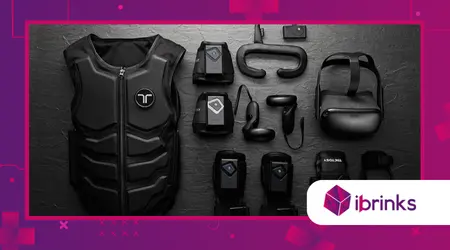
Haptic feedback suits are officially moving from the niche world of virtual reality enthusiasts directly into the heart of the global competitive gaming arenas.
Anúncios
As we navigate the technical landscape of 2026, the demand for tactile data has surpassed the simple need for high-fidelity graphics or spatial audio.
Professional players now realize that seeing and hearing the battlefield is no longer enough to maintain a dominant edge in high-stakes tournaments.
These advanced wearables allow athletes to physically process in-game events, transforming digital data into immediate somatic sensations that bypass the usual cognitive delays.
What are the mechanics behind this tactile revolution?
Modern haptic feedback suits function through an intricate network of localized actuators that deliver precise sensations to specific muscle groups across the torso.
These sensors translate digital code into physical pressure, ranging from the light vibration of distant footsteps to the sharp impact of projectiles.
Advanced software integration ensures that every sensation feels distinct and directional, allowing gamers to identify threats without looking at a mini-map.
This technology creates a sensory language that players learn to interpret instinctively, much like a driver feels the road through a steering wheel.
++ Gaming Equipment in 2026: The Rise of Modular Upgradable Consoles
Why is spatial awareness changing for pros?
Competitive gamers utilize haptic feedback suits to gain a 360-degree biological radar that traditional monitors simply cannot replicate in two dimensions.
Feeling a gentle thrum on the left shoulder instantly alerts a player to a flanking maneuver before the visual cues even appear.
This tactile feedback loops directly into the nervous system, reducing the reliance on visual processing which can often become saturated during chaotic fights.
Professionals are discovering that “feeling” the game environment creates a level of presence that was previously considered the stuff of science fiction.
Also read: Best stream lighting kits for quality visuals
How does neuromuscular memory improve performance?
Wearable haptics allow players to develop a deeper form of muscle memory that associates specific physical vibrations with tactical game states or cooldowns.
When a player feels a rhythmic pulse, they know their ultimate ability is ready without ever glancing at the user interface.
This subconscious connection allows for faster decision-making because the body reacts to the suit’s signals before the conscious mind analyzes the screen.
By offloading data to the skin, gamers preserve their visual focus for critical aim adjustments and complex environmental pathing.
Why are eSports organizations investing in haptics?
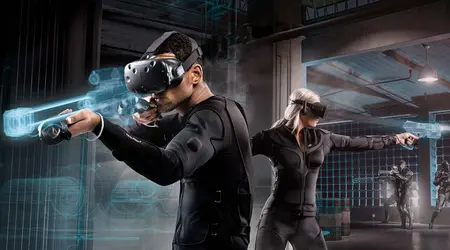
Top-tier teams are now implementing haptic feedback suits in their training facilities to simulate the immense physical pressure of live stadium environments.
This equipment acts like a flight simulator for the body, conditioning the athlete to remain calm while being bombarded by sensory input.
Coaches argue that these suits bridge the gap between a sedentary screen experience and the physical reality of a high-intensity athletic competition.
In a market where milliseconds determine million-dollar prize pools, any equipment that shortens the reaction-time loop is considered a mandatory investment.
Read more: How 360° Capture mics improve group streams
What do the latest performance statistics show?
A 2025 study conducted by the eSports Science Lab in South Korea revealed that players using full-body haptics improved their reaction speeds by 14%.
This research demonstrated that tactile cues reach the brain faster than visual stimuli during intense, high-speed combat scenarios.
Such a significant margin proves that haptic feedback suits are not merely cosmetic accessories but essential tools for professional-grade optimization and performance.
The data confirms that human biology responds more efficiently when multiple senses receive synchronized information from the game engine.
Is the feeling of immersion worth the price?
While the initial cost of high-end haptic feedback suits remains high, the psychological benefit of total immersion provides a unique competitive mindset.
Feeling the “weight” of the virtual world increases the player’s stakes, leading to more disciplined play and fewer careless tactical mistakes.
Is it possible to ever go back to a standard controller once you have felt the literal recoil of a digital weapon?
This rhetorical question is being answered by the massive surge in pre-orders for third-generation haptic vests currently hitting the market.
How do haptic suits solve the “sensory overload” problem?
Competitive gaming often suffers from an abundance of visual effects that can blind a player during critical moments of a match.
Utilizing haptic feedback suits allows developers to move some of that vital information from the eyes to the skin’s touch receptors.
This balanced distribution of data prevents the “tunnel vision” that often leads to avoidable deaths in battle royale or tactical shooter games.
By feeling the damage direction, a player can focus their eyes on the escape route rather than looking for a red hit-marker.
How does the suit simulate different environments?
Modern actuators can mimic the resistance of water, the heat of a nearby explosion, or the subtle drag of walking through thick virtual grass.
These sensations are achieved through varying frequencies and intensities of vibration that trick the brain into believing the physical contact is real.
For a competitive sniper, feeling the wind direction against their ribs can mean the difference between a successful long-range shot and a miss.
The suit provides environmental variables that were previously hidden, adding layers of depth to the strategy and execution of every move.
What is a practical example of high-level haptic play?
Consider a professional “Counter-Strike 3” player navigating a smoke-filled room where visibility is near zero for both teams involved.
With haptic feedback suits, the player can feel the vibration of a grenade bouncing off a nearby wall, indicating the enemy’s exact location.
This “sixth sense” allows them to fire accurately through the obstruction, securing a kill that would be impossible with sound or sight alone.
This specific advantage is why haptic technology is becoming a point of contention and regulation within international competitive leagues.
Impact of Haptic Gear on Gaming Performance (2026 Data)
| Feature | Visual/Audio Only | Full Haptic Integration | Performance Gain |
| Reaction Time | ~250ms | ~215ms | 14% Faster |
| Spatial Awareness | Visual Cues Only | 360° Tactile Feedback | High |
| HUD Dependency | High (Visual Distraction) | Low (Somatic Cues) | Better Focus |
| Immersion Level | Moderate | Extreme | Psychological Edge |
| Data Processing | Cognitive Overload | Sensory Balanced | Improved Logic |
In conclusion, haptic feedback suits are fundamentally redefining the boundaries of what it means to be a competitive gamer in 2026.
By turning digital physics into physical sensations, these devices offer a reaction-time advantage and a level of spatial awareness that eyes and ears cannot achieve alone.
While the technology is still evolving, the shift toward “feeling” the game is no longer a gimmick; it is the new standard for elite performance.
As the gap between the virtual and the physical continues to shrink, those who embrace tactile data will likely lead the next generation of eSports champions.
Do you think the future of gaming lies in what we see, or in what we can finally feel? Share your experience in the comments!
Frequently Asked Questions
Are haptic feedback suits legal in all professional tournaments?
Currently, major leagues are split; some allow them as “assistive tech,” while others are still debating if they provide an unfair biological advantage.
Can these suits cause physical fatigue during long sessions?
Yes, the constant muscle stimulation can lead to fatigue, which is why pros use them for specific training drills rather than 12-hour marathons.
Do I need a specific PC to run a haptic suit?
Most 2026 suits connect via low-latency Bluetooth and require minimal CPU overhead, though the game must explicitly support haptic telemetry data.
How do you clean a haptic suit after a sweaty match?
Most modern suits feature removable, machine-washable liners, while the electronic actuator layers are designed to be moisture-resistant and easily wiped down.
Can haptics help gamers with hearing or visual impairments?
Absolutely; this is one of the most promising areas of the tech, as it allows players to “feel” sounds or visual cues they might otherwise miss.
