
Pourquoi les manuels de jeux classiques offraient plus que de simples instructions
Annonces
Classic game manuals offered more than instructions for generations of players who grew up during the golden age of physical media.
Opening a cardboard box in the 1980s or 1990s was a tactile ritual that immediately transformed a simple plastic cartridge into an expansive universe.
These booklets were not mere technical troubleshooting guides; they served as narrative gateways, artistic showcases, and essential anti-piracy security keys for early computing history.
As digital distribution turns video games into instant, disembodied downloads, retro enthusiasts are revisiting these printed booklets to understand how tangible print elevated interactive storytelling.
What You Will Explore in This Feature
Annonces
- Why Printed Game Manuals Served as Essential Narrative Gateways
- How Game Designers Built Security and World-Building into Physical Books
- Why Collector Culture and Digital Preservation Reclaim the Lost Tactile Experience
- Key Comparison: Printed Manual Era vs. Modern In-Game Tutorials
- Preserving Physical Media in a Fully Streaming Era
- Frequently Asked Questions About Classic Game Manuals
Why Did Vintage Manuals Function as Complete Narrative Gateways?
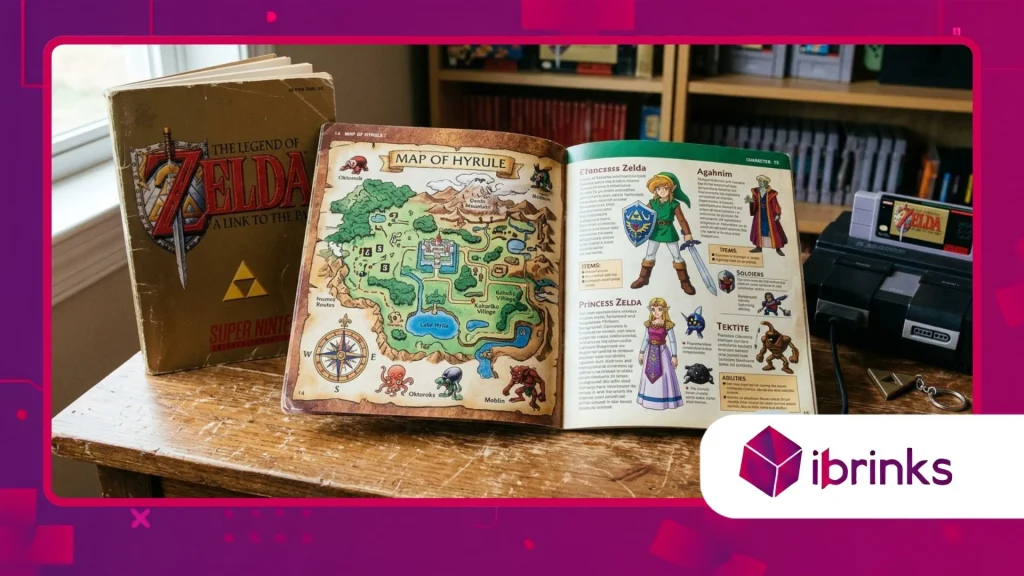
How Did Technical Hardware Limitations Force Storytelling onto Paper?
Early home gaming systems like the Atari 2600 and Nintendo Entertainment System possessed severe memory constraints that prevented developers from rendering complex cutscenes or detailed lore.
Designers solved this electronic bottleneck by commissioning full-color booklets that established setting, character backgrounds, and emotional stakes before players even pressed start.
When you opened La Légende de Zelda in 1986, the included booklet provided essential lore, hand-drawn maps, and intricate monster bestiaries that the 8-bit hardware simply could not display on screen.
This symbiotic relationship between physical print and digital code meant that reading the booklet was an active component of gameplay rather than an optional chore.
Players gained critical insight into enemy weaknesses, item locations, and world dynamics through high-quality illustrations that fueled childhood imaginations.
Without these printed companions, players were left navigating pixelated landscapes with minimal context, proving that classic game manuals offered more than instructions during the 8-bit era.
++ Comment les mods de jeux rétro permettent aux titres classiques de rester vivants
Why Was Tactile Interaction Crucial for Early Player Immersion?
Holding a glossy, scented booklet created a physical link between the gamer and the virtual realm long before digital immersion techniques existed.
The smell of fresh ink and the weight of high-grade paper established a sensory anticipation that modern instant downloads completely lack today.
Gamers often spent their school bus rides or commutes home studying control schemes, artwork, and character bios, building anticipation before ever powering on their CRT televisions.
This physical interaction transformed game software into a tangible asset that felt valuable and permanent in a home collection.
The tactile ritual created a deep psychological connection to the media, making the unwrapping experience as memorable as playing the game itself.
Isn’t it fascinating how paper ink could build more emotional investment than modern 4K loading screens?
How Did Physical Print Shape Interactive Gameplay Mechanics?
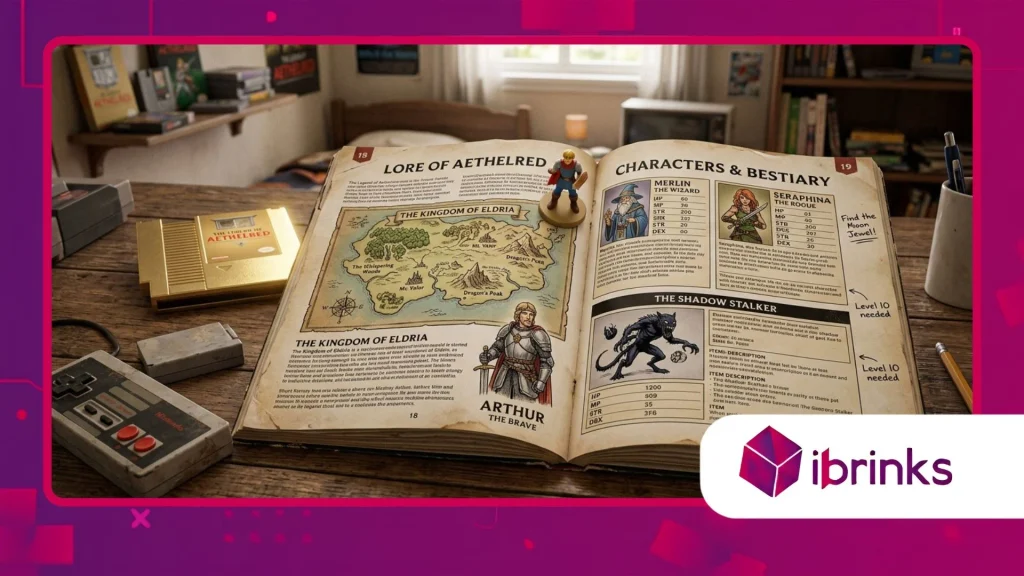
How Did Developers Use Printed Manuals for Physical Anti-Piracy Copy Protection?
During the microcomputer boom of the 1980s and 1990s, physical manuals doubled as clever hardware-level anti-piracy copy protection mechanisms for developers.
Des jeux comme Le secret de l'île aux singes et SimCity required players to look up specific code words, visual symbols, or page numbers from the printed booklet to pass early software gates.
Without the physical booklet in hand, pirated disk copies were rendered completely unplayable past the opening title screen.
This ingenious fusion of mechanical print and digital security forced players to safeguard their manuals as carefully as the game media itself. It transformed the physical object into an active key required for the execution of software.
This practical necessity reinforced the truth that classic game manuals offered more than instructions to PC gamers fighting disk duplication.
Lire aussi : Pourquoi les magazines de jeux vidéo régionaux ont façonné les communautés de joueurs locales
Why Did Manuals Function as Real-World Maps and Tactical Tools?
Complex computer role-playing games and simulation titles routinely included physical fold-out maps, reference charts, and blank note pages inside their booklets.
Des titres tels que Ultima ou Wing Commander provided detailed navigation maps and technical flight specs that players needed to cross-reference while operating their keyboards.
Players actively annotated their manuals, writing down puzzle solutions, secret passwords, and custom coordinates directly onto the back pages.
This interactive workflow blurred the boundary between the physical room and the virtual software canvas.
The physical booklet sat permanently beside the keyboard as a control console, deepening engagement through active note-taking.
These margin scribbles transformed standardized corporate print runs into personalized historical artifacts unique to each player’s journey.
Why Is Retrogaming Culture Reclaiming Printed Manuals Today?
How Does the Absence of Manuals Impact Modern Digital Preservation?
Modern game releases have largely abandoned physical booklets in favor of environmental sustainability, reduced production costs, and digital in-game tutorials.
However, game preservationists and archivists point out that thousands of vintage games rely entirely on missing print media for complete historical context.
Organizations like the Fondation pour l'histoire du jeu vidéo work tirelessly to scan and digitize original booklets to ensure that lost backstories, concept art, and original developer credits remain accessible to future researchers.
In fact, industry preservation data indicates that over 87% of classic video games released prior to 2010 are currently out of print and critically endangered without archived documentation.
Without scanned physical booklets, crucial historical context regarding developer intent, control schemes, and character design is lost forever to time.
This preservation crisis highlights how classic game manuals offered more than instructions by acting as definitive historical records.
En savoir plus: Analyse de l'essor des remasters rétro : marketing et nostalgie
Why Are Collectors Paying Premium Prices for Complete-in-Box Games?
The secondary retro gaming market has seen explosive valuation growth for complete-in-box (CIB) physical titles compared to loose cartridges.
Collectors actively pay double or triple the baseline price for vintage games that still retain their original instruction manuals, posters, and registration cards.
The physical condition of a staple-bound paper booklet often determines whether an item commands a modest price or a record auction figure among serious archivists.
This market demand proves that contemporary gamers value the complete physical experience over raw digital access.
The manual represents a tangible piece of gaming heritage that cannot be duplicated by a digital software file download.
As physical media continues to fade from retail store shelves worldwide, these preserved paper booklets represent rare relics of an artistic era.
Comparing Historical Print Documentation to Modern Digital Execution
| Caractéristique / Métrique | Vintage Printed Manual Era (1980–2005) | Modern In-Game Tutorial Era (Present Day) |
| Primary Storytelling Medium | Physical booklets, maps, backstories, and printed artwork | Contextual cutscenes, voice acting, and dynamic pop-ups |
| Anti-Piracy Role | Physical code wheels, word lookups, and page references | Digital Rights Management (DRM) and online authentication |
| Engagement des joueurs | Tactile reading, physical margin notes, and bus-ride studying | Active gameplay pausing, trial-and-error, and video guides |
| Long-Term Preservation | High risk of physical paper loss; reliant on digital scanning | Reliant on active server maintenance and digital storefronts |
| Collector Valuation Impact | Increases complete-in-box (CIB) item value by 100%–300% | Non-existent; physical editions rarely include printed materials |
Preserving Physical Heritage in an On-Demand Digital Ecosystem
The transition from physical paper booklets to silent digital downloads has fundamentally altered how players experience interactive media.
While modern games offer seamless dynamic tutorials, they often lack the mysterious charm and artistic depth that printed documentation provided.
Vintage booklets gave artists, writers, and developers a dedicated space to expand their creative visions beyond software hardware limits.
By recognizing that classic game manuals offered more than instructions, retro collectors and archivists ensure that the artistic heritage of physical gaming remains vibrant and celebrated for future generations.
Share your favorite classic game manual memory in the comments section below!
Frequently Asked Questions About Classic Game Manuals
What was the main purpose of vintage game manuals beyond basic controls?
Vintage game manuals provided essential world-building lore, character bios, high-resolution artwork, and mechanics that older console hardware could not display on screen.
How did old PC games use physical manuals as copy protection?
Many 1980s and 1990s computer games required players to input specific words or symbols found on precise pages of the physical manual to bypass copy protection screens.
Why did video game publishers stop including printed instruction booklets?
Publishers eliminated printed manuals to reduce manufacturing costs, streamline packaging production, lower shipping weights, and adapt to modern digital distribution platforms.
Does having the original manual increase the resale value of retro games?
Yes, retro games sold complete-in-box with their original manual and insert materials command significantly higher prices on the secondary collector market than loose cartridges.
Where can fans find digitized archives of classic video game manuals?
Non-profit organizations like the Video Game History Foundation and community projects like Archive.org host scanned, high-resolution digital copies of thousands of vintage game booklets.
