
Guerre des consoles
Annonces
Le industrie du jeu vidéo Elle a été façonnée par les rivalités féroces entre les fabricants de consoles de jeux vidéo. PlayStation, Xbox, et Nintendo Elles se sont livrées à une lutte acharnée pour la suprématie, chacune cherchant à s'accaparer une part toujours plus importante du marché. Ces guerres de consoles ont stimulé l'innovation et suscité des débats passionnés parmi les joueurs du monde entier.
La concurrence entre les géants du jeu vidéo a engendré des progrès fulgurants en matière de technologie, de graphismes et d'expérience de jeu. Dans leur quête d'innovation, chaque entreprise offre aux consommateurs des matériels et des logiciels de pointe. La guerre des consoles est devenue un élément incontournable du paysage vidéoludique, influençant tous les aspects, des stratégies marketing aux titres exclusifs.
L'impact de ces rivalités dépasse largement les chiffres de vente. Elles ont créé des communautés de fans fidèles, suscité des débats enflammés en ligne et même influencé la culture populaire. En explorant l'histoire et l'évolution des guerres de consoles, nous verrons comment cette compétition a façonné… industrie du jeu vidéo et continue de façonner son avenir.
Principaux points à retenir
- La guerre des consoles a stimulé l'innovation dans le secteur des consoles. industrie du jeu vidéo
- PlayStation, Xbox, et Nintendo sont les principaux concurrents
- La concurrence a permis d'améliorer le matériel et les logiciels.
- Les jeux exclusifs jouent un rôle crucial dans la rivalité entre consoles.
- La fidélité des fans a été un facteur important dans la guerre des consoles.
- Ces rivalités ont influencé la culture du jeu vidéo et les stratégies marketing.
La naissance de la concurrence sur consoles de jeux
L'arrivée des consoles de salon a bouleversé à jamais le paysage de l'industrie du jeu vidéo. Cette ère a marqué le début de rivalités féroces qui allaient façonner l'avenir du secteur. histoire du jeu pour les décennies à venir.
Les débuts : Atari contre Intellivision
La fin des années 1970 a vu Atari dominer le marché grâce à sa console révolutionnaire. Intellivision Elle s'est rapidement imposée comme une concurrente de taille, grâce à des graphismes supérieurs et un gameplay plus complexe. Cette rivalité a déclenché la guerre des consoles, poussant les deux entreprises à innover rapidement.
Annonces
L'entrée et la domination de Nintendo sur le marché
En 1985, Système de divertissement Nintendo La NES a fait une entrée fracassante sur la scène musicale. Avec des jeux emblématiques comme Super Nintendo Mario Frères, Nintendo La NES est rapidement devenue un nom familier. Elle a revitalisé le marché du jeu vidéo après le krach de 1983, faisant de Nintendo le leader du secteur.
Le défi de SEGA au trône
SEGA a fait son entrée sur le marché avec sa console Genesis en 1989. Présentée comme une alternative plus branchée à Nintendo, la console de SEGA, avec son « processeur ultra-rapide » et sa mascotte au look décalé, a séduit le public. Sonic le hérisson Elle représentait une menace sérieuse pour la domination de Nintendo. Cette concurrence a inauguré une nouvelle ère de guerre des consoles, stimulant les avancées technologiques et la créativité dans la conception des jeux.
| Console | Année de sortie | Caractéristiques principales |
|---|---|---|
| Atari 2600 | 1977 | Cartouches de jeu interchangeables |
| Intellivision | 1979 | Processeur 16 bits, contrôleur à clavier numérique |
| Système de divertissement Nintendo | 1985 | Manette à croix directionnelle, Super Mario Frères |
| SEGA Genesis | 1989 | « Traitement par explosion », Sonic le hérisson |
Nintendo contre SEGA : La première grande guerre des consoles
Le L'ère des 16 bits Ce fut le début d'une lutte acharnée entre Nintendo et SEGA. Cette rivalité a façonné l'industrie du jeu vidéo et a eu un impact durable sur… marketing de consoles stratégies.
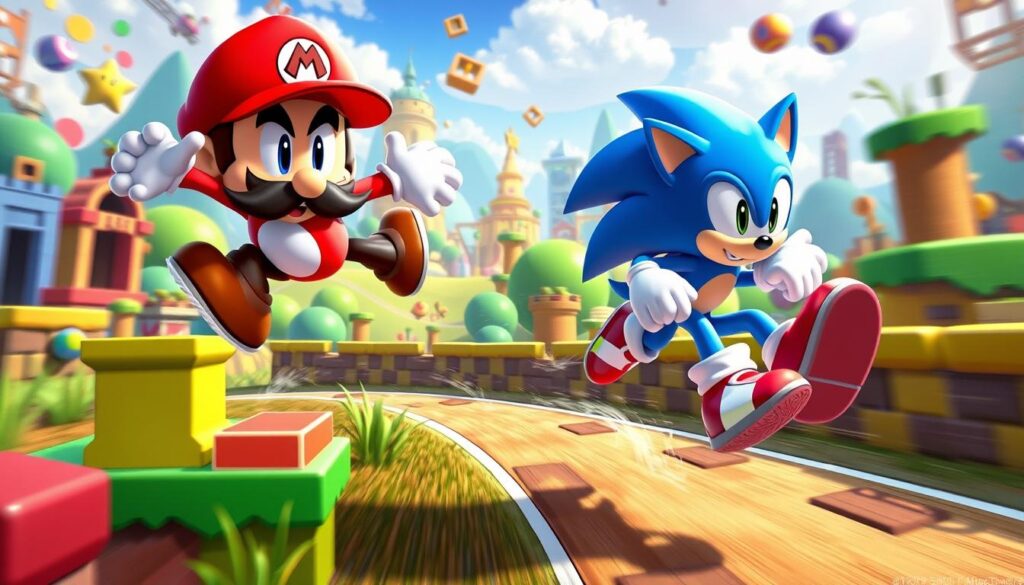
Mario contre Sonic : La rivalité des mascottes
Mario et Sonic le hérisson Ils sont devenus les emblèmes de leurs entreprises respectives. Le plombier de Nintendo et le hérisson rapide de SEGA ont conquis le cœur des joueurs du monde entier. Leur popularité a stimulé les ventes et fidélisé la clientèle.
Stratégies marketing et publicités
Les deux entreprises ont employé des méthodes agressives. marketing de consoles Stratégies. La campagne « Genesis fait ce que Nintendo ne fait pas » de SEGA a défié directement son concurrent. Nintendo a répliqué avec des publicités familiales mettant en scène ses personnages emblématiques.
« Genesis fait ce que Nintendo ne fait pas » – le slogan marketing audacieux de SEGA
Spécifications techniques de combat
Le spécifications matérielles La concurrence s'est intensifiée durant cette période. SEGA se targuait d'une puissance de traitement supérieure, tandis que Nintendo misait sur la qualité et l'innovation de ses jeux.
| Fonctionnalité | SEGA Genesis | Super Nintendo |
|---|---|---|
| processeur | Motorola 68000 16 bits | Ricoh 5A22 16 bits |
| Vitesse d'horloge | 7,6 MHz | 3,58 MHz |
| BÉLIER | 64 Ko | 128 Ko |
| Couleurs | 512 | 32,768 |
| Canaux audio | 6 | 8 |
Cette rivalité intense a poussé les deux entreprises à innover, donnant naissance à un âge d'or du jeu vidéo que les fans chérissent encore aujourd'hui.
L'évolution des jeux et des graphismes sur console
Le monde du jeu vidéo sur console a connu une transformation spectaculaire depuis ses débuts. Des personnages pixélisés simplistes aux mondes 3D immersifs, l'évolution des graphismes a été tout simplement révolutionnaire.
Au début, développement de jeux L'objectif était de créer des expériences captivantes malgré des contraintes matérielles limitées. Avec les progrès technologiques, les développeurs ont repoussé les limites, introduisant des graphismes et des mécanismes de jeu plus complexes.
Le passage de la 2D à Graphismes 3D a marqué une étape importante dans histoire du jeuCe progrès a permis de créer des environnements et des modèles de personnages plus réalistes, améliorant ainsi leur qualité. fidélité visuelle et l'immersion du joueur.
Technologie CD-ROM a joué un rôle crucial dans cette évolution. Sa capacité de stockage accrue a permis aux développeurs de créer des mondes de jeu plus vastes et plus détaillés, et d'y intégrer des éléments audio et vidéo de haute qualité.
| Génération de consoles | Principales caractéristiques graphiques | milieu de stockage |
|---|---|---|
| 8 bits (NES) | Sprites 2D, couleurs limitées | Cartouche |
| 16 bits (SNES, Genesis) | 2D améliorée, plus de couleurs | Cartouche |
| 32 bits (PlayStation, Saturne) | Tôt Graphismes 3D | CD-ROM |
| 64 bits (N64, PlayStation) | Amélioration de la 3D et du mappage des textures | Cartouche/CD-ROM |
| 128 bits (PS2, GameCube, Xbox) | 3D avancée, éclairage réaliste | DVD/Disque optique |
Les consoles actuelles offrent des expériences visuelles époustouflantes, avec des graphismes photoréalistes et de vastes mondes ouverts. Cette évolution a non seulement amélioré expériences de jeu mais a également stimulé l'innovation dans développement de jeux techniques et technologies.
Sony fait son entrée dans l'industrie du jeu vidéo : la révolution PlayStation
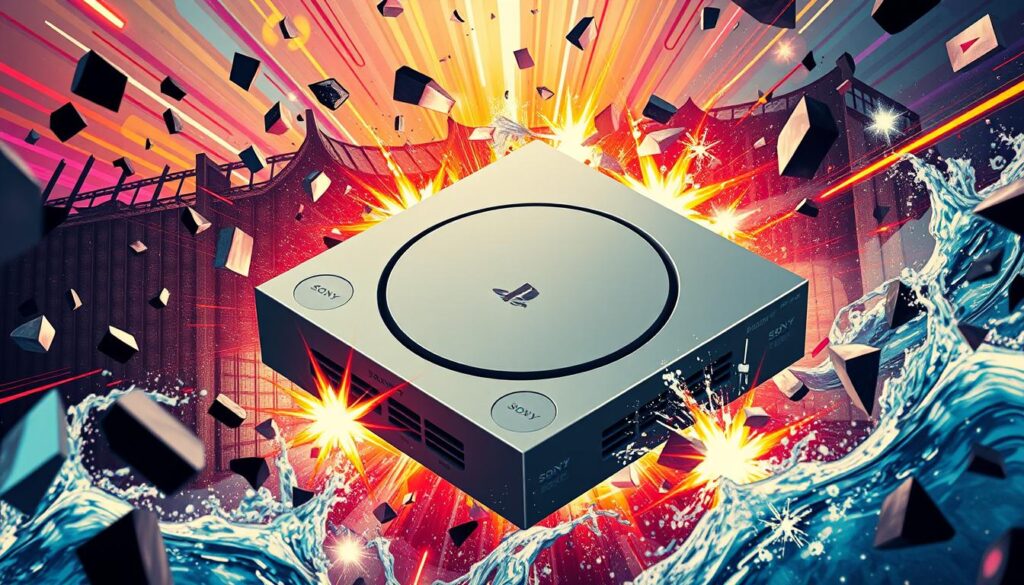
En 1994, Sony a bouleversé le monde du jeu vidéo avec le lancement de la PlayStation. Ce lancement a marqué un tournant dans l'histoire des consoles. La PlayStation a apporté de nouvelles technologies et des idées novatrices aux joueurs du monde entier.
Stratégie marketing de PlayStation
La stratégie de Sony était astucieuse. Ils visaient les joueurs plus âgés avec des publicités attrayantes et des jeux matures. Cela leur a permis de se démarquer de leurs concurrents destinés aux enfants. La PlayStation est devenue un incontournable pour les adolescents et les jeunes adultes.
Impact du CD-ROM par rapport à la cartouche
La PlayStation utilisait des CD-ROM au lieu de cartouches. Ce fut une révolution. Les CD-ROM pouvaient contenir bien plus de données que les cartouches. Cela permettait de proposer des jeux plus volumineux, avec des graphismes et un son de meilleure qualité. Les joueurs adoraient les cinématiques d'introduction et le doublage. Jeux sur CD-ROM offert.
Relations avec les développeurs tiers
Sony a accueilli développeurs tiers Ils les ont accueillis à bras ouverts. Ils ont facilité et rendu peu coûteux le développement de jeux pour la PlayStation. Cela a permis de constituer un catalogue de jeux immense. De nombreux titres phares provenaient de ces studios externes. Cette diversité a fidélisé les joueurs et a aidé Sony à surpasser ses concurrents.
Le succès de la PlayStation a révolutionné le jeu vidéo. Elle a apporté de nouvelles technologies, des jeux inédits et une image moderne à l'industrie. Les choix judicieux de Sony ont bouleversé le marché des consoles et établi de nouvelles normes pour les systèmes futurs.
Guerre des consoles modernes : Xbox contre PlayStation
La bataille entre Xbox et PlayStation définit le jeu vidéo moderne. Ces géants s'affrontent sur le terrain des services en ligne, des jeux exclusifs et de la puissance de leurs consoles. Voyons comment ils façonnent le paysage vidéoludique actuel.
Infrastructure de jeu en ligne
Xbox Live et PlayStation Network servir de base au jeu en ligne. Xbox Live pionnière du jeu en ligne payant, offrant des fonctionnalités robustes et une sécurité renforcée. PlayStation Network Elle a emboîté le pas, en proposant des services similaires et en élargissant sa base d'utilisateurs. Les deux plateformes offrent désormais du jeu en nuage, des jeux gratuits mensuels et des fonctionnalités sociales.
Jeux et studios exclusifs
Titres exclusifs Les ventes de consoles sont stimulées par la concurrence. PlayStation s'appuie sur des franchises acclamées comme God of War et Spider-Man. Xbox réplique avec Halo et Forza. Les deux entreprises acquièrent des studios de développement pour enrichir leur catalogue. Cette concurrence stimule la créativité et repousse les limites du jeu vidéo.
Comparaison des performances matérielles
Matériel de console Le jeu vidéo évolue à chaque génération. Les dernières Xbox Series X et PlayStation 5 incarnent des technologies de pointe. Toutes deux offrent la 4K, des temps de chargement ultra-rapides et le ray tracing. Xbox privilégie la puissance brute, tandis que PlayStation mise sur des fonctionnalités uniques comme sa manette DualSense.
| Fonctionnalité | Xbox Series X | PlayStation 5 |
|---|---|---|
| processeur | 8 cœurs à 3,8 GHz | 8 cœurs à 3,5 GHz |
| GPU | 12 TFLOPS | 10,28 TFLOPS |
| Stockage | SSD de 1 To | SSD de 825 Go |
| Ray tracing | Oui | Oui |
Cette rivalité constante pousse les deux entreprises à innover. Les joueurs bénéficient de services améliorés, de graphismes époustouflants et de catalogues de jeux variés. La guerre des consoles continue de façonner l'avenir du divertissement interactif.
Impact sur la culture et l'industrie du jeu vidéo
La guerre des consoles a profondément transformé le monde du jeu vidéo. Elle a incité les entreprises à concevoir des jeux et des systèmes toujours plus performants. Cette concurrence a été bénéfique pour les joueurs, leur offrant un choix plus vaste et des technologies plus innovantes.
Fidélisation des consommateurs et communautés de marque
communautés de joueurs ont évolué autour de différentes consoles. Les fans de Xbox adorent le jeu en ligne, tandis que les amateurs de PlayStation apprécient titres exclusifsCes groupes contribuent à faire connaître les nouveaux jeux et fonctionnalités. Ils jouent un rôle essentiel dans la croissance continue du secteur.
L'innovation technologique par la concurrence
La course à l'excellence a mené à des résultats extraordinaires innovation technologiqueNous avons vu les graphismes passer de pixels grossiers à des images d'un réalisme saisissant. Les manettes sont désormais équipées de pavés tactiles et de capteurs de mouvement. Chaque nouvelle console tente de surpasser la précédente, repoussant sans cesse les limites du possible.
Batailles de parts de marché
concurrence sur le marché Le secteur du jeu vidéo est féroce. Les entreprises se livrent une lutte acharnée pour chaque vente. Cette bataille pour les parts de marché maintient des prix justes et une qualité élevée. C'est pourquoi nous voyons des offres exceptionnelles et de nouvelles fonctionnalités à chaque génération de consoles. croissance du secteur Nous l'avons constaté grâce à cette volonté incessante d'être numéro un.
FAQ
Que sont les guerres de consoles ?
Quand les guerres des consoles ont-elles commencé ?
Qui sont les principaux concurrents dans la guerre des consoles actuelle ?
Quel impact la guerre des consoles a-t-elle eu sur l'industrie du jeu vidéo ?
Quel rôle jouent les jeux exclusifs dans la guerre des consoles ?
Quel a été l'impact du jeu en ligne sur la guerre des consoles ?
Quelle a été l'importance du passage des cartouches aux CD-ROM ?
Quel rôle jouent les spécifications matérielles dans la guerre des consoles ?
Quel impact la rivalité entre Mario et Sonic a-t-elle eu sur la guerre des consoles ?
Comment l'essor du jeu mobile a-t-il influencé la guerre des consoles traditionnelles ?
