
Au-delà du chat vocal : communications multijoueurs nouvelle génération avec traitement spatial du langage
Annonces
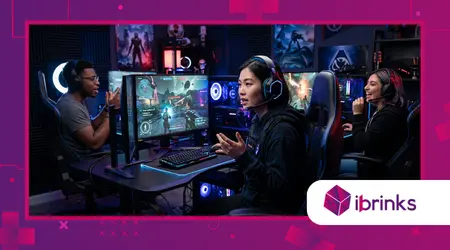
Au-delà du chat vocal est la nouvelle frontière en 2026, car le traitement spatial du langage (SLP) révolutionne la façon dont nous interagissons au sein d'univers multijoueurs vastes et persistants.
Cette technologie va au-delà de la simple transmission audio, interprétant le contexte physique de votre avatar pour traduire les commandes verbales en actions de jeu complexes et en temps réel.
La communication numérique est passée du texte statique à une couche dynamique du monde du jeu lui-même, où les mots ont un poids et une intention spatiale.
Nous nous dirigeons vers un avenir où « parler » à ses coéquipiers signifie déclencher des réactions environnementales, des marqueurs tactiques et des réponses synchronisées de l'IA sans appuyer sur un seul bouton.
Innovations clés en communication
- Reconnaissance de l'intention spatiale : Les systèmes analysent désormais où un joueur regarde et pointe du doigt lorsqu'il parle afin de fournir des indications tactiques précises et contextuelles.
- Traduction IA en temps réel : Une passerelle linguistique transparente permettant aux escadrons internationaux de coordonner des manœuvres complexes dans leurs langues maternelles sans latence.
- Physique audio environnementale : Les sons rebondissent et s'atténuent désormais en fonction des matériaux virtuels qui vous entourent, donnant à chaque murmure une impression de présence physique.
- Intégration non verbale : Le suivi des mouvements synchronise le langage corporel de votre avatar avec vos schémas de parole, créant ainsi une présence sociale véritablement unifiée dans le métavers.
Comment le traitement spatial du langage redéfinit-il le jeu vidéo ?
Mobile Au-delà du chat vocal Cela implique que nos consoles comprennent désormais le « où » et le « comment » de nos conversations, et non plus seulement le « quoi ».
Annonces
Cette année, les algorithmes SLP intègrent les données du microphone à la cartographie des coordonnées 3D pour garantir que « là-bas » pointe bien vers le tireur d'élite ennemi.
Les développeurs mettent en œuvre ces systèmes pour réduire la charge cognitive des joueurs, notamment dans les jeux de tir tactiques rapides ou les environnements de jeu de rôle massifs.
Il en résulte une expérience plus immersive où l'interface disparaît, ne laissant place qu'au flux brut et naturel de la coopération humaine.
Pourquoi le contexte est-il plus important que la clarté ?
Les casques audio traditionnels captent souvent un son qui semble déconnecté du monde du jeu, créant ainsi un fossé sensoriel désagréable pour la plupart des joueurs modernes.
SLP comble cette lacune en traitant votre voix comme une source sonore directionnelle qui interagit avec les murs, les couloirs et même les effets météorologiques.
Lorsque vous criez un avertissement dans une grotte virtuelle, votre voix résonne de manière réaliste, alertant les ennemis mais aidant également vos coéquipiers à localiser votre position exacte.
Ce réalisme physique transforme le simple fait de parler en un élément stratégique qui exige une réflexion approfondie et une conscience de l'environnement.
++ Comment les intégrations de concerts virtuels transforment les espaces sociaux multijoueurs
Quels sont les avantages de la parole tactile ?
On voit maintenant des jeux où dire « Ouvrez cette porte » en regardant un coéquipier déclenche une animation coopérative spécifique.
Cette approche tactile de la parole transforme votre voix en une véritable manette, simplifiant les interactions qui nécessitaient auparavant des menus radiaux complexes ou des raccourcis clavier peu pratiques.
Cette évolution permet aux joueurs handicapés physiques de concourir à des niveaux plus élevés en utilisant des indications verbales pour remplacer des commandes mécaniques complexes.
L'inclusion devient un sous-produit naturel du progrès technologique, ouvrant l'arène concurrentielle à un public mondial beaucoup plus large et diversifié.
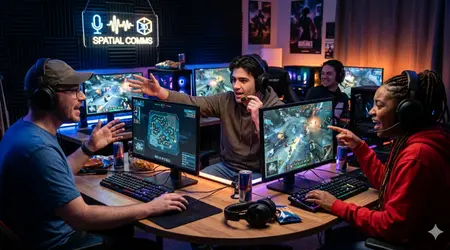
Pourquoi l'industrie se détourne-t-elle des méthodes audio traditionnelles ?
Les milieux concurrentiels se rendent compte que Au-delà du chat vocal Les technologies offrent un avantage considérable dans les tournois à enjeux élevés où chaque milliseconde de coordination compte.
Les systèmes anciens souffrent souvent de « saturation audio », où plusieurs voix se chevauchent et couvrent les sons ambiants essentiels du match.
Un nouveau système de traitement spatial filtre les bruits de fond et priorise les voix en fonction de leur proximité et de leur pertinence tactique par rapport à l'objectif actuel.
Ce « mixage intelligent » garantit que les ordres d'un commandant soient toujours entendus clairement malgré le vacarme chaotique d'un champ de bataille numérique en cours.
Lire aussi : Collaborer avec les fans : concours de fan art
Comment l'IA gère-t-elle la toxicité en temps réel ?
Les systèmes SLP modernes peuvent détecter la tonalité émotionnelle et l'intention malveillante qui se cachent derrière les mots, agissant comme un modérateur invisible qui assure la sécurité des communautés.
En comprenant le contexte, l'IA peut faire la différence entre les plaisanteries compétitives et le harcèlement véritable, et appliquer des sanctions en temps réel sans signalement manuel.
Cette approche proactive crée un environnement social plus sain où les joueurs se sentent en sécurité pour utiliser leur microphone sans craindre la toxicité.
Lorsque la barrière de la peur est levée, l'engagement communautaire explose, ce qui conduit à des écosystèmes multijoueurs plus actifs et dynamiques sur toutes les principales plateformes.
En savoir plus: Création de guides et de wikis de jeux communautaires
Qu’en est-il de la mondialisation linguistique ?
En 2026, la langue ne sera plus un obstacle au travail d'équipe mondial, car SLP propose une traduction vocale instantanée et de haute fidélité avec des accents localisés.
À Tokyo, un joueur peut diriger une équipe composée de Brésiliens et d'Allemands, chaque membre recevant ses ordres dans sa langue maternelle préférée.
Cette connectivité favorise une culture du jeu vidéo véritablement mondiale, où le talent et la stratégie sont les seuls prérequis pour intégrer une équipe d'élite.
Nous assistons à la naissance d'une communauté sans frontières qui privilégie les objectifs communs à la situation géographique de ses membres.
Comment cette technologie va-t-elle façonner les espaces sociaux de demain ?
La transition Au-delà du chat vocal transforme les halls d'entrée en places publiques vivantes où les conversations semblent aussi concrètes que des rencontres physiques.
Les concerts virtuels et les plateformes sociales utilisent désormais « l'occlusion audio » pour permettre des conversations privées au sein d'une foule nombreuse, comme dans la réalité.
À l'horizon 2027, la frontière entre une session de jeu et une réunion sociale continuera de s'estomper pour ne former qu'une seule et même expérience.
La capacité de « ressentir » la voix de quelqu'un dans un espace 3D est la dernière pièce du puzzle de l'immersion.
Pourquoi l'audio spatial améliore-t-il la mémorisation ?
Les joueurs sont plus enclins à rester dans un jeu où les interactions sociales sont authentiques et gratifiantes plutôt que robotiques ou distantes.
Une communication de haute qualité renforce les liens entre amis, transformant un simple jeu en un foyer numérique permanent pour des millions d'utilisateurs.
Voyez cela comme la différence entre un appel téléphonique et un dîner entre amis ; ce dernier offre un sentiment d’appartenance à un lieu et de connexion.
En donnant à la voix une « place », les développeurs s'assurent que leurs mondes restent peuplés de personnes qui aiment réellement discuter entre elles.
Quelles sont les implications en matière de confidentialité ?
La protection de la vie privée demeure une préoccupation majeure, car SLP nécessite une surveillance constante des données vocales pour fonctionner efficacement au sein du moteur du jeu.
Les plus grands studios mettent en œuvre un traitement local, directement sur l'appareil, afin de garantir que les conversations privées ne quittent jamais le domicile de l'utilisateur ni n'atteignent un serveur central.
La transparence des politiques de données est désormais un argument de vente majeur pour les jeux multijoueurs premium, les joueurs exigeant de contrôler leur « empreinte vocale » numérique.
Concilier innovation et sécurité est le principal défi pour les ingénieurs à l'aube de cette nouvelle ère du jeu connecté.
Normes de communication multijoueur 2026
| Fonctionnalité | Chat vocal hérité | Traitement spatial du langage | Avantage du joueur |
| Directionnalité | Mono/Stéréo | Binaural 3D complet | Conscience de la position |
| Traduction | Aucun | Communication vocale IA en temps réel | Coordination mondiale |
| Interaction | Audio uniquement | Actions déclenchées par la voix | Réduction du délai d'entrée |
| Modération | Réactif (Rapports) | Proactif (IA contextuelle) | Des communautés plus sûres |
| Mixage audio | Volume statique | Priorisation tactique dynamique | Des annotations plus claires |
| Accessibilité | Limité | Assistance à la commande vocale | Conception inclusive |
| Immersion | Faible (Superposition) | Niveau élevé (Physique intégrée) | Présence totale |
| Protection des données | Basé sur le cloud | Traitement en périphérie du périphérique | Conversations sécurisées |
Une étude de 2025 réalisée par Association du divertissement interactif ont montré que 82% des joueurs se sentaient plus immergés lorsqu'ils utilisaient l'audio directionnel.
Ce changement confirme que Au-delà du chat vocal Ce n'est pas qu'un gadget, mais une condition essentielle pour la prochaine génération de jeux compétitifs.
Utiliser un langage spatial, c'est comme passer d'un talkie-walkie à une véritable conversation dans une pièce bondée ; la profondeur est incomparable.
Votre voix n'est plus un simple signal ; c'est une force physique qui se déplace dans le monde virtuel avec un objectif précis.
Serons-nous un jour satisfaits de « simplement parler » à nouveau, alors que nos mots peuvent littéralement déplacer des montagnes dans nos jeux préférés ?
La technologie est là, les acteurs sont prêts, et les anciens modes de communication disparaissent rapidement pour laisser place au passé numérique.
L'avenir du jeu vidéo ne se résume pas à de meilleurs graphismes ; il s'agit aussi de meilleures connexions humaines grâce à une technologie plus intelligente et plus consciente.
Nous trouvons enfin notre voix dans le métavers, et elle sonne plus réelle que nous ne l'avions jamais imaginé.
Au fur et à mesure que les serveurs se synchronisent et que les matchs commencent, n'oubliez pas que votre voix est votre arme la plus puissante et votre meilleur lien.
Utilisez-la à bon escient, parlez avec conviction et accueillez la nouvelle ère de la communication spatiale.
L'idée que votre voix interagisse avec l'environnement du jeu vous permet-elle de vous sentir plus connecté à votre avatar numérique ? Partagez votre expérience dans les commentaires !
Questions fréquemment posées
Le traitement spatial du langage nécessite-t-il un casque spécial ?
Bien que n'importe quel casque stéréo fonctionne, les équipements audio spatiaux haut de gamme offrent le positionnement 3D et la profondeur les plus précis pour une immersion optimale.
Puis-je désactiver les alertes tactiques générées par l'IA ?
Oui, la plupart des jeux vous permettent de personnaliser l'influence de votre voix sur l'environnement en fonction de votre style de jeu et de vos besoins en matière de confidentialité.
Comment la traduction en temps réel gère-t-elle l'argot ?
En 2026, les modèles d'IA seront entraînés sur de vastes ensembles de données relatifs à la culture du jeu vidéo, ce qui leur permettra de traduire avec une grande précision l'argot spécifique à chaque communauté.
Le SLP augmente-t-il le décalage dans les jeux multijoueurs ?
Non, l’informatique de périphérie moderne traite les données linguistiques localement sur votre console ou votre PC, garantissant ainsi des performances de jeu fluides et réactives.
