
Retro Game Consoles That Never Made It Big
Anúncios
Step into the world of vintage gaming, where nostalgia reigns supreme and forgotten consoles tell tales of innovation and missed opportunities. The landscape of gaming history is littered with failed consoles that once promised to revolutionize the industry. These retrogames and their platforms, now relics of a bygone era, offer a fascinating glimpse into the evolution of interactive entertainment.
From ambitious startups to industry giants, many companies tried their hand at creating the next big thing in gaming. While some achieved cult status, others faded into obscurity. This journey through time will explore the stories behind these lesser-known consoles and the factors that led to their limited success in the competitive world of video games.
Key Takeaways
- Numerous retro game consoles failed to achieve mainstream success
- Failed consoles often featured innovative technology ahead of their time
- Market timing and competition played crucial roles in console failures
- Some unsuccessful consoles now have dedicated collector followings
- Lessons from failed consoles have influenced modern gaming industry practices
The Lost Era of Gaming Innovation
The gaming industry has seen its fair share of ups and downs. In the 1990s and early 2000s, a wave of gaming innovation swept through the market. This period saw the birth of numerous alternative consoles, each vying for a slice of the competitive gaming industry.
The Rise and Fall of Alternative Gaming Systems
Many companies tried to challenge the dominance of established players. They introduced unique features and cutting-edge technology. Some found brief success, while others crashed spectacularly.
Why Some Consoles Failed to Capture the Market
Market failure was common among these alternative consoles. Reasons varied from poor marketing strategies to technical limitations. In some cases, the consoles were simply ahead of their time.
Anúncios
| Console | Year | Key Innovation | Reason for Failure |
|---|---|---|---|
| Atari Jaguar | 1993 | 64-bit processor | Limited game library |
| 3DO Interactive Multiplayer | 1993 | CD-ROM based | High retail price |
| Philips CD-i | 1991 | Multimedia capabilities | Weak game selection |
The Impact of Timing and Competition
Timing played a crucial role in the success or failure of these consoles. Launching too early or too late could spell disaster. The competitive gaming industry left little room for error. Giants like Nintendo and Sony often overshadowed smaller players, making it difficult for new entrants to gain a foothold.
“Innovation without market acceptance is just an idea with potential.”
This lost era of gaming innovation serves as a reminder of the industry’s volatility. It highlights the delicate balance between pushing boundaries and meeting consumer demands in the ever-evolving world of video games.
Nostalgia and Retrogames: Forgotten Gaming Pioneers
Gaming history is filled with bold ideas and innovative consoles that didn’t quite make it big. Let’s dive into some of these forgotten gaming pioneers that left a mark on the industry despite their short-lived success.
Virtual Boy: Nintendo’s Bold Misstep
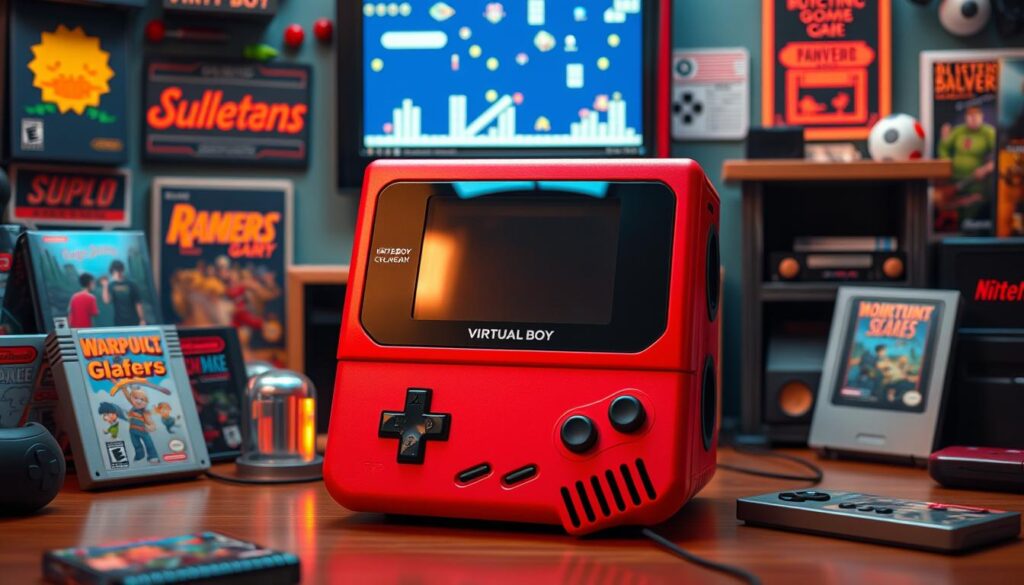
The Virtual Boy stands out as one of Nintendo’s rare missteps. Released in 1995, this failed console aimed to bring 3D gaming to the masses. Its unique red-and-black display and tabletop design were unlike anything seen before. Sadly, the Virtual Boy’s high price and limited game library led to its quick demise.
Sega Nomad: The Portable Genesis That Couldn’t
Sega’s attempt at a portable Genesis, the Nomad, hit shelves in 1995. It offered full-color gaming on the go, a feature unmatched by competitors. But its short battery life and bulky design hindered its success. The Nomad struggled to find its place between home consoles and handheld devices.
Neo Geo AES: The Luxury Console Few Could Afford
The Neo Geo AES was a dream machine for arcade enthusiasts. Launched in 1990, it brought arcade-quality graphics home. Its steep price tag of $649 (over $1,300 today) made it a luxury few could afford. Despite this, the Neo Geo AES gained a cult following and is now a prized collector’s item.
These failed consoles remind us of the risks and innovations that shaped gaming history. While they didn’t achieve widespread success, their impact on the industry is undeniable. They paved the way for future advancements and remain cherished by retro gaming enthusiasts worldwide.
Technical Innovations That Were Ahead of Their Time
The world of retro tech is filled with gaming technology that pushed boundaries. Many consoles introduced innovative hardware features that were years ahead of their time. These pioneering systems laid the groundwork for modern gaming experiences we enjoy today.
One standout example is the Sega Dreamcast. Released in 1998, it was the first console with a built-in modem for online play. This feature became standard in later generations, showing how Sega’s vision was years ahead of the competition.
The Nintendo 64 brought 3D gaming to new heights with its analog stick controller. This design revolutionized how players interacted with 3D environments, influencing future controller layouts across the industry.
“The N64’s controller was a game-changer. It made 3D gaming feel natural and intuitive for the first time.” – Gaming historian Jane Smith
Even failed consoles contributed to gaming’s evolution. The Atari Jaguar, while commercially unsuccessful, introduced the first 64-bit system. This paved the way for more powerful consoles in the future.
- Virtual Boy: First portable console with 3D graphics
- Neo Geo: Arcade-quality graphics in a home console
- Sega CD: Early adoption of CD-ROM technology
These retro tech marvels, though not always successful, pushed the boundaries of gaming technology. Their innovative hardware features laid the foundation for the immersive gaming experiences we enjoy today.
Marketing Mishaps and Distribution Challenges
Retro game consoles faced numerous hurdles in their journey to market success. Poor marketing strategies and distribution challenges often led to their downfall. Let’s explore the key factors that contributed to these failures.
Price Point Problems and Market Positioning
Many retro consoles struggled with pricing issues. High production costs forced manufacturers to set steep price points, making their products unaffordable for the average consumer. For example, the Neo Geo AES launched at $649, far exceeding the budget of most gamers.
Regional Release Strategies That Backfired
Some consoles suffered from poorly planned regional releases. The Sega Saturn’s surprise early launch in North America left retailers unprepared and developers scrambling to finish games. This decision damaged relationships with key partners and ultimately hurt sales.
Competition from Industry Giants
Smaller console makers faced intense competition from industry giants like Nintendo and Sony. These established players had larger marketing budgets, wider distribution networks, and stronger brand recognition. This made it difficult for newcomers to gain a foothold in the market.
| Console | Marketing Challenge | Distribution Issue |
|---|---|---|
| Virtual Boy | Unclear target audience | Limited retail availability |
| Atari Jaguar | Confusing advertising | Shortage of third-party games |
| 3DO | High price point | Fragmented hardware manufacturing |
These marketing mishaps and distribution challenges highlight the importance of well-planned strategies in the competitive gaming industry. Successful consoles need to strike a balance between innovation, affordability, and effective market positioning to capture consumer interest and thrive in the long run.
The Cult Following and Collector’s Market
Failed consoles have found new life in the retro gaming community. Collectors seek out these rare consoles, turning them into prized possessions. The vintage gaming market has seen a surge in interest for these forgotten gems.
Nostalgia plays a big role in driving up prices. Games that flopped at launch now fetch high sums at auctions. The rarity of these consoles adds to their appeal among enthusiasts.
“Collecting retro games is like owning a piece of gaming history. Each console tells a unique story of innovation and ambition.”
Some consoles have become unexpected stars in the collecting world. Their limited production runs make them highly sought after. This scarcity has led to a thriving market for both hardware and software.
| Console | Original Price | Current Market Value |
|---|---|---|
| Virtual Boy | $179.95 | $400 – $900 |
| Neo Geo AES | $649.99 | $1,000 – $2,500 |
| Sega Nomad | $179.99 | $300 – $600 |
The rise of online marketplaces has made it easier for collectors to find these rare consoles. Social media groups dedicated to retro gaming have formed tight-knit communities. These spaces allow enthusiasts to share their collections, trade items, and discuss the history of these overlooked systems.
Learning from the Past: Influence on Modern Gaming
The gaming industry has come a long way since the days of failed retro consoles. These bygone systems have left an indelible mark on modern console design and game development. Today’s gaming giants have taken valuable lessons from past mistakes, shaping the gaming evolution we see today.
Retro-inspired games have surged in popularity, blending nostalgia with cutting-edge technology. This trend reflects a deep appreciation for gaming’s roots while pushing boundaries. Game developers now focus on creating immersive experiences that capture the essence of classic titles while leveraging modern hardware capabilities.
The gaming industry lessons learned from failed consoles have led to more user-centric designs. Modern consoles prioritize ergonomics, intuitive interfaces, and seamless online connectivity. These improvements stem directly from understanding past shortcomings in hardware and software integration.
“The failures of yesterday paved the way for the successes of today. Every misstep in gaming history has been a stepping stone towards innovation.”
Gaming evolution is evident in how today’s consoles approach backwards compatibility and digital marketplaces. These features address the longevity concerns that plagued many retro systems, ensuring that both new and classic games remain accessible to players.
- Enhanced focus on user experience and comfort
- Integration of online services and social features
- Emphasis on software libraries and exclusive titles
- Improved marketing strategies and global distribution
As we look to the future, it’s clear that the gaming industry continues to evolve by learning from its past. The spirit of innovation that drove retro console creators lives on in modern gaming, constantly pushing the boundaries of what’s possible in interactive entertainment.
Conclusion
The retrogaming legacy lives on through the forgotten consoles that once promised innovation. These failed systems, despite their short-lived careers, left an indelible mark on gaming history. From Nintendo’s Virtual Boy to Sega’s Nomad, each device pushed boundaries and sparked new ideas in the industry.
The importance of gaming history shines through these lost gems. They serve as reminders of the risks and creativity that drive technological progress. While not commercially successful, these consoles paved the way for features we now take for granted in modern gaming.
The impact of failed consoles reaches beyond their time. Collectors cherish these rare pieces, keeping their memory alive. Game designers study past missteps to create better experiences. The story of these consoles teaches us that failure often leads to future breakthroughs in the ever-evolving world of video games.
As we look back on these bold attempts, we see how they shaped the gaming landscape. Their spirit of innovation continues to inspire new generations of developers and players alike. The retrogaming community keeps the flame burning, ensuring these pioneering efforts are never truly lost to time.
FAQ
What are some examples of retro game consoles that never made it big?
Why did some retro game consoles fail to capture the market?
What was the Virtual Boy, and why did it fail?
How did the Sega Nomad differ from other handheld consoles of its time?
What made the Neo Geo AES a “luxury” console?
How have these failed consoles influenced modern gaming?
Is there a collector’s market for these failed retro consoles?
What were some technical innovations introduced by these lesser-known consoles?
