
Free-to-Play vs Pay-to-Play
Anúncios
Gaming revenue models have come a long way since the early days of arcade machines. Today, the industry is split between two main approaches: free-to-play and pay-to-play. These monetization strategies shape not only how games are developed but also the player experience.
Free-to-play games offer no upfront cost, relying on microtransactions for income. Pay-to-play titles, on the other hand, often require an initial purchase or subscription. Both models have their pros and cons, influencing how gamers interact with their favorite titles.
As the gaming landscape evolves, we’re seeing a blend of these approaches. Some games start as pay-to-play and later shift to free-to-play, while others adopt hybrid models. This flexibility allows developers to adapt to changing market demands and player preferences.
Key Takeaways
- Free-to-play and pay-to-play are the main gaming revenue models
- Microtransactions drive income in free-to-play games
- Pay-to-play games often require upfront costs or subscriptions
- Player experience varies between these monetization strategies
- Hybrid models are emerging in the evolving gaming market
Understanding the Basics of Gaming Revenue Models
The gaming industry has seen a shift in revenue models over the years. Game developers now employ various strategies to monetize their creations. Let’s explore the two main approaches: free-to-play (F2P) and pay-to-play (P2P) games.
What Defines Free-to-Play Games
F2P games offer players access without upfront costs. This model relies on in-game purchases and ads for revenue. Popular F2P titles like Fortnite and League of Legends have reshaped gaming industry trends.
Anúncios
The Structure of Pay-to-Play Models
P2P games require an initial purchase or subscription. This traditional model remains strong in the gaming market. Titles like World of Warcraft and Call of Duty continue to thrive under this structure.
Evolution of Gaming Monetization
Game development has adapted to changing player preferences. The rise of mobile gaming and digital distribution has influenced revenue streams. Hybrid models combining elements of F2P and P2P are becoming more common.
| Model | Revenue Sources | Example Games |
|---|---|---|
| Free-to-Play | Microtransactions, Ads | Fortnite, Candy Crush |
| Pay-to-Play | Upfront Cost, Subscriptions | World of Warcraft, FIFA series |
| Hybrid | Initial Purchase, In-game Purchases | Destiny 2, Rocket League |
As the gaming landscape evolves, developers must balance player experience with profitable business models. The future of gaming monetization lies in innovative approaches that cater to diverse player preferences and market demands.
The Economics Behind Free-to-Play Games
Free-to-play games have revolutionized the gaming industry with their unique economic model. This approach allows players to access games without upfront costs, relying on various revenue streams to sustain and grow.
Microtransactions and Virtual Items
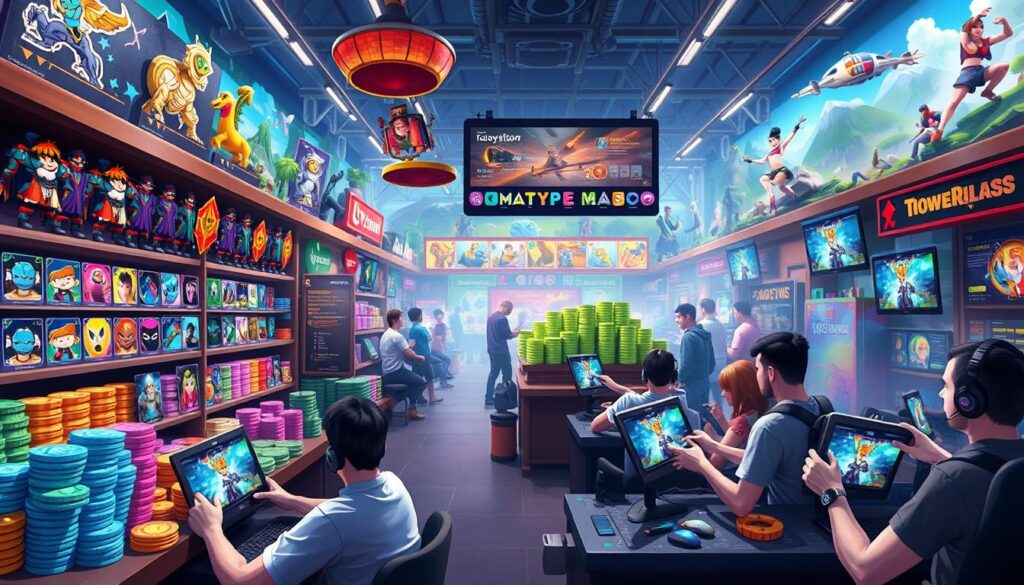
The backbone of the freemium model is microtransactions. Players can buy virtual currency to purchase in-game items, often cosmetic in nature. These cosmetic items, like character skins or emotes, don’t affect gameplay but offer personalization. Mobile gaming apps frequently use this strategy, enticing users with small, frequent purchases.
Battle Pass Systems
Battle passes have gained popularity in free-to-play games. Players buy a pass for a set period, unlocking rewards as they play and progress. This system encourages regular gameplay and offers a sense of value, as players earn more items than they would through direct purchases.
Advertisement Revenue in F2P Games
Some free-to-play games, especially in the mobile gaming sector, rely on ad revenue. Players watch short video ads in exchange for in-game rewards or to continue playing. This model balances user experience with monetization, providing a way for non-paying players to contribute to game revenue.
| Revenue Stream | Examples | Player Benefit |
|---|---|---|
| Microtransactions | Character skins, emotes | Personalization |
| Battle Pass | Seasonal rewards, exclusive items | Progression, value |
| Advertisements | Video ads, banner ads | Free gameplay, in-game rewards |
These economic strategies have made free-to-play games a dominant force in the gaming industry, offering diverse experiences for both paying and non-paying players.
Pay-to-Play: Traditional Gaming Model
The pay-to-play model has been a cornerstone of the gaming industry for decades. This approach involves gamers making an upfront purchase to access retail games or subscribing to services for continuous play. Let’s explore the economics behind this traditional model.
Upfront Purchase Costs
Retail games typically come with a one-time cost. Players buy the game outright, gaining full access to its content. This model is common for single-player experiences and some multiplayer titles. The price point often reflects development costs and market demand.
Subscription-Based Gaming
MMORPGs often use subscription models. Players pay a recurring fee to access game servers and content. This steady income stream allows developers to maintain and update the game regularly. World of Warcraft is a prime example of this model’s success.
DLC and Expansion Economics
Downloadable content (DLC) and expansion packs extend a game’s lifespan and revenue potential. These additions offer new stories, characters, or gameplay features for an extra cost. Season passes bundle multiple DLCs, providing premium content at a discounted rate compared to individual purchases.
| Content Type | Description | Typical Price Range |
|---|---|---|
| Base Game | Full retail release | $40 – $70 |
| Expansion Pack | Major content addition | $20 – $40 |
| DLC | Smaller content updates | $5 – $15 |
| Season Pass | Bundle of future DLCs | $30 – $50 |
This traditional model continues to evolve, with many games now blending pay-to-play elements with free-to-play features to maximize player engagement and revenue.
Impact on Player Experience in Modern Games
Game design plays a crucial role in shaping player experiences across different monetization models. Free-to-play and pay-to-play games each offer unique advantages and challenges for gamers.
In free-to-play games, player engagement often revolves around progression systems. These games typically feature regular content updates and events to keep players invested. The absence of an upfront cost allows for a larger player base, fostering vibrant communities.
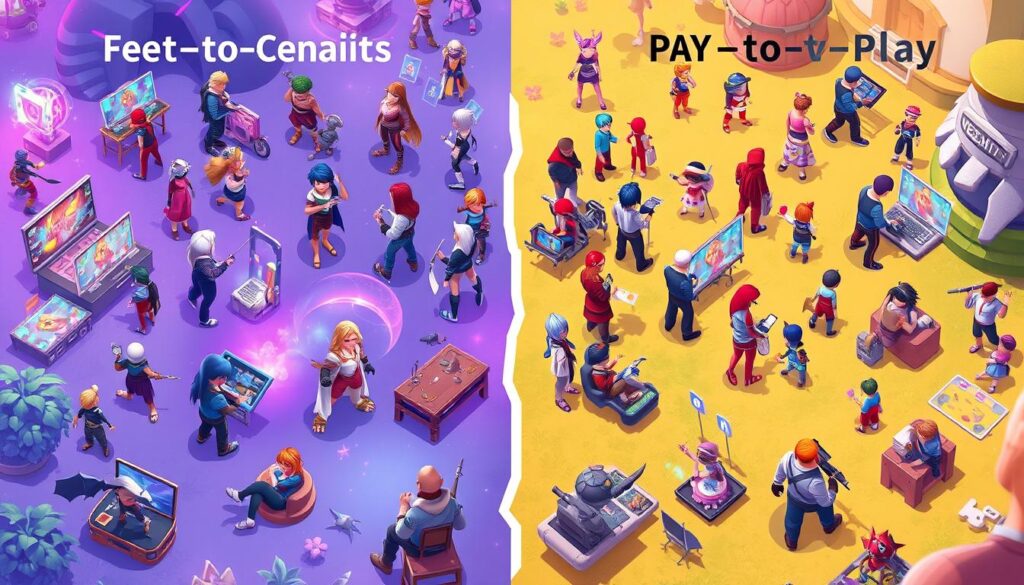
Pay-to-play games, on the other hand, focus on delivering a complete experience from the start. With game balance as a priority, developers can create more intricate gameplay mechanics without the need to incentivize microtransactions.
Community building differs between these models. Free-to-play games often emphasize social features and multiplayer interactions to retain players. Pay-to-play titles may have more dedicated fan bases due to the initial investment required.
| Aspect | Free-to-Play | Pay-to-Play |
|---|---|---|
| Initial Cost | None | Upfront purchase |
| Progression | Often grindy, with purchasable boosts | Balanced, skill-based |
| Content Updates | Frequent, sometimes paywalled | Less frequent, often free or as paid DLC |
| Player Base | Larger, more diverse | Smaller, more committed |
Both models continue to evolve, with hybrid approaches emerging to balance player satisfaction and profitability. The impact on player experience remains a key consideration in modern game development.
Monetization Strategies Across Different Gaming Platforms
Gaming platforms shape how developers make money. Each platform has its own ways to get cash from players. Let’s look at how mobile, console, and PC games bring in the bucks.
Mobile Gaming Economics
Mobile games rule the App Store and Google Play. Most are free to download but make money through in-app purchases. Players buy coins, skins, or power-ups. Ads also bring in cash. Some hit games earn millions daily from these tiny transactions.
Console Gaming Markets
Xbox Live and PlayStation Network changed how console games make money. Digital sales now beat physical copies. Many games offer season passes or extra content for a price. Free-to-play titles like Fortnite proved consoles can use mobile tactics too.
PC Gaming Ecosystem
PC games use a mix of old and new money tricks. Steam and Epic Games Store sell digital copies. But they also host free games that sell in-game items. Some PC games charge monthly fees. Others use crowdfunding to get started. The PC market is wide open for creative ways to earn.
| Platform | Main Revenue Sources | Popular Stores |
|---|---|---|
| Mobile | In-app purchases, Ads | App Store, Google Play |
| Console | Game sales, DLC, Subscriptions | Xbox Live, PlayStation Network |
| PC | Game sales, Microtransactions, Subscriptions | Steam, Epic Games Store |
Each platform offers unique ways to make money. Smart game makers use what works best for their games and players. The key is finding the right balance between profit and fun.
The Future of Gaming Business Models
The gaming industry is on the brink of a revolution, with new monetization strategies emerging. As cloud gaming and game streaming gain traction, traditional business models are being reshaped. This shift is paving the way for innovative approaches to game delivery and revenue generation.
Hybrid Monetization Approaches
Game developers are increasingly adopting hybrid monetization strategies. These blend elements of free-to-play and pay-to-play models. For example, a game might offer a free base version with optional premium content or a battle pass system. This approach aims to cater to diverse player preferences and spending habits.
Blockchain and NFT Integration
NFT gaming and play-to-earn models are gaining momentum. These systems allow players to own and trade in-game assets as unique digital items. While still in its early stages, this technology could transform how players interact with games and virtual economies. It opens up new possibilities for player-driven marketplaces and digital ownership.
Subscription Service Evolution
Subscription-based gaming services like Xbox Game Pass and PlayStation Plus are redefining game access. These platforms offer extensive libraries of games for a monthly fee. As these services evolve, they may incorporate more exclusive content and cloud gaming features. This shift could change how games are developed, marketed, and consumed in the future.
FAQ
What’s the main difference between free-to-play and pay-to-play games?
Are free-to-play games really free?
What are microtransactions in gaming?
How do subscription-based games work?
What is a battle pass system?
How do mobile games typically make money?
What are DLCs and expansion packs?
How are NFTs being integrated into gaming?
What is cloud gaming?
How do game streaming services like Xbox Game Pass work?
