
How player-created rulesets are extending a game’s lifespan
Anúncios

player-created rulesets are extending the relevance of modern titles far beyond their original developer-intended scope in 2026.
This phenomenon represents a seismic shift in how we perceive digital longevity. When a studio stops releasing content, the community often takes the steering wheel.
They create artificial constraints that breathe new life into stale mechanics.
This trend essentially democratizes the creative process of game design. Players are no longer just consumers; they are active architects of their own difficulty.
By implementing strict, self-imposed protocols, they transform casual adventures into brutal tests of patience.
Anúncios
This organic evolution keeps servers full and discussion forums buzzing long after the marketing budget has dried up.
Core Strategic Concepts
- Artificial Scarcity: How restricting resources creates a more intense emotional connection to the gameplay loop.
- Permadeath Challenges: The rise of “Hardcore” variants where a single mistake results in total progress deletion.
- Themed Roleplay: Using established lore to build custom social hierarchies and intricate economic systems within virtual worlds.
- Speedrunning Restrictions: Categorizing runs based on specific bans, such as “Glitchless” or “No Hit” requirements for elite competitors.
Why are these custom challenges becoming so popular?
The main reason player-created rulesets are extending the utility of classic games is the desire for mastery.
High-level players often find that standard difficulty levels no longer provide a significant dopamine hit.
They seek out “Nuzlocke” runs or “No-Death” marathons to validate their deep understanding of the game’s internal code.
These community-driven mandates foster a unique sense of shared struggle. Watching a streamer attempt a “Peaceful” run in a violent action game creates a compelling narrative.
It turns a predictable software experience into a high-stakes performance art piece that attracts thousands of concurrent viewers.
How does the “Nuzlocke” effect work?
Originally designed for monster-catching games, the Nuzlocke rule forces players to release any creature that faints.
This creates an intense emotional bond that the base game rarely achieves. You begin to care about every move because the consequences are finally permanent and personal.
This specific logic has bled into other genres, from survival shooters to grand strategy. By adding stakes that the developers never dared to implement, players find a renewed sense of purpose.
It effectively doubles the replay value without the studio writing a single line of new code.
++ The silent death of traditional tutorials in modern game design
Can developers support these initiatives?
Modern studios are now adding “Challenge Mode” toggles that officially track these community rules. This validation bridges the gap between the creator’s vision and the player’s reality.
When a game acknowledges your “No-Magic” run, it legitimizes the hundreds of hours you spent practicing.
However, the most authentic experiences remain those enforced by the community’s honor system.
The lack of a digital “check” adds to the prestige of the accomplishment. It relies on the integrity of the player, making the final victory feel far more human and earned.
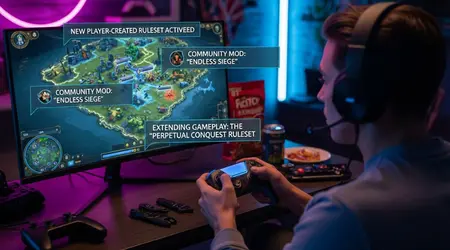
How do these rules affect long-term player retention?
In the current landscape, player-created rulesets are extending the lifespan of titles that would otherwise be forgotten.
Consider the “Hardcore” movement in massive multiplayer games.
It took a twenty-year-old title and made it the most-watched category on streaming platforms overnight by simply banning the ability to resurrect.
This shift proves that modern gamers crave friction. In an era of “quality of life” features that often automate the fun out of a game, players are fighting back.
They are choosing the difficult path, proving that the journey is more important than the digital reward at the end.
Also read: The environmental impact of server-heavy games
What is the role of “Social Contracts”?
In roleplay servers, players agree to follow complex laws and economic rules not found in the game’s manual.
These social contracts create a living, breathing world that evolves based on human interaction. You might be a simple farmer in a game about dragons, simply because the community rules allow it.
This level of immersion is something even the best AI cannot yet replicate. It relies on the unpredictability of human behavior and the collective desire to maintain a fictional reality.
These servers often have waiting lists that span several months, proving the massive demand for structured play.
Read more: Future of multilingual voice acting in games
Does this improve the competitive scene?
By introducing specific bans on powerful items or characters, players create a more balanced environment.
If a certain weapon is deemed “too easy,” the community simply agrees not to use it in high-level play. This organic balancing keeps the meta-game from becoming stagnant or repetitive.
Such grassroots regulation often moves faster than official patches. It allows the competitive scene to remain healthy and diverse even when the developers are busy with sequels.
This agility is why player-created rulesets are extending the viability of e-sports titles across different regions and skill levels.
Why is “Emergent Gameplay” the future of the industry?
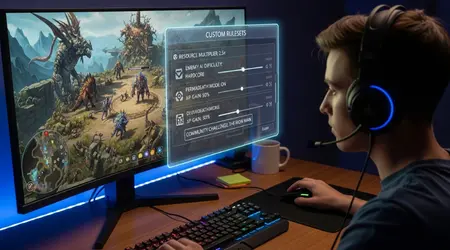
We are seeing that player-created rulesets are extending the conversation around “emergent gameplay.” This is when players use tools in ways the developers never intended.
A grappling hook meant for traversal becomes a weapon of war in a community-run “Airborne Only” tournament.
A recent study by the Interactive Digital Software Association indicates that 65% of players in 2026 engage with at least one community-made mod or rule.
This statistic highlights a fundamental change in the power dynamic between the player and the software provider. The “game” is now just the starting point, not the final destination.
Is there an analogy for this?
Think of a standard game like a box of LEGO bricks with an instruction manual. The developer gives you the manual, but the community decides to throw it away.
They use the same bricks to build something entirely different, proving the versatility of the original foundation.
This creative rebellion is what keeps the industry vibrant. If every player followed the same path, the cultural impact of gaming would vanish within weeks.
Instead, we have a thousand different ways to play the same ten minutes of content, each offering a unique perspective.
How do “Ironman” modes change the psyche?
The “Ironman” ruleset no trading and no help from others turns a social game into a lonely, epic struggle for self-sufficiency.
You cannot simply buy your way to the top; you must earn every resource yourself. This purity of progress is highly addictive and prestigious within the community.
It forces the player to engage with every single mechanic, including the ones they would usually skip. This holistic approach reveals the true depth of the game’s design.
It turns the player into a scholar of the mechanics, finding efficiency in places others never even looked.
Community Ruleset Impact Analysis (2026)
| Ruleset Type | Core Constraint | Target Genre | Lifespan Increase |
| Nuzlocke | Death is Permanent | RPG / Collection | +300% Replayability |
| Speedrun | Minimum Time | All Genres | Infinite Competition |
| No-Hit | Zero Damage Taken | Action / Souls-like | High-Skill Retention |
| Hardcore | One Life Only | MMO / Survival | Massive Social Growth |
| Pacifist | No Kills Allowed | FPS / Stealth | Creative Problem Solving |
The New Era of Digital Autonomy
As we observe how player-created rulesets are extending the reach of our favorite titles, one truth becomes clear: the player is the ultimate content creator.
We have transitioned from an era of passive consumption to one of active, restrictive mastery.
By taking the tools provided and adding our own walls, we have found a freedom that developers could never bake into the code.
This trend is not a sign of a game’s failure to provide content, but a testament to the strength of its core systems.
When a game is good enough that we want to play it under the most miserable conditions, it has truly achieved greatness. In 2026, the best way to love a game is to challenge it to its very breaking point.
Would you rather play a game exactly as intended, or do you prefer the thrill of a self-imposed “Hardcore” challenge? Share your experience in the comments!
Frequent Questions
Are player-created rulesets considered cheating?
Absolutely not. In fact, they are the opposite of cheating because they make the game significantly harder rather than easier.
Most communities view these rules as the highest form of skill expression, requiring more dedication than the standard experience.
Do I need mods to participate in these rulesets?
While some mods help track the rules, most of these challenges are based on the “Honor System.”
You simply promise the community that you are following the rules. Recording your gameplay is the standard way to prove your legitimacy in the digital age.
Why would I want to make my game harder?
Increasing the difficulty often forces you to think more creatively.
When you can’t rely on your usual overpowered tactics, you discover new strategies and appreciate the game’s balance on a deeper level. It turns a routine task into a genuine puzzle.
Can these rulesets be applied to multiplayer games?
Yes, but they usually require dedicated servers or a group of friends who all agree to the same terms.
“Roleplay” and “Hardcore” servers are the most common examples of this in the current multiplayer landscape of 2026.
What is the most popular community ruleset right now?
The “Hardcore Ironman” remains the gold standard. It combines the “one-life” tension with the requirement to be entirely self-sufficient.
It is widely regarded as the ultimate test of both game knowledge and nerves.
