
Creating your own 8‑bit music using modern tools
Anúncios
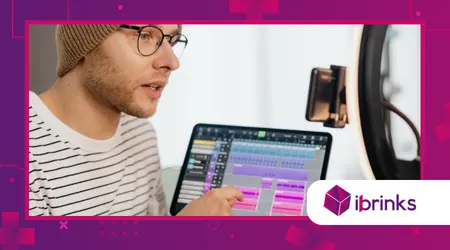
Creating your own 8‑bit music has evolved from a technical necessity of the 1980s into a vibrant artistic movement in 2026.
This digital renaissance allows modern creators to harness the nostalgic power of the Ricoh 2A03 or the legendary SID chip through sleek, contemporary interfaces.
Aspiring composers no longer face the daunting task of coding raw assembly to generate a simple square wave.
Today, the accessibility of sophisticated software has democratized chiptune production, making it possible for anyone to craft infectious, lo-fi melodies from a laptop.
Quick Navigation
- The Chiptune Essence: Understanding the raw waveforms and hardware limitations.
- Modern Workflows: Comparing trackers, DAWs, and VST plugins for 8-bit sound.
- Compositional Logic: Mastering the art of the arpeggio and limited polyphony.
- The 2026 Landscape: New tools and community trends in the retro-audio scene.
What are the essential tools for 8-bit production?
Mastering the process of Creating your own 8‑bit music requires a blend of specialized software that emulates the grit of vintage sound chips.
Anúncios
Most professionals in 2026 oscillate between traditional “trackers” like Famitracker and modern Digital Audio Workstations (DAWs) equipped with authentic plugins.
Trackers offer a vertical approach to composition that mirrors the workflow of early game developers.
This method forces you to think within the constraints of four or five channels, which is the secret to capturing that authentic NES or Game Boy aesthetic.
++ Exploring text‑adventure games before graphics
Why choose trackers over standard DAWs?
Trackers provide precise control over “effects columns,” allowing users to manipulate pitch slides and vibrato with surgical accuracy.
This granular level of detail is essential for simulating the iconic “wah-wah” sounds heard in classic Mega Man soundtracks.
Modern trackers now support MIDI input, bridging the gap between old-school sequencing and tactile performance.
They allow you to visualize the music as a stream of hexadecimal data, which strangely simplifies complex polyphonic arrangements.
Also read: The appeal of playing monochrome early Game Boy titles
Which VST plugins offer the best retro authenticity?
If you prefer a horizontal timeline, plugins like Plogue Chipsounds or the free Magical 8bit Plug 2 are indispensable. these tools recreate the specific electrical quirks and aliasing noise of 80s hardware with remarkable fidelity.
Many producers combine these vintage sounds with modern mixing techniques to create “bitpop.”
This hybrid genre proves that 8-bit textures can thrive alongside high-fidelity drums and lush, contemporary synth pads.

How can you master the constraints of chiptune?
A central challenge in Creating your own 8‑bit music is managing the severe limitation of simultaneous sounds.
Vintage consoles often lacked true polyphony, forcing composers to use rapid-fire arpeggios to trick the human ear into hearing full chords.
Think of it as weaving a tapestry with only three threads. You must alternate the focus between the melody, the harmony, and the percussion to maintain a dense, driving energy.
Read more: Revisiting point-and-click adventures of the ’90s
What is the secret to 8-bit percussion?
Most 8-bit systems utilize a “noise channel” to generate percussive sounds like snares and hi-hats.
By adjusting the pitch and decay of white noise, you can create a surprisingly punchy drum kit that cuts through the mix.
Some composers use the Triangle wave channel for a deep, sub-heavy kick drum. This technique requires sacrificing a melodic bassline, highlighting the constant trade-offs inherent in the genre’s structural design.
How do arpeggios replace complex chords?
Since you cannot play three notes at once on a single channel, you cycle through them at lightning speed.
This creates a shimmering, harmonic “blur” that has become the most recognizable hallmark of the 8-bit sound.
Effective arpeggios require precise timing to avoid sounding like a chaotic mess. In 2026, modern tools allow you to sync these cycles perfectly to your project’s master tempo for a cleaner, more professional finish.
Why is the 8-bit aesthetic still relevant in 2026?
The global interest in Creating your own 8‑bit music stems from a desire for simplicity in an era of infinite digital choices.
According to data from the Global Independent Music Report 2025, lo-fi and retro-inspired tracks saw a 22% increase in streaming engagement.
This trend suggests that listeners crave the raw, emotional directness of limited waveforms. The 8-bit sound acts as a sonic shorthand for adventure, challenge, and pure, unadulterated digital joy.
How does nostalgia influence modern sound design?
Retro sounds evoke a specific “warmth” that high-resolution digital synthesizers often lack.
This perceived imperfection adds character and soul to a track, making it stand out in a crowded marketplace of overly polished productions.
Creators often use 8-bit motifs as “ear candy” in pop or electronic tracks. This subtle nod to the past builds an immediate bridge of familiarity with audiences who grew up with a controller in hand.
Is chiptune becoming a mainstream professional tool?
Game developers and indie filmmakers increasingly commission original chiptune scores to differentiate their projects.
This demand has turned a niche hobby into a viable career path for many talented digital composers.
The community remains highly collaborative, with open-source libraries and forums sharing complex instrument patches.
This culture of transparency ensures that the art form continues to evolve while respecting its historical roots.
Authentic 8-Bit Hardware vs. Modern Software Emulation
| Feature | Vintage Hardware (SID/2A03) | Modern VST/Software |
| Sound Quality | Raw, analog warmth with noise | Clean, predictable, high-res |
| Ease of Use | Difficult (requires coding) | High (drag-and-drop) |
| Flexibility | Fixed 3-5 channels | Unlimited layers and tracks |
| Cost | Expensive (modding required) | Mostly free or affordable |
The journey of Creating your own 8‑bit music is a rewarding exploration of how limits can spark immense creativity.
By embracing the square wave and the noise channel, you connect with a legacy that spans decades of gaming history.
Whether you use a vintage tracker or a modern DAW, the goal remains the same: capturing a sense of wonder in a handful of bits.
Today’s tools offer the perfect balance of convenience and grit, allowing your imagination to run wild within the 8-bit frame.
Share your experience in the comments or tell us which retro chip inspires your latest project!
Frequently Asked Questions
Do I need to know how to read music to make 8-bit tracks?
No, many trackers use a grid system that relies more on patterns and numbers than traditional staves.
Is it legal to use samples from old games?
Sampling actual game files can lead to copyright issues; it is always safer to synthesize your own sounds using VSTs.
Can I make 8-bit music on my phone?
Yes, several mobile apps now offer simplified tracker interfaces or 8-bit synth modules for composing on the go.
What is the best way to get a “Game Boy” sound?
Look for “LSDJ” or emulators of the LR35902 chip, which focus heavily on the unique pulse wave duty cycles.
Why does my 8-bit music sound too “clean”?
Try adding a bit of downsampling or a subtle “crush” effect to simulate the lower bit-depth of vintage audio outputs.
