
How club-based competition differs from traditional esports leagues
廣告
Club-based competition transforms professional esports into an integrated, multi-title organizational model that operates fundamentally differently from traditional single-game franchise leagues.
Across the global competitive ecosystem, major esports organizations are shifting away from publishers’ closed-loop franchise systems such as the Overwatch League or League of Legends Championship Series to build unified, cross-game brands capable of competing across dozens of distinct titles simultaneously.
This architectural shift redefines financial sustainability, audience retention, and competitive strategy for modern esports entities.
While classical franchise leagues force teams into single-game silos with steep buy-in fees, multi-discipline organizations leverage operational scale, cross-promotional fan bases, and unified sponsorship portfolios.
Consequently, this structural evolution provides a resilient blueprint for international competitive gaming in 2026.
廣告
What to Expect in This Analysis
- Defining the Shift: How multi-title operational structures challenge classic publisher-owned franchise models.
- Economic Mechanics: Why diversified revenue streams and global multi-game tournaments stabilize organization finances.
- Fan Loyalty & Retention: How multi-game club identities retain audiences across changing gaming meta trends.
- Comparative Data Table: Direct comparison between franchise leagues and club-focused frameworks.
- The Future Horizon: Strategic implications for global esports investments and publisher partnerships.
What Is the Core Concept Behind Multi-Title Esports Organizations?
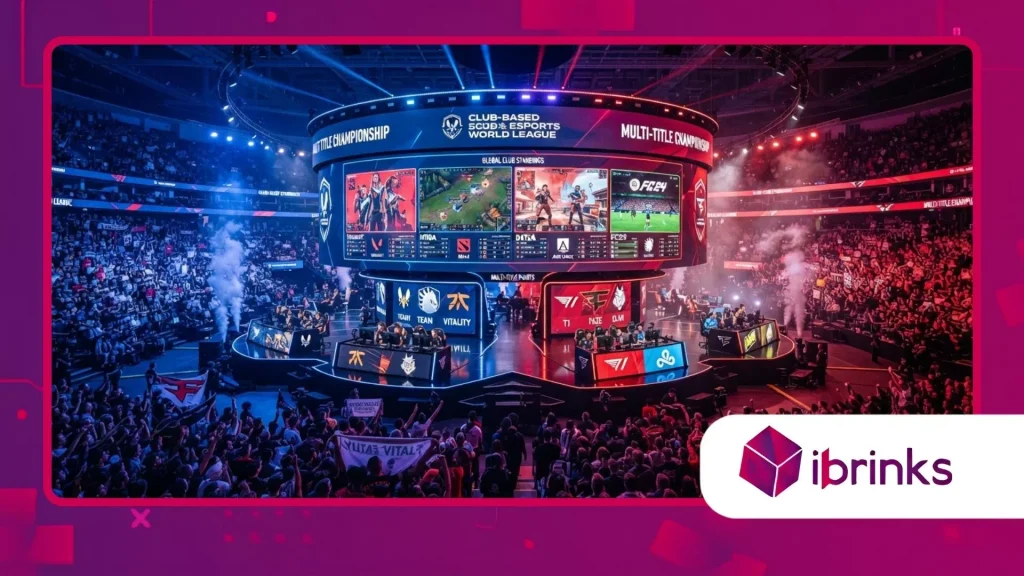
How do multi-game organizations restructure modern esports operations?
Modern competitive gaming relies heavily on operational diversification to protect multi-discipline organizations against game-specific decline and publisher volatility.
一個 club-based competition framework allows a single organization to manage distinct rosters across titles like 反恐精英2, Dota 2, 火箭聯盟, 和 Apex英雄 under one cohesive global identity.
Instead of investing fifty million dollars into a single franchise slot tied exclusively to one publisher’s title, organizations allocate capital across multiple competitive scenes.
This strategy shields entities from sudden balance patches, developer bankruptcy, or dropping player numbers that routinely affect single-game environments.
As a result, cross-title operations maximize asset utilization while minimizing systemic exposure to single-product lifecycles.
Why are single-game franchise leagues losing ground to flexible multi-title models?
Publishers that enforced rigid region-locked franchising faced severe financial strains when inflated media rights failed to materialize over long-term broadcasting windows.
Closed-loop systems restricted teams from competing in third-party international invitationals, effectively walling off regional fan bases and stifling organic international rivalries.
In contrast, multi-discipline structures align directly with global third-party tournament circuits, such as the Esports World Cup initiative in Riyadh, which offers substantial multi-game prize pools for club performance across titles.
Organizations like Team Liquid, Falcons, and Team Secret demonstrate that multi-title rosters drive significantly higher global media reach than isolated regional franchises.
Therefore, flexible organizational architectures naturally attract global commercial partnerships seeking broad gaming demographic reach.
How Does Organizational Diversification Drive Sustainable Esports Growth?

How do shared resources and unified branding reduce operating overhead?
Operating under a club-based competition structure grants teams exceptional operational efficiency by centralizing performance, marketing, legal, and administrative infrastructure across all competitive rosters.
A centralized coaching staff, sports psychology unit, and content creation pipeline support rosters across ten different titles within a single corporate framework.
When a club signs an international sponsor, the brand gains immediate visibility across multiple global esports audiences simultaneously rather than reaching a single game’s demographic.
This cross-pollination lowers player acquisition costs, amortizes high overhead expenses, and dramatically increases total lifetime sponsorship value.
Consequently, unified operational management creates stable corporate foundations in an industry historically known for volatile cash flow.
另請閱讀: 遊戲錦標賽中多類型賽制的興起
What financial advantages do multi-game clubs hold over franchised teams?
Franchise league participants frequently struggle with fixed franchise payments, strict publisher salary caps, and limited revenue-sharing opportunities.
Multi-title organizations, conversely, tap into independent tournament operators, direct digital item revenue across diverse games, and broad merchandising channels.
Research by Newzoo indicates that multi-title sponsorship packages generate higher commercial conversion rates because brand exposure spans continuously throughout the calendar year across overlapping tournament schedules.
When one game enters an off-season, another active roster maintains brand visibility and sponsorship deliverables without operational pauses.
Ultimately, this constant competitive presence builds consistent cash flows and insulates organizations from seasonal revenue drops.
Why Is Fan Engagement Stronger in Cross-Game Competitions?

How do multi-discipline clubs cultivate long-term viewer loyalty?
Traditional esports leagues rely on geographic location or single-game preference to build fan bases, whereas a club-based competition builds brand loyalty that transcends specific game titles.
Fans follow the club’s crest, culture, and iconic personalities whether the organization is competing in a tactical shooter, a battle royale, or a real-time strategy title.
This emotional connection mirrors classic multi-sport entities like Real Madrid or Barcelona, where supporters follow the club across football, basketball, and handball.
When a specific game drops in popularity, fans simply pivot their viewership to the club’s active rosters in newly emerging competitive games. Thus, organizational affinity permanently replaces transient game-specific interest.
閱讀更多: 資料所有權如何影響全球遊戲錦標賽
What role do global multi-game tournaments play in cementing club prestige?
Global multi-title tournaments reward organizational depth by offering overall club championship trophies alongside individual game titles.
These events encourage clubs to scout, acquire, and nurture elite talent across a wide spectrum of competitive genres to maximize overall championship point standings.
The competitive narrative shifts from “Who is the best Dota 2 team?” to “Which organization dominates the entire global esports landscape?”
This elevated narrative captures mainstream interest, boosts digital content engagement, and creates compelling storylines for global broadcast partners.
Is the future of competitive gaming defined by publisher-owned borders, or by global sports brands commanding multi-game empires? The trajectory clearly favors unified multi-title supremacy.
Key Operational Differences: Franchise Leagues vs. Club-Based Frameworks
| Operational Metric | Traditional Single-Game Franchise Leagues | Global Multi-Title Club Frameworks |
| Publisher Control | High (Monopolistic closed-loop ecosystem) | Flexible (Multi-publisher ecosystem participation) |
| Capital Allocation | Concentrated heavily in single-game franchise fees | Diversified across multiple active rosters and titles |
| Sponsorship Reach | Restricted to a single title’s active player base | Continuous exposure across multiple global gaming communities |
| Revenue Resilience | Vulnerable to single-game viewership drops | Protected by diversified competition schedules |
| Fan Base Longevity | Tied directly to individual game lifecycles | Sustained through overarching organizational brand loyalty |
What Lies Ahead for Organizational Competition in Modern Esports?
Strategic realignment toward a club-based competition model represents a permanent shift toward financial maturity, operational scale, and sustainable commercial structures in global esports.
Organizations that embrace multi-title agility navigate publisher changes, economic shifts, and audience preferences far more effectively than single-game franchise participants.
By building resilient brand equity that crosses game boundaries, these entities create lasting value for investors, sponsors, and global fan bases alike.
As the international competitive landscape continues to consolidate, multi-discipline organizations will undoubtedly set the standard for professional gaming excellence. Share your thoughts on this operational evolution in the comments below!
常見問題解答
What defines a multi-title gaming organization?
A multi-title gaming organization is a single professional entity that operates separate competitive rosters across multiple video game titles simultaneously under a single brand identity.
This operational structure centralizes administrative, marketing, and performance resources while building cross-game brand equity.
By competing across diverse competitive titles, these organizations insulate themselves from single-game popularity cycles and maintain year-round commercial visibility for global sponsorship partners.
Why are publishers moving away from single-game franchise leagues?
Publishers are moving away from closed franchise leagues due to high operational costs, declining broadcaster rights fees, and rigid financial commitments that limited team profitability.
Franchise models often restricted organic ecosystem growth and prevented cross-regional competition.
By partnering with independent multi-title tournament operators, publishers reduce direct production costs while keeping their competitive titles visible within larger, globally recognized multi-game events.
How do multi-game organizations monetize their brand across different titles?
Multi-game organizations monetize their brand by offering sponsors integrated packages that guarantee visibility across several high-profile gaming titles throughout the year.
They also generate income from cross-game merchandise sales, digital in-game items, performance prize pools, and exclusive content creator partnerships.
This revenue diversification ensures financial stability even if one specific game market experiences a temporary downturn.
Do fans remain loyal when an organization enters a new game?
Yes, multi-game organizations build strong brand cultures and identity markers that encourage supporters to follow their rosters into newly launched competitive titles.
By leveraging high-profile creators, memorable team branding, and consistent community interaction, clubs successfully transfer audience engagement from established titles to new esports titles.
This cross-title fan migration provides instant viewership for emerging competitive scenes.
How does a club-based competition affect player scouting and development?
This model streamlines player scouting and talent development through centralized training facilities, shared analytical tools, and standardized performance management protocols.
Clubs apply unified sports psychology, athletic training, and nutritional support across all active rosters regardless of the specific game title.
This professional infrastructure improves player performance, extends competitive careers, and allows successful management strategies to be replicated across diverse competitive squads.
