
The role of AI coaching in top tier Gaming Championships: preparing players for 2026

The role of AI coaching in top tier Gaming Championships has moved from theoretical concept to indispensable training tool by 2025.
Anúncios
Pro eSports teams now rely on sophisticated artificial intelligence to gain micro-advantages that human eyes often miss. The next generation of champions is being forged in data.
This technological integration is fundamentally changing how players prepare for major tournaments in 2026 and beyond.
AI offers unparalleled depth in analyzing opponent patterns, optimizing rotational strategies, and refining individual mechanical execution. It’s the ultimate, unbiased performance analyst.
What Functions Does AI Coaching Fulfill in Elite Training?
AI coaching systems are distinct from simple statistics trackers. They employ machine learning models to synthesize vast amounts of game data.
They identify subtle, systemic weaknesses in both individual players and team synergy.
These platforms operate as tireless, objective analysts, processing thousands of hours of competitive play instantly.
They provide actionable insights that human coaches can then implement in practice routines.
++ Why mobile-only tournaments are defining the future of the Gaming Championship scene
How Does AI Analyze Opponent Strategies?
AI models ingest historical tournament data from rival teams. They identify high-probability play patterns under specific game states, which reveals hidden tendencies.
This predictive analysis is crucial for drafting and counter-strategy.
For instance, the AI can detect that a specific opponent typically initiates an aggressive push within the first 30 seconds after securing a certain map objective. This allows for calculated, preemptive defensive maneuvers.
Also read: How the next-gen Gaming Championship is built around hybrid online/offline formats
Why is Data Granularity Essential for Individual Performance?
AI breaks down individual player performance into minute, measurable units.
It tracks mechanical metrics like reaction time, cursor placement accuracy, and ability usage efficiency with extreme precision. No human coach can manually process this level of detail.
The AI highlights skill deterioration under pressure or fatigue, providing objective evidence for targeted training exercises. It ensures every player maximizes their mechanical consistency during crunch moments.
Read more: How Spectators Are Becoming Players in Interactive Gaming Championship Broadcasts
How Does AI Optimize Team Composition and Role Assignments?
Beyond skill tracking, AI systems test millions of team compositions and in-game role assignments against specific opponent profiles. This helps coaches find the highest-win-rate combination for a given tournament meta.
This capability moves lineup decisions beyond intuition and tradition, rooting them firmly in statistical probabilities.
It allows teams to exploit subtle power spikes or counter specific weaknesses the AI has identified.
What is the Difference Between Standard Analytics and True AI Coaching?
Standard analytics provide historical reporting (what happened and when).
True AI coaching uses machine learning to offer prescriptive recommendations (what will happen and what should be done). This forward-looking approach is the key differentiator.
True AI can simulate counter-scenarios against known opponents, allowing teams to practice against the most statistically dangerous version of their rival’s strategy before the match even begins.

How Does AI Enhance the Human Coaching Role, Not Replace It?
The widespread integration of AI does not sideline the human coach; rather, it elevates their role to a strategic director and psychologist.
The human element remains vital for interpretation, motivation, and applying the data in real-time.
The human coach’s skill now lies in translating complex algorithmic findings into simple, motivational instructions that players can execute fluidly under tournament pressure. The partnership between AI and human expertise is symbiotic.
Why Is Interpreting Context Critical for Human Coaches?
AI delivers objective data but cannot account for subjective factors like player mood, jet lag, or mid-match psychological dynamics.
The human coach must interpret the data within the context of the players’ emotional and physical state.
A human coach understands when to push a player based on AI findings and when to offer psychological support. This delicate balance of data and empathy defines the modern coach.
How Do AI Tools Improve Scrimmage Efficiency?
AI platforms significantly increase the efficiency of practice matches (scrimmages).
They can pause the replay instantly after a critical mistake and explain the optimal decision tree at that exact moment. This instant feedback loop is immensely powerful.
This focused, data-driven critique saves hundreds of hours of manual VOD (Video On Demand) review. It allows teams to dedicate more practice time to actual execution rather than merely identifying errors.
The ‘Mid-Lane Timeout’ Scenario
Consider Team Ascent during a critical game. Their AI system, running in the background, flags a historically low-win-rate strategy initiated by the mid-laner.
The human coach, seeing this pattern confirmed by the AI, calls a tactical pause. The coach uses the AI data to pivot the mid-laner to a safer rotation instantly, saving the game.
The AI provided the warning, but the human made the high-stakes, real-time command decision under pressure. This partnership proves The role of AI coaching in top tier Gaming Championships is cooperative.
What Are the Ethical and Competitive Concerns Surrounding AI?
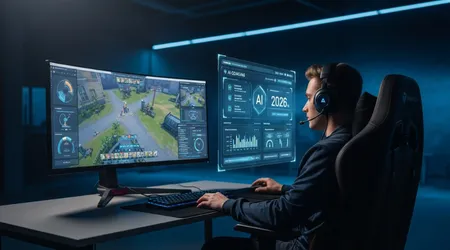
The rapid integration of AI coaching raises serious questions regarding fair play, access equality, and the integrity of the competitive environment.
The eSports ecosystem must proactively address these challenges to ensure a level playing field in 2026.
If only the wealthiest teams can afford the most advanced proprietary AI systems, the talent gap will widen drastically. This disparity threatens the fundamental competitive balance of eSports.
Why Is “AI Homogenization” a Potential Problem?
If every top team uses the same core AI framework to identify and exploit the same statistically optimal strategies, competitive gameplay risks becoming stale and predictable.
This “AI Homogenization” could reduce the creative human spark in competition. Spectators value the unpredictable genius of human decision-making.
If games become purely algorithmic execution, the entertainment value may decline, damaging the overall ecosystem.
How Does The Role of AI Coaching in Top Tier Gaming Championships Affect Access and Equity?
Proprietary AI systems developed by organizations like TSM or Cloud9 represent massive financial investments. Smaller, less funded teams cannot compete with this level of analytical depth.
This creates a systemic financial barrier, reinforcing the dominance of established teams. Governing bodies, such as the ESL or Riot Games, must ensure basic, high-quality analytical tools are universally available.
Regulating Real-Time Assistance
Imagine a new AI system that provides real-time “ping alerts” to a player based on micro-shifts in an opponent’s camera angle.
If this system is deemed “unfair assistance,” organizers must implement technical regulations to detect and ban its use, similar to hardware cheat detection.
The competitive rules must constantly evolve to define the line between permissible advanced analysis and forbidden automation or unfair advantage.
What Does the Future of AI Coaching Look Like in 2026?
Looking forward to 2026, AI coaching will become less about identifying past mistakes and more about predictive, adaptive training models.
The technology will integrate psychological metrics and physiological data to optimize human performance wholly.
The future champions will be those who best integrate the AI’s data into their human intuition. The synthesis of mechanical precision and strategic brilliance, guided by data, will define the next meta.
How Will AI Integrate Physiological Data?
Future AI systems will ingest real-time physiological data (heart rate, galvanic skin response, eye-tracking) to build highly personalized stress models. The AI will learn a player’s performance threshold under pressure.
Training regimens will be adapted to expose players to environments that maximize performance just below the point of mental burnout. This hyper-personalized training is the next frontier.
What is the Concept of “Adversarial Training” in AI Coaching?
Adversarial training involves creating AI opponents designed to exploit a specific individual player’s documented weakness relentlessly. The AI acts as a custom-built, ruthless training partner.
This forces the player to quickly adapt and overcome deeply ingrained bad habits in a controlled environment. The continuous refinement offered by this method provides an immense competitive advantage.
| Coaching Layer | Primary Function | Advantage Over Human Coach | Impact on Player |
| Layer 1: Data Analytics | Historical pattern identification; statistical reporting. | Processes 10,000+ games instantly. | Highlights systemic team weaknesses. |
| Layer 2: Machine Learning | Predictive counter-strategy; optimal composition testing. | Simulates millions of counter-scenarios. | Improves drafting and in-game strategic pivots. |
| Layer 3: Physiological AI (2026) | Real-time stress and fatigue assessment; cognitive load modeling. | Objectively measures human limits under pressure. | Optimizes training schedule and prevents burnout. |
Conclusion: The New Era of eSports Preparation
The role of AI coaching in top tier Gaming Championships is now cemented as the most powerful analytical tool in eSports.
It provides the objective data necessary to refine human skill to an almost perfect state. This technology is creating a new competitive standard.
The challenge for teams in 2026 will not be if they use AI, but how effectively they use it integrating its cold, hard data with the fluid, creative genius of human players.
We stand at the threshold of algorithmic eSports dominance. Is human instinct becoming obsolete, or merely sharpened by data? Share your predictions for the next championship meta below.
Frequently Asked Questions
Does AI Coaching replace the human head coach?
No, AI coaching does not replace the head coach. It serves as an advanced analytical tool. The human coach remains crucial for team leadership, motivational psychology, and real-time decision-making during the match.
Is AI coaching legal in major eSports tournaments?
Current rules allow the use of AI for pre-match analysis and practice VOD review.
However, real-time AI assistance during a live match (like automated mini-map pings or movement corrections) is strictly illegal and treated as cheating.
What types of games benefit most from AI coaching?
Games with deep complexity, highly granular mechanics, and vast amounts of data benefit the most.
This includes popular Massive Online Battle Arenas (MOBAs) like League of Legends and Dota 2, and complex Real-Time Strategy (RTS) games.
What is the most significant competitive advantage AI offers?
The most significant advantage is unbiased data-driven decision-making. AI eliminates human bias and emotional judgment, ensuring strategies are based on pure statistical probability of success.
What are “VOD reviews,” and how does AI improve them?
VOD (Video On Demand) reviews are when teams watch recorded game footage to analyze mistakes.
AI improves them by instantly tagging critical moments, classifying errors, and providing immediate optimal play suggestions, drastically speeding up the learning process.
