
The rise of multiplayer microcultures inside massive games
Anúncios
Multiplayer microcultures are completely rewriting the rules of modern gaming inside massive digital landscapes right now.
Millions of players gather daily in sprawling open worlds, not to fight bosses, but to build highly specific communities with unique social norms.
This organic evolution transforms standard game servers into living digital cities, housing everything from virtual taxi services to localized roleplay economies.
Developers no longer fully control the social destiny of their games; instead, players invent completely unscripted ways to connect, socialize, and interact.
A Blueprint of This Digital Transformation
- The Ecosystem: Analysis of how emerging social behaviors alter corporate game design.
- Economic Impacts: Examination of in-game financial systems driven entirely by grassroots player agreements.
- Community Survival: Investigation into how these unique societies maintain internal order.
What Are Multiplayer Microcultures and Why Do They Exist?
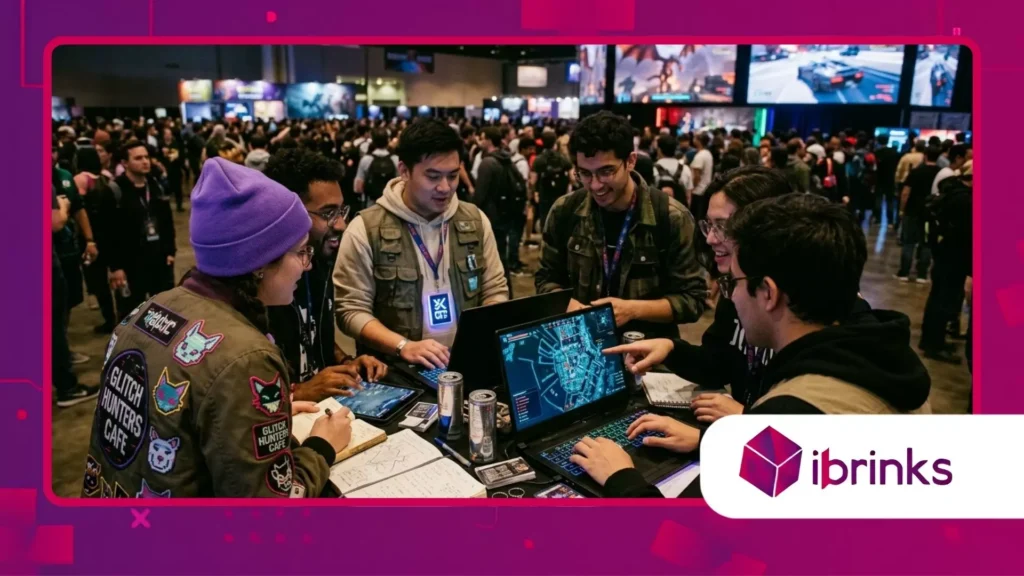
Modern video games function like massive metropolitan areas, providing the infrastructure while citizens build the actual culture.
Anúncios
When millions of users occupy a single shared space, they naturally fragment into smaller, localized groups to combat digital loneliness.
This fragmentation yields multiplayer microcultures that establish independent social rituals, slang, and traditions entirely separate from the main gameplay loop.
Think of these communities as distinct neighborhoods within an enormous digital mega-city, each operating with its own unspoken laws.
Have you ever entered a game server only to find players hosting an elaborate, unscripted fashion show instead of completing quests?
This happens because humans inherently crave intimate, meaningful connections, forcing them to reshape rigid software into flexible social hubs.
How Do Players Invent Unscripted Roles?
Gamers routinely abandon developer-intended pathways to fill critical sociological gaps within their favorite virtual societies.
In sandbox environments like Grand Theft Auto Online, certain groups form dedicated, non-violent roadside assistance crews to rescue stranded players.
They sacrifice combat progression to provide essential services, proving that communal utility often outvalues virtual scoreboards.
These self-assigned roles foster immense mutual respect and deep institutional knowledge among community members over long periods.
Veteran players train newcomers through word-of-mouth traditions, creating lasting social structures that mimic real-world apprenticeships and professional guilds.
++ Why multiplayer migration shapes gaming communities in 2026
Why Do These Groups Ignore Main Game Objectives?
Many digital societies deliberately reject intended game mechanics to pursue alternative forms of collective fulfillment and creative expression.
For instance, a dedicated faction in a survival game might establish a neutral, heavily guarded trading post where fighting is strictly banned.
They spend hundreds of hours gathering cosmetic items and resources just to facilitate peaceful commerce between rival factions.
By ignoring standard victory conditions, these groups build sustainable social ecosystems that extend the lifespan of a title by years.
They find greater satisfaction in maintaining a functioning, peaceful community than in achieving a generic “Victory Royale” screen.
Also read: Use polls to shape your community roadmap
Where Can We Observe These Social Behaviors Growing?
We see these fascinating communal developments flourishing across massive multiplayer platforms like Roblox, Minecraft, and various high-population MMORPG servers.
In Final Fantasy XIV, players meticulously design intricate, fully staffed virtual nightclubs, complete with real-time DJs streaming music via external platforms.
These spaces attract thousands of concurrent visitors weekly who gather solely to converse, dance, and show off complex customized outfits.
This behavior turns games into pure social platforms, where the underlying software merely acts as an interactive background for human relationships.
The game stops being a competitive product and instead becomes a canvas for genuine, unpredictable human interaction.
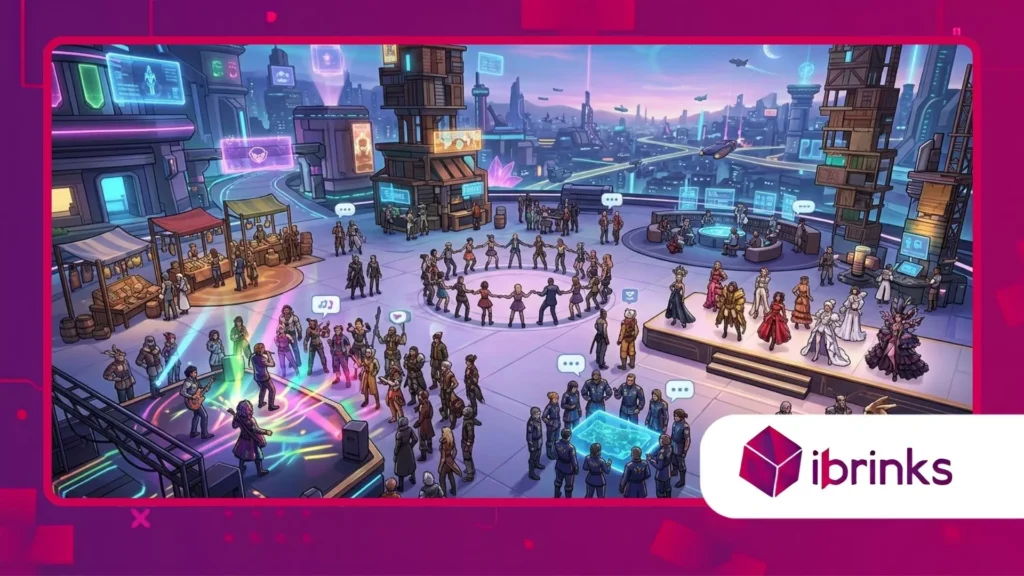
How Do Emerging Social Dynamics Reshape Game Design?
Game development studios now actively monitor these organic player behaviors to guide their corporate roadmaps and future mechanical updates.
When designers observe a specific community ritual gaining massive popularity, they often update software to support that specific player-driven behavior.
Consequently, multiplayer microcultures wield immense power over multi-million-dollar corporations by showing exactly how modern audiences want to interact.
A study published by the Entertainment Software Association (ESA) recently highlighted that over 70% of active multiplayer gamers prioritize deep community features over graphics.
This statistical reality forces developers to shift away from rigid, linear designs toward flexible systems that empower grassroots communities.
Instead of dictating how a game must be played, modern studios provide the blank bricks and let players build the cities.
Read more: The appeal of retro RPG difficulty today
What Architecture Encourages Community Independence?
To cultivate organic societies, modern game engines must prioritize deep customizability, flexible private servers, and robust expressive tools like emotes.
When developers give players advanced tools to modify environments, they pave the way for unique regional traditions to blossom.
Without these open-ended design frameworks, user interactions remain highly predictable, sterile, and restricted by the base code.
The most successful modern titles act as empty digital canvases, allowing players to paint their own complex social rules.
When a game offers deep structural freedom, communities naturally step in to invent something far more engaging than any corporate script.
How Do Economy and Trade Fuel Group Identity?
In-game economies often evolve into highly complex systems when players establish their own fiat currencies or strict barter agreements.
In certain space simulation games, specific player cartels control the distribution of rare fuel minerals across entire solar systems.
They negotiate complex trade treaties, enforce embargoes, and hire real player mercenaries to protect their precious commercial shipping lanes.
These player-led markets generate deep political intrigue and intense collective loyalty, making every financial transaction feel meaningful.
The economy becomes a living narrative device, driven entirely by supply, demand, and absolute trust between community members.
Why Do Developers Struggle to Control Server Politics?
Corporate moderation teams frequently find it impossible to police the incredibly nuanced political landscapes that emerge within massive community servers.
When a dispute arises between two prominent digital factions, the conflict usually resolves through complex diplomacy rather than developer intervention.
Forcing heavy-handed corporate rules onto a mature social ecosystem often alienates the most dedicated, high-value player bases.
Smart developers choose to act as distant, neutral observers rather than active, authoritarian dictators within these digital worlds.
They allow communities to self-govern, intervene only during severe rule violations, and let internal social pressures resolve routine cultural conflicts.
What Is the Global Impact of Virtual Communities?
The cultural phenomena born inside virtual boundaries regularly spill over into real-world pop culture, global economics, and digital language.
Internet slang, fashion aesthetics, and specific social trends frequently originate within a niche gaming server before dominating global social media platforms.
The ongoing evolution of multiplayer microcultures proves that digital worlds are no longer isolated escapes from reality, but active incubators for global culture.
This cultural exchange creates a profound borderless melting pot where players from entirely different backgrounds forge deep, lifelong connections.
A teenager in Tokyo and a college student in London can easily co-found a highly influential digital faction together.
This shared digital heritage breaks down traditional geographic barriers, fostering genuine global understanding through the simple act of collaborative, unscripted play.
How Does Virtual Slang Travel to the Real World?
Unique phrases, terminology, and inside jokes coined during intense multiplayer sessions quickly migrate to mainstream social media platforms like TikTok.
When a specific gaming community popularizes a funny shorthand term for a complex tactical situation, it catches on globally.
Soon, millions of internet users repeat the phrase daily without ever knowing its original competitive gaming roots.
This linguistic drift shows how deeply embedded virtual societies have become in the collective consciousness of modern youth.
Digital worlds are rewriting how we communicate, changing our vocabulary one viral, unscripted gaming moment at a time.
Why Is Digital Space Becoming the New Town Square?
For younger generations, traditional physical gathering spaces like malls or parks are increasingly replaced by vast, interactive virtual environments.
These digital platforms offer a safe, highly customizable space to hang out, share ideas, and build deep friendships without financial barriers.
Within these worlds, multiplayer microcultures provide a profound sense of true belonging that traditional social media feeds completely fail to deliver.
The interactive nature of a shared virtual world creates far stronger social bonds than simply scrolling past static photo updates.
It offers a living, breathing community square where people actually live, work, and play together across vast distances.
What Does the Future Hold for Virtual Social Spaces?
As virtual reality and cloud computing technologies advance rapidly, these digital societies will become vastly more immersive, complex, and economically significant.
We will see the emergence of fully persistent virtual nations operating with their own codified laws, specialized careers, and distinct cultural arts.
The line separating our physical lives from our deeply cherished digital communities will continue to fade into irrelevance.
The future of internet interaction lies not in flat text feeds, but in these vibrant, three-dimensional spaces built by passionate users.
As these environments expand, the unique societies thriving within them will undeniably dictate the broader trajectory of human digital culture.
The data below outlines how different player archetypes organize within massive game spaces, showcasing the diverse structures of modern digital societies.
| Microculture Type | Primary Activity | Internal Governance | Real-World Impact |
| Virtual Logistics | Roadside rescue, fuel transport | Strict corporate hierarchy | Inspires real-world logistics training apps |
| Digital Hospitality | Managing clubs, hosting events | Democratic staff teams | Spawns independent music and DJ streams |
| Economic Cartels | Controlling rare resource trade | Council of senior traders | Drives real-world secondary market economies |
The Permanent Shift in Digital Human Connection
The incredible rise of these decentralized societies signals a beautiful, permanent shift in how humanity utilizes massive digital networks.
Video games are no longer mere toys designed for isolated amusement; they are magnificent, living laboratories for human culture, democracy, and connection.
By organizing themselves into highly sophisticated multiplayer microcultures, players have successfully reclaimed the internet from sterile corporate algorithms.
As technology advances through 2026 and beyond, these community-driven spaces will continue to redefine entertainment, economy, and global communication.
The true magic of modern gaming does not reside in the code created by developers, but in the unscripted stories written by players.
What unique virtual community or secret digital tradition have you discovered during your online adventures? Share your experience in the comments below and let us explore how these hidden worlds are changing our digital lives forever.
Frequently Asked Questions
How do multiplayer microcultures start inside a massive game?
They typically form when a small group of players decides to ignore the main objectives to pursue a unique, self-created social activity or service.
Can developers shut down these player-made communities?
While developers have the technical power to change game mechanics, doing so usually causes immense community backlash and can destroy the game’s player base.
Do these digital societies have a real financial impact?
Yes, many player-driven groups manage complex internal economies that influence real-world trading markets, content creation revenue, and secondary cosmetic sales.
