
Por que o futuro dos jogos pode ser menos sobre lançamentos e mais sobre mundos.
Anúncios
O future of games is shifting dramatically away from traditional standalone releases toward persistent, evolving digital worlds that function as long-term social ecosystems.
Players and studios are moving past the old cycle of buying a new game every year, preferring spaces where identities, communities, and digital economies endure across decades.
As production costs rise and technology enables seamless persistence, understanding this cultural shift is essential for gamers, developers, and industry analysts navigating the interactive landscape of 2026.
Navigating This Article
- What Is Driving the Shift Toward Persistent Virtual Environments?
- Why are traditional launch models giving way to long-term digital worlds?
- How do evolving virtual spaces impact player retention and engagement?
- What technical architecture supports persistent online game ecosystems?
- How Do Live-Service Worlds Transform Gaming Economies and Culture?
- Why are players investing more time in fewer ongoing game worlds?
- How are developers monetizing ecosystem games without alienating players?
- What role does user-generated content play in modern gaming worlds?
- Why Must Studios Adapt to Platform-Based Game Architecture Today?
- Why are legacy publishers struggling to match persistent world infrastructure?
- How do cloud technologies scale interactive virtual environments?
- What defines the competitive edge for future virtual world platforms?
- Data Overview: Traditional Releases vs. Persistent Gaming Worlds
- The Horizon Ahead for Interactive Digital Spaces
- Perguntas frequentes
What Is Driving the Shift Toward Persistent Virtual Environments?
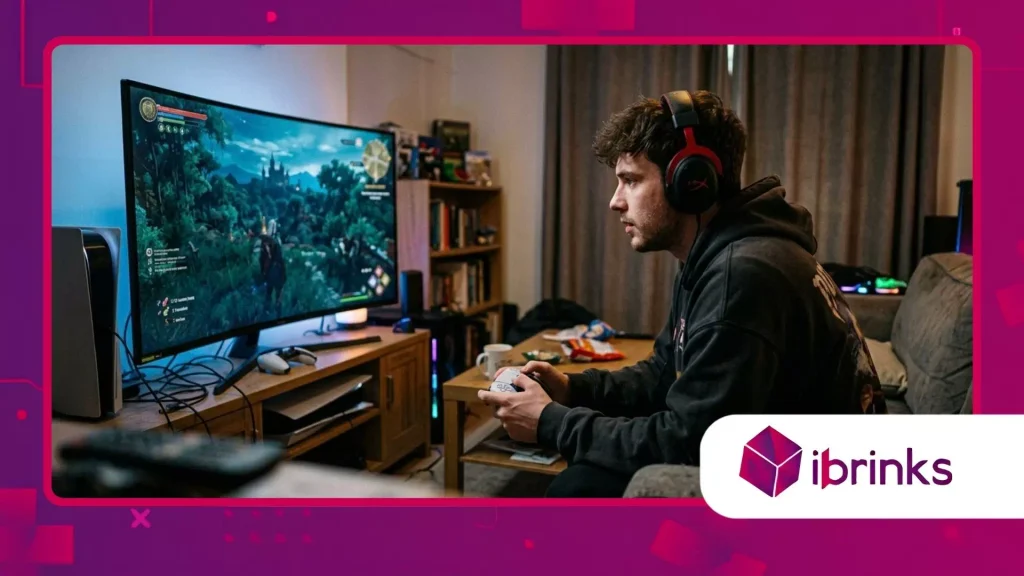
Why are traditional launch models giving way to long-term digital worlds?
O future of games no longer relies solely on the high-risk, high-reward cycle of traditional boxed releases that hit store shelves every few years.
Studio budgets for triple-A titles frequently exceed hundreds of millions of dollars, making single-purchase software models financially precarious for developers and publishers alike.
Anúncios
According to market data from Newzoo’s 2025 Global Games Market Report, over 70% of total industry revenue across PC and console now originates from ongoing, persistent virtual environments rather than initial software sales.
Players increasingly demand ongoing content updates, seasonal events, and shared social spaces that expand over time rather than static stories with a definitive ending.
Building persistent platforms allows development studios to maintain predictable recurring revenue streams while building deeper relationships with their player bases over time.
Think of traditional releases like buying a static hardcover book, whereas modern persistent worlds operate much like a living, interactive library that continuously writes new chapters based on reader choices.
Rather than asking consumers to drop sixty or seventy dollars on a new experience every month, platforms offer evolving digital hubs where time and financial investment accumulate continuously.
This structural transition protects developers from catastrophic launch failures while delivering far greater value per dollar to players who want their preferred games to endure.
How do evolving virtual spaces impact player retention and engagement?
Virtual environments that regularly refresh their terrain, narrative arcs, and gameplay mechanics create sticky ecosystems that hold player attention far longer than traditional releases ever could.
When an online world adapts to real-time player actions and seasonal narratives, it transforms from a simple entertainment product into a daily social destination for friend groups.
Players log in not just to complete specific missions, but to hang out, express their digital identities, and participate in shared cultural moments that feel urgent and unrepeatable.
This psychological shift transforms engagement from passive media consumption into active participation within a living community.
Retention metrics spike when developers treat their games as evolving services that respect player investment across multiple years and hardware generations.
Systems that carry forward cosmetic items, earned achievements, and friend lists reduce friction when transitioning between major game updates or platform updates.
When players know their progress will remain meaningful three years down the road, they commit far more time, energy, and social capital to the ecosystem.
Consequently, legacy franchises without persistent architectures struggle to maintain active daily user bases between their sparse release cycles.
++ O futuro dos jogos de mundo compartilhado além da fórmula MMO
What technical architecture supports persistent online game ecosystems?
Powering massive persistent environments requires cloud-native infrastructure capable of handling spatial networking, real-time data synchronization, and serverless scalability.
Modern game architectures rely on dynamic server sharding and cloud computing to host millions of simultaneous connections without dividing player bases across isolated regional servers.
Companies utilize advanced networking frameworks to ensure that physical world changes made by one player such as building structures or altering terrain remain permanently visible to others.
This continuous technical persistence forms the fundamental backbone of true virtual worlds, separating simple multiplayer titles from genuine digital ecosystems.
Engine developers are continuously refining tools like Unreal Engine 5’s World Partition system to stream massive, seamless landscapes without traditional loading screens or artificial boundaries.
By distributing physics calculations and artificial intelligence processing across cloud server arrays, studios can simulate living worlds populated by thousands of intelligent entities.
These technical advancements allow developers to update geometry, lighting, and gameplay parameters on the fly without shutting down servers for extensive maintenance windows.
As server architecture becomes more resilient and scalable, the line between distinct game versions blurs into a single, continuous runtime state.
How Do Live-Service Worlds Transform Gaming Economies and Culture?
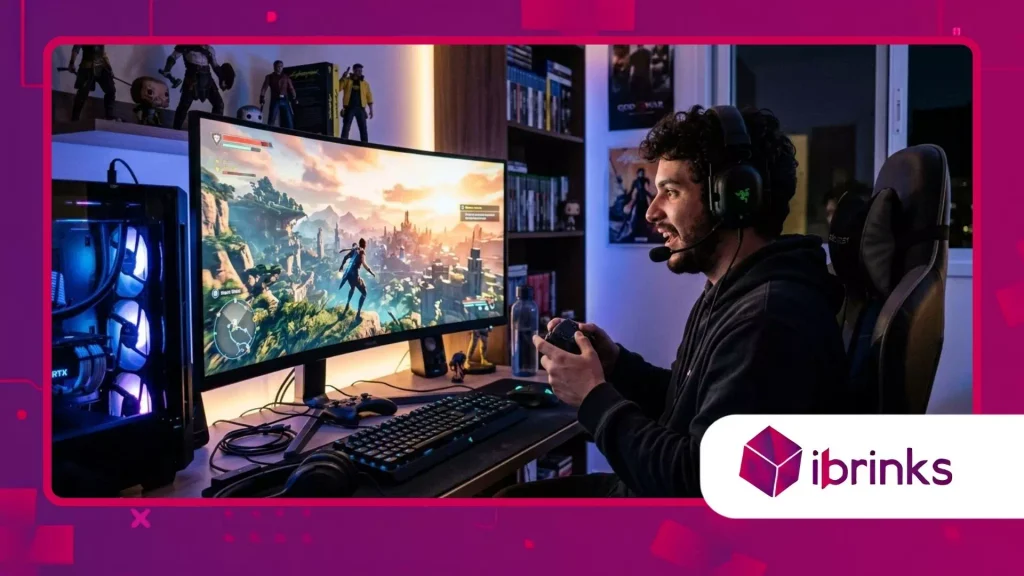
Why are players investing more time in fewer ongoing game worlds?
Modern lifestyle demands and social habits have led consumers to consolidate their gaming hours into a small handpicked selection of deeply rewarding virtual worlds.
The average gamer today prefers mastering a few evolving titles alongside their friend groups rather than constantly learning new mechanics across dozens of standalone releases.
As cross-platform play becomes standard, virtual worlds serve as primary communication channels where social interaction matters just as much as competitive skill.
Consequently, games that offer diverse activity loop from competitive modes to creative sandbox spaces successfully capture the majority of weekly screen time.
The economic reality of player time allocation creates a winner-takes-most dynamic where established world platforms draw attention away from mid-tier, single-player launches.
Gamers build meaningful social equity within their chosen digital spaces, developing reputations, unlocking rare gear, and organizing virtual events with global communities.
Leaving a mature virtual ecosystem means leaving behind established friend networks and years of personal progress, creating a powerful incentive to stay.
As a result, new titles must offer compelling world-building and social connectivity to convince users to divide their limited free time.
Leia também: A ascensão de roteiros elaborados pela comunidade em substituição aos planos de desenvolvimento fixos.
How are developers monetizing ecosystem games without alienating players?
Monetization strategies in persistent worlds have evolved away from intrusive pay-to-win mechanics toward cosmetic customization, battle passes, and player-driven commerce.
Successful publishers realize that long-term player trust is vastly more valuable than short-term monetization tricks that compromise competitive integrity or gameplay balance.
By offering optional visual customizations, unique emotes, and thematic battle passes, studios fund continuous content updates while keeping the baseline experience entirely free or low-cost.
This inclusive approach ensures large, active player populations that keep matchmaking pools healthy and social hubs vibrant for everyone.
Transparency in digital storefronts and fair value exchanges build player goodwill, encouraging voluntary financial support over many years.
Leading ecosystem titles publish clear drop rates for cosmetic items and offer direct-purchase options so players know exactly what they are acquiring.
Furthermore, battle pass systems that reward active gameplay with premium currency allow dedicated players to roll their investment forward into future seasons.
When players feel respected by a developer’s economic model, they view microtransactions as a way to support a service they enjoy daily rather than an exploitation technique.
Leia mais: Como os jogos modernos equilibram liberdade e orientação sem dar tudo de mão beijada
What role does user-generated content play in modern gaming worlds?
User-generated content (UGC) has become the primary growth engine for persistent virtual worlds, turning passionate players into active creators and worldbuilders.
Platforms like Roblox and Fortnite’s Unreal Editor demonstrate how empowering players with professional-grade development tools dramatically accelerates content output.
By allowing community members to design custom game modes, architectural spaces, and social experiences, platforms offer virtually infinite variety without overburdening internal development teams.
This decentralized approach turns the future of games into a collaborative creation engine where content evolves at the speed of community imagination.
The integration of creator monetization programs further solidifies UGC as a cornerstone of modern game economies, providing financial incentives for top-tier talent.
Creators can earn significant income through engagement-based payouts or digital item sales, turning content creation into viable full-time careers within these virtual ecosystems.
This economic feedback loop attracts professional designers, programmers, and artists who continuously elevate the quality and diversity of available in-world experiences.
As developer tools become more accessible, the boundary between professional game development and community creation continues to dissolve completely.
Why Must Studios Adapt to Platform-Based Game Architecture Today?
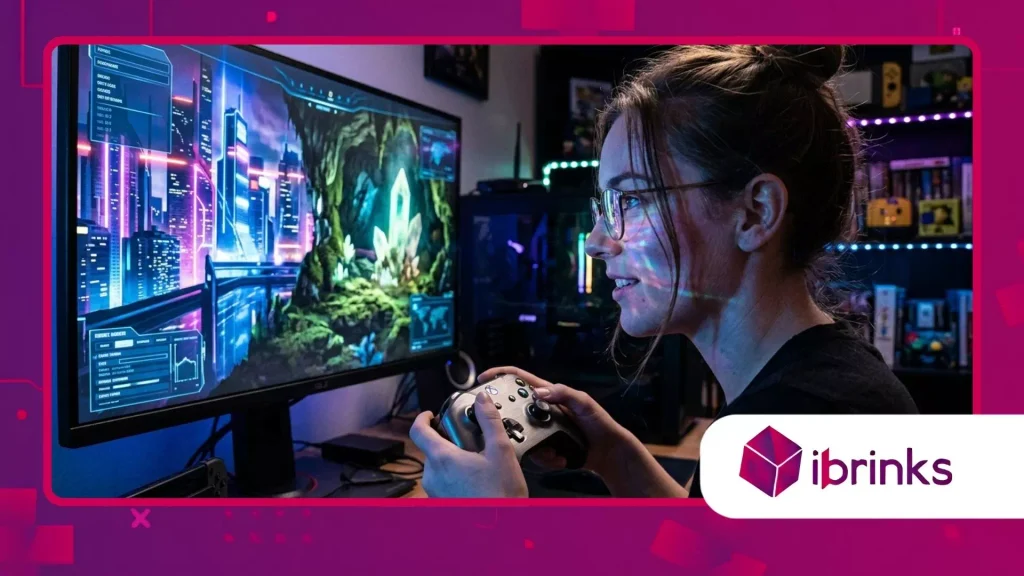
Why are legacy publishers struggling to match persistent world infrastructure?
Traditional game publishers face steep cultural and operational challenges when attempting to pivot from legacy release models to continuous live platforms.
Developing a standalone game requires a sprint toward a launch date, after which the team typically transitions directly to the next standalone project.
In contrast, operating a persistent world demands permanent operational teams, real-time analytics monitoring, rapid hotfixing, and long-term community management infrastructure.
Studios that fail to adapt their organizational structures often suffer from developer burnout, slow content rollouts, and rapid player drop-offs following launch.
Furthermore, legacy tech stacks and proprietary game engines built for linear single-player experiences often lack the flexibility required for rapid live updates.
Overhauling legacy codebases while keeping live servers operational is akin to replacing a jet engine mid-flight without disrupting passengers in the cabin.
Publishers that attempt to force traditional linear engines into live-service frameworks frequently encounter server instability, cheating exploits, and broken game balance.
Success in this new landscape requires building modular, scalable tech foundations from day one rather than retrofitting outdated tools.
How do cloud technologies scale interactive virtual environments?
Cloud computing platforms provide the dynamic server allocation necessary to handle massive traffic fluctuations during major game events and content drops.
Rather than maintaining static server fleets that sit idle during off-peak hours, studios leverage cloud infrastructure to spin server instances up or down instantly.
This flexible capacity management controls operational hosting costs while ensuring seamless performance when millions of players attempt to log in simultaneously.
Cloud infrastructure also enables global low-latency routing, bringing international player bases together within unified online environments seamlessly.
Advanced cloud streaming technology further democratizes access by rendering high-fidelity graphics on remote servers and streaming the interactive feed to low-power client hardware.
Players can access complex, graphics-heavy digital worlds on smartphones, smart televisions, or entry-level laptops without requiring expensive dedicated hardware setups.
This hardware independence expands the total addressable market for game worlds, bringing millions of new players into persistent digital communities globally.
As cloud delivery networks mature, spatial virtual worlds will become as instantly accessible as streaming music or video services today.
What defines the competitive edge for future virtual world platforms?
The defining factor for dominant gaming platforms over the coming decade will be their ability to foster vibrant, self-sustaining digital societies.
Technical specs and graphical fidelity remain important, but social features, cross-platform interoperability, and robust creator economies will dictate long-term market leadership.
Platforms that allow seamless digital asset mobility and identity persistence across various experiences within their ecosystem will capture the highest player engagement.
Ultimately, winning platforms will feel less like software programs and more like vibrant digital cities where players live, work, and play.
Strategic partnerships across entertainment, fashion, and music will further blur the boundaries between traditional gaming and broader popular culture.
Persistent worlds regularly host live music concerts, film premieres, and interactive brand activations that attract audiences far beyond core gaming demographics.
These cross-industry collaborations turn virtual environments into central cultural hubs where global media events take place in real time.
Platforms that successfully cultivate these rich multidimensional experiences will dictate the direction of interactive entertainment for generations to come.
Data Overview: Traditional Releases vs. Persistent Gaming Worlds
The structural migration toward persistent virtual worlds is clearly reflected in industry-wide engagement metrics, financial performance data, and player retention patterns.
The comparison table below highlights key operational differences between traditional single-release titles and persistent platform ecosystems based on market data from recent years.
| Metric / Dimension | Traditional Single-Release Model | Persistent World / Platform Model |
| Primary Revenue Source | One-time upfront software purchase | Recurring microtransactions, cosmetics, and passes |
| Average Player Lifecycle | 10 to 40 hours over 1–2 months | Hundreds of hours spanning multiple years |
| Content Update Frequency | Rare (occasional expansion or DLC pack) | Continuous (weekly patches, seasonal content) |
| Estrutura da Comunidade | Segmented by game version / hardware | Unified cross-platform social ecosystem |
| Criação de conteúdo | Internal development team only | Hybrid (Internal developers + User-Generated Content) |
| Infrastructure Needs | Peer-to-peer or static dedicated servers | Dynamic cloud sharding & spatial networking |
The Horizon Ahead for Interactive Digital Spaces
The evolution of interactive media clearly demonstrates that the future of games lies in building enduring, interconnected digital worlds rather than shipping static, disposable software releases.
As cloud architecture scales and community-driven content tools mature, virtual environments will continue to transcend traditional entertainment categories to become central hubs for global culture, social connection, and digital commerce.
Developers who successfully build adaptable, player-centric platforms will lead the industry forward, while those reliant purely on legacy release cycles risk becoming obsolete.
What kind of virtual world do you hope to call home in the years ahead? Share your thoughts and experiences in the comments below!
Perguntas frequentes
Will traditional single-player games disappear completely as persistent worlds grow?
No, traditional single-player games will continue to thrive alongside persistent world platforms, serving as specialized, artistic narrative experiences for players.
While persistent ecosystems capture the majority of daily active hours and recurring revenue, single-player titles fulfill a strong demand for polished, story-driven entertainment.
Many developers use successful persistent worlds to fund high-risk narrative projects, ensuring both formats coexist in the broader market.
How do persistent game worlds affect hardware upgrade cycles for players?
Persistent game worlds extend the usability of existing gaming hardware by optimizing engine scalability and integrating cloud-rendering options for older devices.
Instead of forcing players to purchase new consoles every few years to access new titles, developers continuously update engine architecture to run on current systems.
This approach keeps massive player bases connected across multiple hardware generations without fragmenting the community.
What prevents new persistent gaming worlds from failing at launch?
Success requires strong day-one server stability, an engaging core gameplay loop, transparent monetization models, and a clear roadmap for future content updates.
Games that fail usually suffer from insufficient content depth, aggressive pay-to-win microtransactions, or server infrastructure failures during initial player rushes.
Providing strong social tools and empowering community creators early on also significantly boosts long-term survival rates.
How do developers handle game balance in virtual worlds that expand continuously?
Developers utilize real-time telemetry data, automated playtesting analytics, and active community feedback channels to monitor gameplay balance continuously.
Regular patch updates allow designers to tweak weapon stats, character abilities, and resource distribution quickly if mechanical imbalances arise.
Transparent patch notes and developer communications help maintain player trust whenever major gameplay balance shifts occur.
Can players earn real money by participating in persistent game worlds?
Yes, many modern persistent platforms offer formal monetization programs that allow content creators, modders, and map designers to earn real-world income.
Through engagement-based revenue sharing, custom item sales, and developer grant programs, skilled creators build sustainable careers directly within game ecosystems.
As user-generated content infrastructure expands globally, creator-based digital economies will become even more lucrative.
