
The history of budget game labels in the retro era
Anúncios
Budget game labels shaped the gaming landscape during the 8-bit and 16-bit retro eras by making interactive software accessible to millions of players worldwide.
Before budget lines emerged, buying a new release often required significant financial investment, leaving budget-conscious gamers relying heavily on physical rental shops or magazine cover disks to experience fresh content.
The historical impact of these budget ranges extends beyond low prices, fundamentally altering software distribution and game longevity across major global markets.
Established publishers soon realized that re-releasing hit titles at reduced price points could effectively eliminate the second-hand market while generating steady, long-term revenue streams from mature gaming catalogs.
O que esperar deste guia
- Understanding Budget Game Lines: The economic origins of low-cost software ranges.
- Key Historical Eras: How publishers adapted budget models across home computers and consoles.
- Industry Impact & Legacy: The market dynamics, statistics, and lasting legacy of budget publishing.
- Comparative Data & Overview: A structured historical breakdown of major retro budget ranges.
- Perguntas frequentes: Clear answers to common queries regarding retro budget releases.
What Are Budget Game Labels and How Did They Evolve?

How Did Home Computer Labels Start the Budget Revolution?
In the early 1980s, British home computer markets saw software houses pioneer dedicated low-cost ranges to reach budget-conscious players.
Anúncios
Mastertronic led this movement by selling cassette games in newsagents and gas stations for £1.99, proving that mass-market pricing could drive massive retail sales.
Publishers quickly discovered that lower profit margins per unit were easily offset by vastly higher unit volumes across international markets.
This economic model established budget game labels as a major force, allowing smaller developers to gain commercial exposure without massive marketing budgets.
How Did Console Manufacturers Adapt Budget Ranges?
Console giants recognized the power of low-cost lines when software libraries expanded rapidly during the late 1980s and 1990s.
Nintendo introduced the Player’s Choice range on the Super NES, while Sega launched the Master System and Genesis Classics lines to maintain retail momentum.
Sony perfected this strategy with the PlayStation Greatest Hits and Platinum ranges, requiring games to achieve specific sales thresholds before re-packaging.
These official budget ranges extended product lifecycles, ensuring top-tier games remained profitable long after their initial full-price launch windows closed.
++ Como os mods de jogos retrô mantêm os títulos clássicos vivos
Why Did Budget Software Become Crucial for Retro Preservation?
Beyond commercial success, budget packaging inadvertently preserved vast amounts of gaming history that might otherwise have become entirely lost.
Low-cost cassette compilations and budget re-releases kept early software titles in continuous circulation across European and North American retail channels.
Archivists and retro enthusiasts today rely heavily on these budget pressings to study early programming techniques and original game design choices.
Without these high-volume budget re-releases, many foundational titles from early microcomputers would exist only in scarce, expensive original editions.
Why Did Publishers Create Dedicated Value Ranges?
What Driven the Shift Toward Mass Market Distribution?
The primary driver behind budget pricing was expanding retail distribution beyond traditional computer stores into everyday shopping outlets.
By placing software cassette racks near supermarket checkout counters, publishers reached casual buyers who had never stepped inside specialized software boutiques.
This broad availability transformed gaming from a specialized technical hobby into accessible mainstream entertainment for entire families.
The physical presence of affordable titles in non-traditional retail spaces fundamentally reshaped consumer purchasing habits during the microcomputer era.
Leia também: Por que as revistas regionais de jogos moldaram as comunidades locais de jogadores?
How Did Budget Re-Releases Combat Used Software Markets?
Publishers frequently utilized budget ranges to directly compete against second-hand game sales and software piracy in major territories.
By offering legitimate boxed games at prices matching or beating used store rates, companies successfully enticed players back to official retail products.
This commercial defense strategy kept revenue flowing directly back to publishers and original development teams rather than third-party resellers.
Operating budget game labels allowed studios to capture secondary market demand while maintaining strong brand visibility on retail shelves.
Leia mais: Analisando a ascensão das remasterizações retrô: marketing e nostalgia
What Was the Financial Impact on Game Development Studios?
Budget lines provided consistent cash flow that helped independent studios fund risky original titles without relying solely on venture capital.
Developers could license their back catalog to budget distributors, earning passive royalty income that sustained daily operations during lengthy development cycles.
According to historical data from the UK’s Association of UK Interactive Entertainment (UKIE), budget software accounted for over 30% of total physical software units sold in the UK home computer market between 1986 and 1992.
This reliable revenue engine acted as a critical financial bridge for emerging European software houses.
How Did Low-Cost Labels Shape Video Game History?
How Did Budget Publishing Bridge Technological Generations?
As 8-bit systems yielded to 16-bit and 36-bit hardware, budget ranges allowed older hardware platforms to remain commercially viable for years longer.
Millions of budget-conscious households continued purchasing affordable software for their existing systems long after enthusiast early adopters upgraded to newer hardware.
This extended tail gave budget publishers a captive audience for value-priced software long after premium full-price development had migrated away.
The transition period demonstrated that hardware longevity relies just as heavily on affordable software access as it does on raw processing capability.
What Role Did Budget Range Packaging Play in Branding?
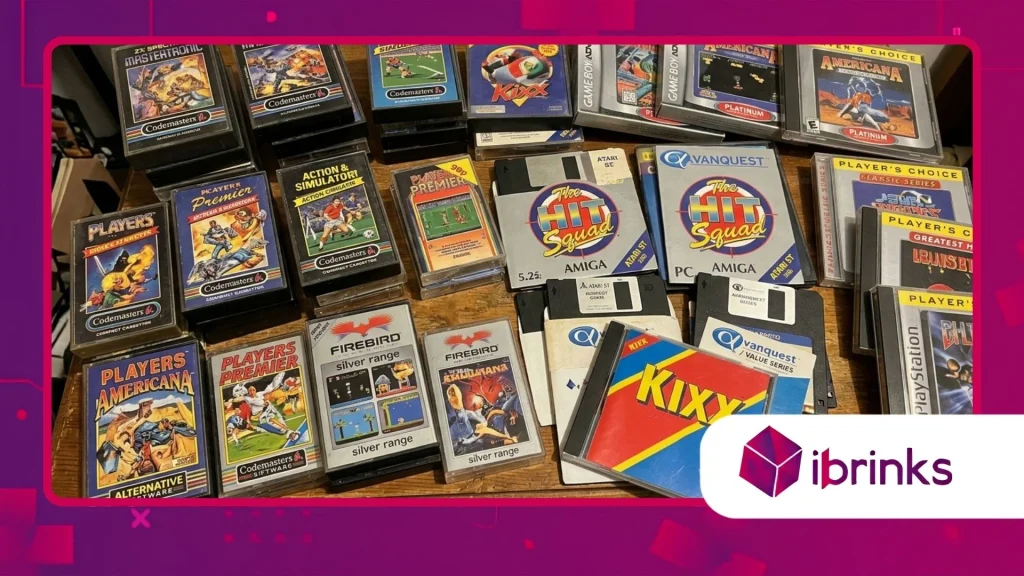
Distinct visual branding defined budget ranges, using vibrant border colors and standardized logo placements to signal distinct value to consumers.
Labels like Code Masters used striking artwork and bold pricing badges to stand out on crowded retail spinner racks.
While some collectors initially disdained budget packaging compared to original big-box releases, these distinct designs became iconic symbols of retro gaming culture.
Today, vintage budget packaging represents a cherished design aesthetic that evokes deep nostalgia among long-time retro software collectors.
How Do Modern Digital Sales Reflect Retro Budget Strategies?
The economic mechanics established by retro budget ranges directly inspired modern digital distribution models seen on platforms like Steam and GOG.
Deep digital discount events and publisher weekend sales operate on the identical commercial principle of capturing late-adopter demand via aggressive price drops.
Just as early budget game labels extended the commercial lifespan of cassette titles, modern digital sales keep decade-old video games financially productive.
The legacy of value publishing continues to influence how software is priced, distributed, and preserved across the global games industry.
The Historical Evolution of Retro Value Ranges
| Label / Range Name | Parent Publisher | Primary Platforms | Introduced | Key Feature / Distinction |
| Mastertronic | Mastertronic | ZX Spectrum, C64, Amstrad | 1983 | Pioneered the standard £1.99 retail price point in non-traditional outlets. |
| Pocket Power | Hi-Tec Software | ZX Spectrum, Commodore 64 | 1989 | Focused on licensed cartoon properties sold at impulse-buy prices. |
| Kixx | U.S. Gold | C64, Amiga, Atari ST, PC | 1988 | Re-released major full-price arcade ports and strategy hits at value rates. |
| Player’s Choice | Nintendo | SNES, Game Boy, N64 | 1996 | Official Nintendo budget line requiring one million units sold for eligibility. |
| Greatest Hits | Sony Computer Ent. | PlayStation 1, PS2 | 1997 | Green-spine Sony branding indicating proven commercial success and high quality. |
The Endless Legacy of Retro Value Lines
The emergence of budget software ranges fundamentally democratized interactive entertainment, transforming gaming from an expensive niche hobby into a accessible global medium.
By establishing low-risk price points, these historical value labels allowed players to explore diverse genres while providing software houses with sustained commercial lifespans for their creative catalogs.
Think of budget labels as the ultimate public library system of retro gaming; they opened doors for millions who otherwise couldn’t afford the price of entry.
As software formats continue shifting toward digital storefronts and subscription channels, the strategic lessons learned during the retro budget era remain essential for understanding modern software economics.
What was your favorite budget title or re-release label growing up? Share your memories and retro gaming experiences in the comments section below!
Perguntas frequentes
What made budget games different from full-price releases in the retro era?
Budget games were typically sold at a fraction of full-price titles, often featuring simpler packaging, concise manuals, and re-released back-catalog software.
While some budget games were original low-budget titles, many were highly acclaimed full-price games re-packaged years after their initial debut to target price-sensitive shoppers.
Did budget software lines harm developer revenues or help them?
Budget software lines generally helped developers by generating secondary revenue streams from older software that had completed its full-price retail cycle.
These licensing royalties provided reliable cash flow that helped independent studios maintain operations, retain staff, and finance new game development projects.
How did Nintendo and Sony select games for their value ranges?
Console manufacturers established strict sales thresholds before a title could join lines like Player’s Choice or Greatest Hits.
Games typically needed to sell between 250,000 and 1,000,000 copies and remain on the market for at least nine to twelve months before qualifying for official budget re-packaging.
Why are retro budget labels so popular among collectors today?
Collectors appreciate retro budget labels for their distinct cover designs, unique historical packaging variations, and nostalgic value.
Additionally, collecting complete runs of budget lines like Mastertronic or Sony Greatest Hits offers an affordable and rewarding entry point into physical software collecting.
Are digital sales today considered the equivalent of retro budget ranges?
Modern digital sales events and discounted storefront tiers serve the exact same market function as classic budget labels.
By dropping software prices strategically over time, digital platforms attract casual buyers, defeat secondary piracy, and maximize total lifecycle earnings for game developers worldwide.
