
Why retro gaming documentaries attract a new generation
Annonser
Retro gaming documentaries have become a cultural phenomenon, pulling millions of young viewers toward interactive history they never experienced in real time.
The digital generation grows up with ultra-realistic graphics and live service models, yet young players actively consume deep dive longform content about 8-bit systems, arcade cabinet preservation, and lost source code.
I observe how this shift reflects a search for artistic authenticity and complete game releases in a era dominated by microtransactions.
What You Will Discover in This Article
- Cultural Context: Why modern youth connect with analog gaming roots.
- Production Mechanics: How streaming platforms transform digital preservation.
- Industry Evolution: What early developmental risks teach us today.
- Impact Metrics: Key historical data on documentary viewership.
- Future Outlook: How media preservation shapes interactive art.
Why Do Young Players Binge Historic Gaming Stories?
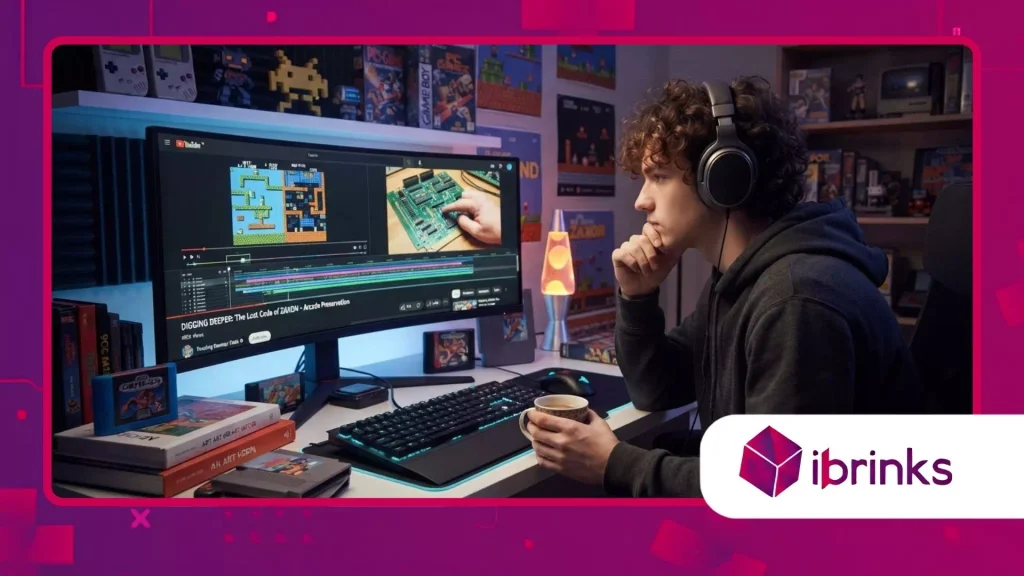
Young gamers turn to retro gaming documentaries because these productions contextualize interactive media as a legitimate, evolving art form rather than mere disposable software.
Watching developers fight memory constraints on the Nintendo Entertainment System or salvage broken code on tight deadlines offers human drama that resonates with digital natives.
Annonser
Today, players navigate live-service games filled with battle passes, so learning about complete, standalone cartridges provides a refreshing perspective on software design integrity.
Exploring interactive history allows Gen Z and Gen Alpha to trace the lineage of mechanics they enjoy today, from modern Roguelikes to complex open-world RPG systems.
These feature-length investigations treat early creators like classical composers or visionary filmmakers, framing arcade culture as a pivotal social revolution.
By understanding the intense technical friction faced by pioneer programmers, young audiences build a deeper, informed respect for the interactive medium.
How Does Historical Context Change Modern Play Styles?
When younger audiences watch retro gaming documentaries, their engagement with current titles changes from passive consumption to active, critical appreciation.
Seeing how programmers squeezed color palettes out of strict memory budgets makes modern lighting pipelines and physics engines far more impressive to study.
Players who discover classic platformers through historical investigations often seek out retro retro collections or emulation setups to experience those design fundamentals firsthand.
Understanding historical hurdles also helps modern players identify true design innovation versus recycled live-service mechanics.
A teenager who observes how early arcade titles designed difficulty curves around coin collection gains sharp insight into modern monetization schemes.
This historical awareness transforms casual fans into discerning critics who value thoughtful game design over superficial graphical fidelity.
++ Hvordan ROM-hacking ble et kreativt fellesskap
Why Is Analog Gaming History Relevant in a Cloud Era?
The shift toward always-online distribution creates a distinct risk where titles vanish overnight when servers go offline permanently.
Early gaming history shows young viewers that physical preservation matters, as lost source code often destroys valuable digital heritage forever.
Experiencing stories of lost prototypes and community restoration projects inspires younger players to archive physical media and support digital preservation initiatives worldwide.
Analog hardware also carries a tangible, tactile charm that cloud gaming platforms simply cannot replicate for modern audiences.
From cathode-ray tube display scanning lines to physical cartridges, young fans find comfort in mechanical hardware simplicity.
Documenting these physical artifacts creates a meaningful bridge across generations, keeping foundational gaming history alive within modern digital culture.
How Do Interactive Films Preserve Industry Heritage?

Feature-length investigative films serve as definitive historical records, capturing irreplaceable primary interviews with pioneer developers before critical industry history disappears.
Independent filmmakers search company archives, uncover unreleased prototype cartridges, and digitize rare internal documentation to ensure creative decisions are accurately preserved.
Without these rigorous investigations, legendary stories about early studio culture and hardware engineering would remain locked behind non-disclosure agreements or forgotten entirely.
Professional archiving standards transformed casual YouTube video essays into cinema-grade media projects backed by major streaming platforms worldwide.
These projects analyze pivotal market shifts, such as the 1983 video game crash, while detailing how studios rebuilt trust through strict quality controls.
By documenting both catastrophic failures and historic triumphs, historical film crews safeguard the global narrative of interactive entertainment.
Les også: Hvorfor regionale spillmagasiner formet lokale spillermiljøer
How Do Streaming Platforms Amplify Digital Archiving?
Streaming services have elevated obscure software history into mainstream entertainment, introducing millions of viewers to classic gaming culture overnight.
Documentaries like High Score on Netflix demonstrated that global audiences eagerly watch multi-part series covering early arcade history and 16-bit console wars.
High production budgets allow directors to utilize slick 3D animation, crisp line art, and remastered archival footage that make old software look vibrant for high-definition displays.
This widespread streaming access creates a collective viewing culture where historical software trends become trending topics across social media networks.
Young viewers react in real time to historical milestones, sharing clips of obscure prototype hardware across online communities.
Consequently, high distribution reach ensures that early digital art remains visible and relevant to modern audiences worldwide.
Les mer: Analyse av fremveksten av retro-remastere: markedsføring og nostalgi
What Role Do Creators Play in Software Preservation?
Independent documentary creators spend years cross-referencing interviews, validating historical claims, and searching for lost source code across global archives.
Their investigative reporting frequently exposes long-held industry myths, providing verified historical accuracy regarding controversial studio decisions.
Through tireless archival research, these filmmakers build comprehensive digital libraries that preserve precious source material for future academic research.
Many documentary teams work directly alongside non-profit institutions like the Strong National Museum of Play and the Video Game History Foundation.
By donating digitized interview tapes, scanned design documents, and rare developmental hardware, creators strengthen global preservation infrastructure.
Their media work ensures that fragile magnetic media and fading paper design documents survive for future generations.
What Can Pioneer Developers Teach Modern Studios?
Studios during the 8-bit and 16-bit eras operated within strict hardware limitations that demanded extraordinary creative ingenuity and tight mathematical logic.
Pioneer programmers could not rely on day-one patches, massive storage arrays, or post-launch online downloads to fix structural code defects.
Studying these early developmental constraints teaches modern developers how to prioritize tight control mechanics, intuitive level design, and efficient memory usage over brute-force graphical processing.
When analyzing early software engineering through feature investigations, modern development teams discover elegant solutions to enduring technical challenges.
Classic game designers relied on ingenious tricks, such as palette swapping and clever sprite layering, to craft vast worlds within minimal byte allocations.
These timeless lessons prove that strict hardware constraints often spark the most memorable artistic innovations.
How Did Early Technical Limits Drive Creative Innovation?
Hardware limitations forced original designers to rely heavily on player imagination, atmospheric audio design, and precise kinetic feedback.
When developers had only a few kilobytes of total memory, every single pixel and sound channel required deliberate placement.
Directors could not hide weak gameplay mechanics behind cinematic cutscenes, forcing them to refine core play loops until they felt exceptionally responsive.
These creative workarounds gave birth to iconic visual art styles, such as detailed pixel art and chiptune audio composition, which remain incredibly popular today.
Modern indie studios actively study these vintage design constraints to build memorable, highly focused titles without massive production budgets.
The historical lesson remains clear: creative constraint remains one of the most powerful catalysts for genuine artistic innovation.
Why Do Vintage Studio Failures Shape Today’s Industry?
Examining historic industry crashes shows modern studios the clear dangers of oversaturating markets with low-quality, rushed software titles.
The infamous downfall of early market leaders highlighted what happens when financial greed completely replaces creative passion and quality control.
By reviewing these historical cautionary tales through compelling retro gaming documentaries, contemporary leaders learn to avoid unsustainable development cycles and consumer exploitation.
Understanding vintage studio failures also helps independent developers navigate unpredictable market shifts, changing distribution models, and evolving audience expectations.
Historical precedent demonstrates that transparent communication, solid technical execution, and original gameplay concepts consistently outlast temporary market trends.
Studying past mistakes provides modern creators with an invaluable roadmap for long-term creative survival.
Industry Impact and Archival Milestones
The table below highlights key historical metrics, archival achievements, and documentary milestones that have defined retro media preservation in recent years.
| Metric / Project Indicator | Historical Relevance & Scope | Impact on Industry & New Generations |
| Video Game History Foundation Archive | Over 10,000 digitized design docs, source codes, and promotional assets preserved since 2017. | Serves as a primary reference source for investigative documentary creators worldwide. |
| Netflix’s High Score Seertall | Ranked in Top 10 global trends across 50+ countries upon its 2020 debut release. | Proved global commercial demand for high-budget retrospective software history series. |
| ESA Preservation Survey Data | Revealed that 87% of classic games released before 2010 are critically endangered. | Accelerated community documentary efforts to locate and digitize lost source media. |
| GDC Pioneer Developer Panels | Over 500 historic post-mortems recorded and published for public educational access. | Provides primary developer testimony used directly in independent archival films. |
Timeless Lessons for the Future of Interactive Media
The rising fascination with past software achievements proves that brilliant game design transcends hardware generations, visual resolutions, and transient market trends.
Like classical cinema or jazz music, early interactive media has established an enduring artistic canon that demands ongoing study, preservation, and celebration.
As long as independent creators continue unearthing lost prototypes and documenting pioneer developers, the rich history of electronic play will inspire, educate, and captivate new generations of players across the globe.
By bridging the gap between retro hardware constraints and modern gaming expectations, archival films ensure that foundational digital art is never forgotten.
These visual histories remind us that behind every iconic sprite, memorable soundtrack, and satisfying mechanic lies a human story of creative passion overcoming extreme technical odds.
Sharing these stories fosters a mature, appreciative gaming culture that values historical preservation just as much as future technological innovation.
If you love classic gaming history, share your favorite documentary in the comments below!
Ofte stilte spørsmål
Why are young gamers interested in games made before they were born?
Young gamers are drawn to classic titles because they offer unique art styles, straightforward mechanics, and a fascinating window into digital media history.
Experiencing complete games without intrusive monetization models provides a refreshing contrast to many modern live-service experiences.
Where can I watch authentic documentaries about classic video games?
High-quality productions are available across major streaming platforms like Netflix and Amazon Prime, as well as dedicated media sites like YouTube and Vimeo.
Specialized non-profit channels like Noclip and the Video Game History Foundation offer exceptionally detailed, fully verified historical coverage.
How do filmmakers verify historical facts about vintage game development?
Documentary teams cross-reference primary interviews with original studio design notes, patent filings, corporate financial records, and archived magazine publications.
They often partner with digital preservation foundations to test physical prototype cartridges and inspect original source code directly.
Are classic games actually endangered or disappearing permanently?
Yes, industry preservation studies indicate that roughly 87% of classic games released prior to 2010 are no longer commercially accessible or preserved.
Without dedicated archival initiatives and documentary coverage, hundreds of historical titles risk being lost forever due to hardware degradation and licensing issues.
How do retro documentaries impact modern indie game design?
These films showcase how pioneer developers solved complex design problems using minimal resources, inspiring modern indie creators to focus on tight mechanics and artistic constraints.
Many successful indie titles directly adapt retro visual aesthetics and classic gameplay fundamentals highlighted in historical retrospectives.
