
Why Reactive NPCs Are Becoming More Important in Story-Driven Games
Anúncios
Reactive NPCs are transforming modern storytelling in the gaming industry by creating immersive worlds where non-player characters dynamically adapt to every player decision.
Modern gamers no longer tolerate static environments or scripted routines that break immersion; instead, they demand virtual citizens with memory, emotional depth, and responsive behavioral patterns.
This evolution shifts video games from linear cinematic experiences into living ecosystems shaped directly by user actions, setting a brand-new standard for narrative complexity and interactive entertainment today.
Navigation Map
- What Defines Modern Interactive Characters?
- How Advanced Behavioral Engines Work
- What Are the Industry Impacts?
What Defines Modern Interactive Characters?
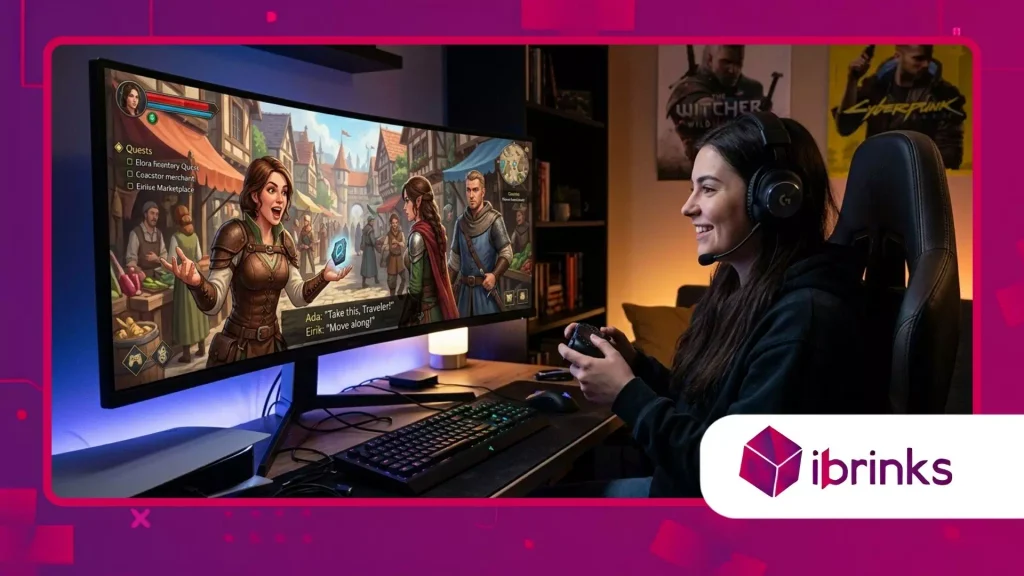
What Are reactive NPCs and Why Do They Matter?
Reactive NPCs represent characters endowed with advanced artificial intelligence routines that track player choices, faction standing, and world state variables dynamically.
These entities process contextual data to modify dialogues, alter daily routines, and manifest distinct emotional responses during gameplay sequences without relying entirely on predetermined scripting.
Anúncios
Without this layer of responsiveness, open-world environments risk feeling sterile, predictable, and ultimately disconnected from the consequences of the player’s overarching journey.
Developers utilize complex state machines and memory layers so that virtual inhabitants remember past transgressions, alliances, and unexpected acts of kindness across long narrative arcs.
Players notice these behavioral shifts immediately, as storekeepers bar their doors, guards display visible suspicion, and companion characters voice genuine moral fatigue.
Consequently, the boundary between scripted cinema and player-driven emergence blurs significantly, elevating the psychological weight of every single combat engagement or dialogue choice.
How Do Dynamic Memory Systems Alter Gameplay?
Advanced memory architecture allows virtual populations to retain specific historical actions, ensuring that temporary choices carry permanent weight throughout long campaigns.
When players commit crimes or offer vital assistance, local inhabitants update their internal reputation matrices, altering future trade prices, quest availability, and overall hostility levels.
This creates an organic feedback loop where actions propagate naturally through settlements, transforming minor side quests into memorable milestones of community perception.
Furthermore, dynamic memory prevents narrative dissonance by stopping characters from repeating cheerful greetings immediately after surviving a violent confrontation with the player.
Programmers achieve this by linking short-term conversational nodes to persistent global flags, ensuring dialogue reflects the exact current geopolitical and social climate.
Ultimately, this level of detailed tracking transforms passive bystanders into active participants who shape the player’s emotional connection to the digital world.
++ Waarom originele IP's terrein winnen ten opzichte van gevestigde series
Why Are Emergent Interactions Replacing Scripted Loops?
Traditional game design relied on rigid, looping patrol routes and isolated trigger zones that shattered immersion the moment a player bypassed them creatively.
Emergent simulation systems replace these fragile constraints by granting virtual agents autonomy over navigation, daily chores, and interpersonal relationships within the game space.
As a result, unexpected scenarios unfold naturally, such as a wandering merchant fleeing from local wildlife right into the path of an oncoming convoy.
This systemic freedom fosters genuine replayability, as two different players will experience completely distinct narrative micro-events within the exact same geographical location.
Developers build robust toolsets that allow artificial intelligence directors to orchestrate chaos or harmony based on systemic inputs rather than manual placement.
Therefore, the gaming ecosystem breathes with authentic vitality, proving that unpredictable procedural reactions often outperform meticulously authored linear spectacles.
How Advanced Behavioral Engines Work
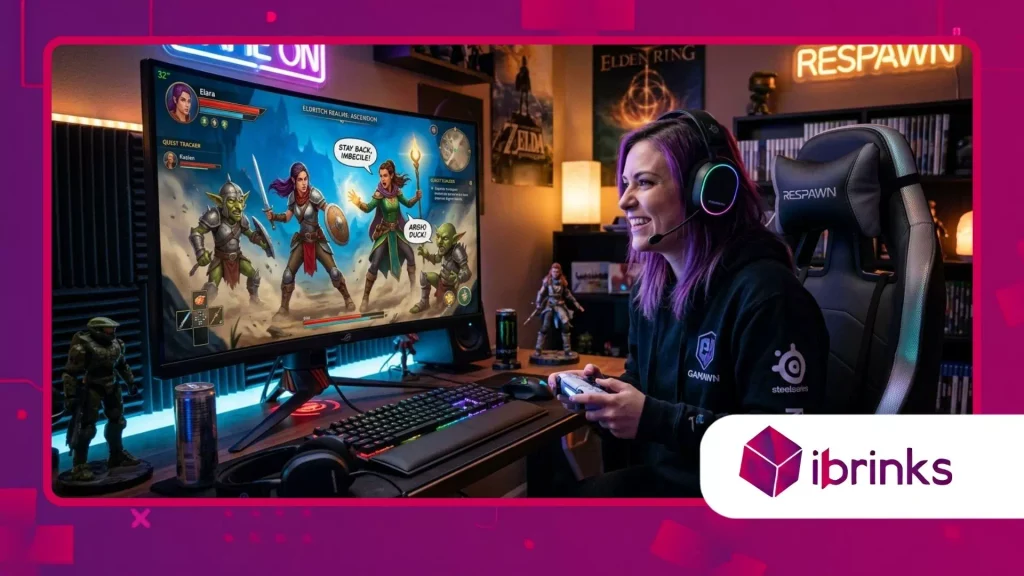
How Do Large Language Models Power Dialogue?
Recent integration of large language models allows non-player characters to generate contextual dialogue on the fly instead of relying on limited pre-recorded voice lines.
Players can type or speak custom inquiries, and the underlying model crafts tailored responses grounded in the character’s specific lore, personality, and current emotional state.
This breakthrough eliminates repetitive conversational loops and empowers users to explore unique interpersonal dynamics that writers never explicitly programmed into the software.
Of course, maintaining strict narrative boundaries remains crucial to prevent characters from breaking immersion or hallucinating lore-breaking details during critical story moments.
Engineers implement strict retrieval-augmented generation frameworks that cross-reference character bibles and current world states before outputting any synthesized vocal or textual line.
Thus, conversational freedom coexists safely with overarching creative direction, delivering unprecedented linguistic depth to interactive virtual storytelling today.
Lees ook: De opkomst van door de gemeenschap gedreven routekaarten die vaste ontwikkelingsplannen vervangen.
What Role Does Emotional Modeling Play?
Emotional modeling software assigns virtual agents internal parameters for fear, anger, trust, and affection that fluctuate dynamically based on external environmental stimuli.
When a player draws a weapon inside a crowded tavern, the ambient fear meter spikes, causing patrons to cower, flee, or reach for their own hidden defenses.
These emotional states directly dictate subsequent behavioral paths, turning abstract moral alignments into visceral, observable psychological reactions.
By visualizing internal psychological shifts through subtle animations, micro-expressions, and hesitant vocal tones, developers forge genuine empathy between the user and digital entities.
Players hesitate before resorting to violence when facing characters who display authentic hesitation, vulnerability, or self-preservation instincts during tense negotiations.
Consequently, emotional fidelity serves as the primary anchor for meaningful narrative stakes in contemporary role-playing games.
How Does Spatial Awareness Drive Realism?
Spatial awareness algorithms enable characters to interpret their physical surroundings in real time, recognizing cover spots, dangerous terrain, and changing environmental hazards dynamically.
If a sudden fire breaks out in a wooden structure, inhabitants do not simply walk into walls; they calculate evacuation routes, warn nearby civilians, and panic accordingly.
This profound level of environmental coupling ensures that the game world feels alive and genuinely reactive to catastrophic events.
Moreover, spatial intelligence allows characters to react to visual spectacles, such as a player wearing legendary armor or wielding a glowing magical artifact in public spaces.
Bystanders will murmur in awe, whisper gossip, or scatter in terror depending on the cultural reputation attached to those specific visual identifiers.
Such intricate attention to environmental context bridges the gap between mechanical simulation and believable artistic immersion.
What Are the Industry Impacts?
What Are the Development Challenges?
Implementing deeply responsive artificial intelligence architectures demands enormous computational budgets, sophisticated debugging tools, and close collaboration between writers and systems engineers.
Ensuring that complex behavioral trees do not conflict or cause performance bottlenecks requires rigorous optimization, particularly when rendering hundreds of active agents simultaneously.
Furthermore, narrative designers must relinquish absolute control over plot pacing, trusting systemic emergence to deliver coherent dramatic beats without heavy-handed scripting.
Industry data indicates that artificial intelligence integration scales development costs significantly, prompting studios to adopt modular middleware solutions rather than building proprietary systems from scratch.
Despite these technical hurdles, consumer demand for intelligent virtual worlds continues to drive aggressive investment across major triple-A and ambitious indie studios alike.
Balancing narrative cohesion with absolute systemic freedom remains the ultimate frontier for modern game directors and software architects.
How Do Players Perceive These Innovations?
Community reception toward intelligent non-player characters has been overwhelmingly positive, with players frequently sharing clips of unexpected emergent scenarios across social media platforms.
Gamers appreciate the absence of invisible walls and predictable guardrails, celebrating moments where their unique choices alter the sociopolitical landscape of virtual realms.
This organic word-of-mouth marketing demonstrates that deep systemic reactivity acts as a powerful differentiator in a crowded gaming marketplace.
However, critics also note that unpredictable artificial intelligence behavior can occasionally cause comedic bugs or unintended quest blockers if safety parameters fail.
Balancing absolute autonomy with reliable quest progression requires careful tuning and continuous post-launch patch support from development teams worldwide.
Even so, the overwhelming consensus points toward reactive characters becoming the permanent baseline for future interactive narrative design.
What Does the Future Hold for Virtual Ecosystems?
Looking ahead, the convergence of cloud computing, edge processing, and advanced machine learning models promises even more breathtaking leaps in virtual ecosystem realism.
Future titles will likely feature persistent cloud-hosted populations that evolve continuously, remembering player actions across different game sessions or community servers seamlessly.
As hardware capabilities expand, the line between scripted cinema and living simulation will dissolve completely into pure interactivity.
| Functie | Traditional Static NPCs | Modern reactive NPCs |
| Memory Retention | None (resets after interaction) | Persistent across global state variables |
| Dialogue Variety | Fixed branching dialogue trees | Dynamic generation via advanced models |
| Behavioral Logic | Rigid patrol loops and triggers | Emergent navigation and emotional states |
Community Insights and Reflections
Uiteindelijk, reactive NPCs redefine our relationship with digital media by turning passive consumption into an active, high-stakes dialogue between player and program.
As technical boundaries recede, these intelligent virtual companions and adversaries elevate storytelling from a solved puzzle into an unpredictable living art form.
We invite you to share your thoughts, memorable gameplay moments, or concerns regarding artificial intelligence in the comments below!
Veelgestelde vragen
What are reactive NPCs in modern video games?
Reactive NPCs are non-player characters powered by advanced artificial intelligence that dynamically adapt their behavior, memory, and dialogue to player choices.
Do these adaptive systems increase hardware requirements?
Yes, processing complex behavioral trees, dynamic memory matrices, and real-time pathfinding demands significantly higher central and graphical processing unit allocations.
Can conversational artificial intelligence break game narratives?
Without strict constraint frameworks and lore-grounded guardrails, large language models can occasionally generate inconsistent dialogue that conflicts with established game lore.
Will traditional scripted quests disappear entirely?
Not entirely, as developers still rely on authored set-pieces to deliver critical cinematic moments, emotional climaxes, and precise pacing benchmarks.
How do dynamic memory systems impact replayability?
They multiply replay value exponentially because different player choices create unique sociopolitical consequences, altering subsequent interactions across multiple playthroughs.
