
How gaming preservation groups recover lost development builds
Anúncios
How gaming preservation groups recover lost development builds represents one of the most critical missions in modern digital history, protecting unreleased code, prototype cartridges, and early source files from permanent decay.
When priceless source code or prototype read-only memory chips languish in abandoned storage lockers, specialized archivists step forward to perform forensic data recovery.
Without these meticulous technological rescue operations, entire chapters of interactive entertainment history would vanish into obscurity forever.
- Quick Look At The Recovery Process
- Architectural Analysis Of Prototype Hardware
- Impact Of Digital Preservation On Modern Studios
Every vintage prototype holds untold stories regarding discarded mechanics, cut levels, and abandoned artistic visions that define the evolution of our favorite interactive mediums.
As physical storage media degrades rapidly across decades, museum curators and digital archivists race against the mechanical clock to salvage fragile magnetic tapes and corrupted EEPROM chips.
Anúncios
Understanding these technical recovery workflows sheds profound light on how digital archaeology safeguards our interactive heritage for generations to come.
What is digital artifact extraction in retro development?
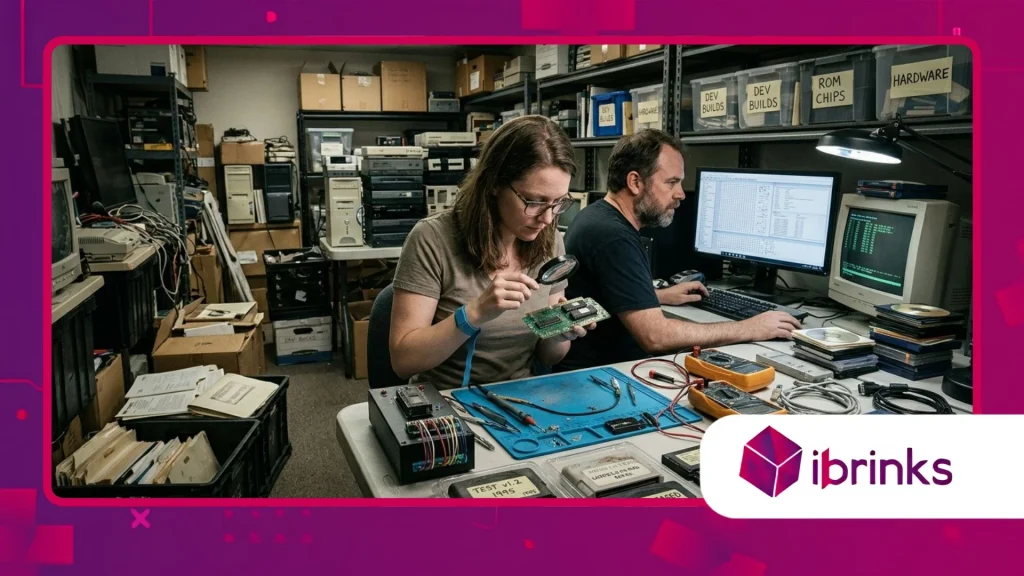
Why do old development builds deteriorate rapidly?
Physical magnetic disks, early prototype cartridges, and optical media suffer from relentless bit rot, magnetic flux decay, and chemical breakdown over long periods.
When storage materials age without proper climate control, the underlying binary data becomes completely unreadable by standard consumer hardware components.
Specialized non-destructive extraction protocols must be utilized to bypass damaged storage sectors without destroying the fragile original medium entirely.
Archivists often deploy specialized hardware readers to capture raw electrical signals directly from degraded silicon before physical failure occurs.
How do recovery specialists extract raw ROM data?
Specialized technicians employ sophisticated logic analyzers, oscilloscope probes, and custom read-out rigs to dump raw hexadecimal data from aging circuit boards.
When dealing with damaged or corroded integrated circuits, experts desolder the flash memory chips carefully and place them into professional universal programmers.
This delicate hardware-level extraction guarantees that subtle electrical anomalies do not corrupt the remaining valid data stored inside the memory cells.
Advanced error-correction algorithms are subsequently applied to reconstruct missing or distorted bits recovered from the initial hardware scan.
++ Hoe retro game mods klassieke titels levend houden
What tools are used in forensic game archaeology?
Digital archivists rely heavily on customized hardware dumpers, custom firmware scripts, and proprietary debugging cables to interface with obscure developer hardware kits.
These custom tools allow preservationists to communicate directly with proprietary processors and coprocessors found exclusively within rare development systems.
Furthermore, software-based hex editors and bespoke emulation environments help verify whether the dumped binary images execute correctly on target hardware.
Precision soldering stations, microscopic inspection cameras, and ultrasonic cleaning baths complete the essential toolkit required for hardware-level resurrection.
How do preservationists track down lost builds?
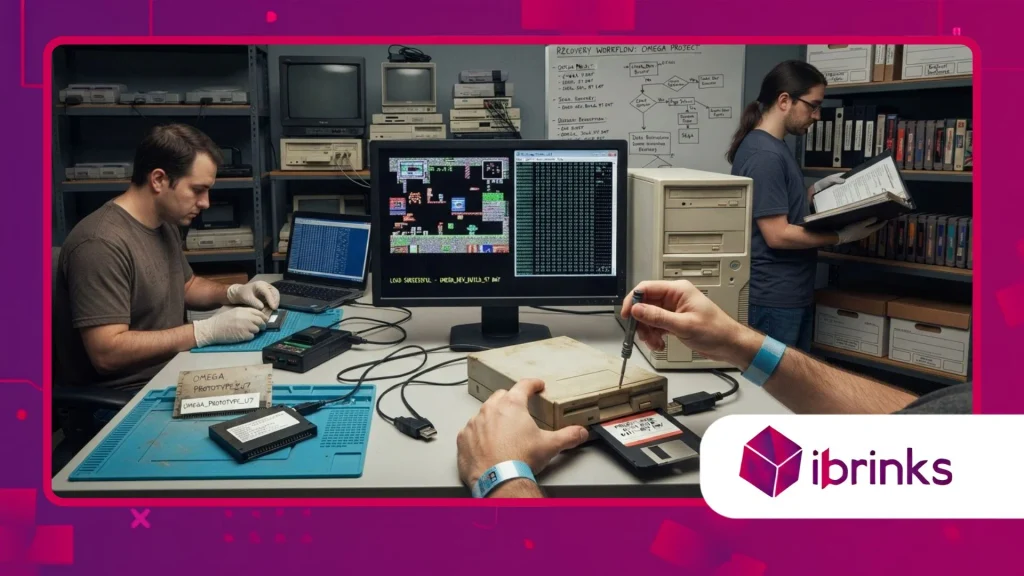
Where do missing prototype cartridges usually surface?
Lost development builds frequently surface in unexpected locations, including former developer garages, liquidators’ warehouses, and specialized online enthusiast auctions across the globe.
Industry veterans sometimes unearth long-forgotten boxes of backup floppy disks or prototype cartridges while cleaning out their personal attics or retirement homes.
Preservation groups maintain active communication channels with retired programmers, artists, and QA testers to track down these invaluable historical artifacts before they are discarded.
Networking within dedicated collector communities serves as a vital pipeline for discovering authenticated software builds from defunct studios.
Lees ook: Waarom regionale gametijdschriften de lokale gamegemeenschappen hebben gevormd
How is provenance verified for rare source code?
Establishing absolute authenticity requires cross-referencing file timestamps, internal developer documentation, unique build strings, and known compiler toolchains from specific historical eras.
Experts examine assembly code structures to ensure the routines match established coding styles and proprietary libraries used by the original development studio.
When anonymous sellers offer unverified disk images, archivists perform rigorous cryptographic hash checks and compare the data against known historical software leaks.
This meticulous authentication process prevents fraudulent reproductions from contaminating legitimate digital preservation archives and museum collections.
Lees meer: Analyse van de opkomst van retro-remasters: marketing en nostalgie
What legal frameworks govern software preservation efforts?
Digital archivists navigate complex copyright laws, intellectual property rights, and specific library exemptions designed to protect endangered cultural artifacts from permanent loss.
Many jurisdictions provide narrow legal provisions allowing accredited non-profit institutions to bypass technological protection measures strictly for preservation and research purposes.
However, public distribution of unreleased commercial code remains a legally gray area, prompting many groups to restrict access to physical archive facilities.
Collaborative agreements with surviving corporate entities increasingly help bridge the gap between legal compliance and historical software accessibility.
Why does saving unreleased software matter today?
How do recovered builds influence modern game design?
Studied closely by contemporary developers, recovered prototype builds reveal brilliant discarded mechanical ideas that inspire fresh indie titles and modern triple-A releases alike.
Examining early design iterations demonstrates how complex systems evolve through trial and error during high-pressure production cycles in competitive studio environments.
This historical transparency empowers upcoming creators to learn from past engineering triumphs and failures without repeating costly architectural mistakes.
Preserving these foundational milestones ensures that the artistic evolution of interactive media remains fully documented and open for critical analysis.
What is the future of digital heritage archiving?
Advanced cloud-backed repositories, decentralized storage networks, and standardized file formats are rapidly transforming how fragile historical code is secured for future generations.
Automated bit-rot detection systems now monitor massive digital libraries continuously to guarantee that archived binary files remain completely uncorrupted over centuries.
As artificial intelligence assists in decompiling legacy assembly languages, recovering lost development builds becomes faster and more precise than ever before.
Collaborative global networks of museums and universities continue expanding their digital vaults to protect our shared interactive legacy.
How can enthusiasts support software preservation initiatives?
Enthusiastic fans can contribute directly to recognized preservation foundations by donating historical hardware, archival documents, or financial resources required for costly restoration projects.
Supporting accredited museums and open-source emulation projects ensures that technical infrastructure remains robust enough to run recovered software indefinitely.
Education campaigns also help raise public awareness regarding the urgent need to protect digital culture from irreversible technological obsolescence.
Every collective effort brings us closer to safeguarding the complete history of human play and technological innovation.
Technical Comparison of Preservation Methods
| Recovery Approach | Primary Hardware Used | Risiconiveau | Target Media Type |
| In-Circuit Dumper | Arduino/Teensy Rigs | Laag | Standard Cartridges |
| Chip Desoldering | Hot Air Rework Station | Medium | EPROM / Flash Chips |
| Magnetic Read-Head | Flux Recovery Deck | Hoog | Floppy & Tape Media |
| Optical Extraction | High-Res Laser Rig | Hoog | Compact Discs & GD-ROMs |
The ongoing mission to rescue forgotten source code and prototype hardware ensures that our interactive heritage survives the relentless march of technological obsolescence.
By supporting meticulous archival practices and respecting the complex legal landscape surrounding digital preservation, we guarantee that future generations can explore the authentic roots of video game history.
Share your thoughts or preservation experiences in the comments below to join this vital conversation.
Veelgestelde vragen
What constitutes a lost development build in gaming history?
A lost development build refers to unreleased software versions, internal alpha builds, or prototype ROM images created during active game development that were never published commercially.
These rare artifacts often contain debug menus, placeholder assets, and entirely different level designs compared to final retail versions.
How do preservationists prevent physical data degradation on old media?
Archivists store fragile physical media in climate-controlled vaults with strictly regulated humidity, temperature, and light levels to slow down chemical breakdown.
They also create bit-perfect digital backups immediately upon acquiring any physical artifact to ensure long-term data survival.
Can anyone access recovered prototype builds at preservation museums?
Access to recovered source code and unreleased prototypes is typically restricted to authorized researchers, accredited historians, and educational institutions under supervised viewing conditions.
This restriction respects ongoing copyright regulations while fulfilling vital historical and academic preservation missions.
Why are early developer hardware kits so hard to find today?
Many development kits were routinely destroyed, recycled for parts, or thrown away by bankrupt studios to free up physical space and protect trade secrets.
Consequently, surviving units are extremely rare and highly prized by technological historians worldwide.
How does community support drive modern software archaeology?
Passionate community members provide crucial funding, technical expertise, and networking connections that enable non-profit organizations to rescue endangered media from private collections.
Crowdfunded preservation drives frequently cover expensive hardware repairs and legal consultations necessary for successful data recovery projects.
