
Waarom kwalificatiewedstrijden op locatie terugkeren naar de competitieve gamingwereld
Anúncios
In-person qualifiers are returning to competitive gaming as tournament organizers, game publishers, and sponsor partners confront the mounting limitations of purely online competition.
Across major esports ecosystems from tactical shooters like Counter-Strike 2 En Valorant to fighting games and battle royales regional LAN (Local Area Network) brackets are reclaiming their position as the primary proving ground for championship contention.
After years of relying on remote servers to cut travel expenses, event directors realized that digital-only pathways eroded competitive integrity, dampened sponsor activations, and stalled grassroots talent development.
Bringing players back into physical venues restores zero-latency parity, verifies player identity on stage, and rebuilds the electric atmosphere that originally turned competitive gaming into a global spectator business.
Wat u in deze gids zult ontdekken
- The Integrity Crisis: Why remote cheating, DDoS disruptions, and uneven ping forced publishers to rethink online brackets.
- Commercial and Broadcast Value: How regional LAN venues unlock local sponsorship revenue and authentic crowd energy.
- Player Development and Scouting: Why live stage pressure separates true championship contenders from online specialists.
- Format Comparisons: A side-by-side breakdown of online open brackets versus regional in-person qualifiers.
- Common Questions Answered: Detailed insights into costs, hardware standards, and upcoming circuit shifts.
Why Are Tournament Organizers Moving Away From Online-Only Qualifiers?
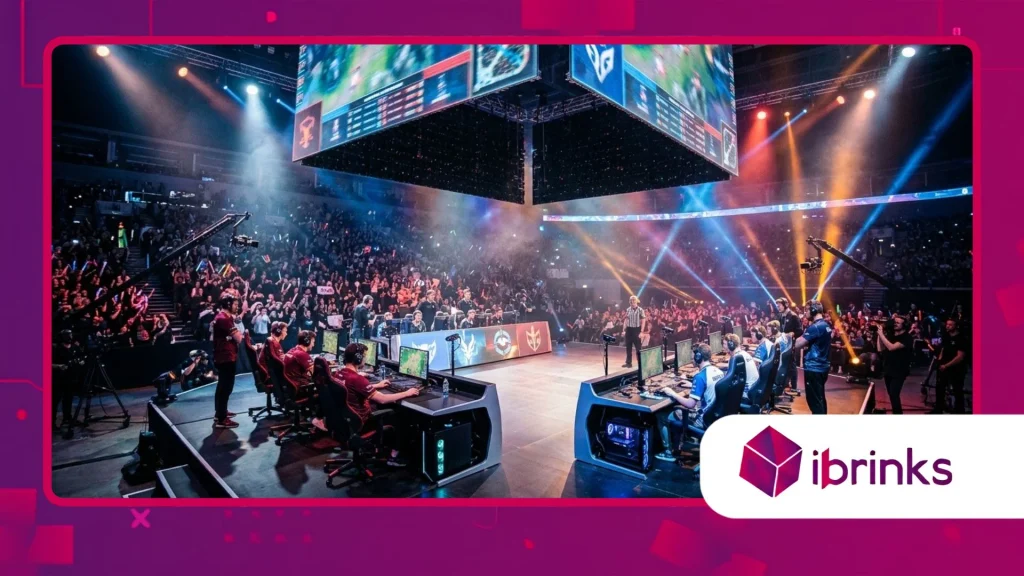
What Technical Vulnerabilities Damaged Online Competitive Integrity?
Remote tournament brackets suffered from persistent network disparities that undermined match outcomes before a single round began.
Anúncios
Players competing across vast geographical regions frequently faced ping differences exceeding 40 milliseconds, giving competitors located closer to central servers a measurable reaction advantage.
Even with strict anti-cheat software running in the background, bad actors exploited remote environments through hardware-level cheats, external radar tools, and account-sharing schemes that proved nearly impossible to police from afar.
Distributed Denial of Service (DDoS) attacks further derailed high-stakes broadcasts, forcing officials to delay matches or issue forfeits when home internet connections dropped mid-series.
Moving competitors onto closed local networks eliminates packet loss, server tick-rate discrepancies, and external network tampering in one stroke.
Tournament administrators inspect every peripheral, configure identical tournament-grade PCs or consoles, and monitor players directly behind their monitors.
Wanneer in-person qualifiers are returning to competitive gaming, referees no longer spend hours reviewing suspicious gameplay clips or investigating IP logs after a bracket ends.
Instead, results reflect pure mechanical skill, tactical preparation, and composure under standardized conditions.
How Did Remote Brackets Weaken Broadcast Storytelling and Fan Engagement?
Watching an elimination match unfold through webcam feeds of bedrooms and dimly lit gaming setups rarely generates the emotional stakes needed to captivate broad audiences.
Without live reaction shots, walkouts, or audible crowd reactions, online qualifiers struggled to differentiate high-stakes championship pathways from routine ranked ladder streams.
Broadcasters found it difficult to build compelling rivalries when emerging contenders remained faceless avatars until they reached an international Major.
Physical qualifier venues transform early-stage brackets into tangible sporting narratives that fans can rally behind in person and online.
Cameras capture the immediate tension of a player wiping sweat from their palms before a match-point round, alongside teammates celebrating across a shared stage table.
According to Esports Charts, regional LAN events consistently generate higher average minute audience retention during elimination rounds compared to equivalent online closed qualifiers.
Viewers stay tuned because live environments deliver authentic human drama that remote webcams simply cannot replicate.
++ Waarom meerfasige kwalificatierondes de toegang tot competitie vergroten
Why Could Publishers No Longer Ignore the Commercial Limits of Digital Brackets?
Sponsors invest in competitive gaming to build measurable brand affinity, showcase hardware in action, and engage directly with passionate communities.
Online-only qualifiers restricted partners to digital logo overlays and pre-roll video ads, offering zero physical footprint for product testing or fan activations.
Peripheral manufacturers, energy drink brands, and local tourism boards pushed organizers for live touchpoints where attendees could try new headsets, meet rising stars, and purchase team merchandise.
Hosting regional LAN qualifiers opens lucrative mid-tier commercial inventory that sustains tournament ecosystems year-round.
Local municipalities increasingly subsidize venue rentals through sports tourism grants, recognizing that weekend gaming qualifiers fill hotels and restaurants.
Hardware partners supply tournament floors with uniform monitors and PCs, turning the competitive arena into a living showroom.
Als in-person qualifiers are returning to competitive gaming, organizers diversify their revenue streams beyond volatile media rights deals.
How Do Live Qualifier Venues Benefit Players, Teams, and Sponsors?
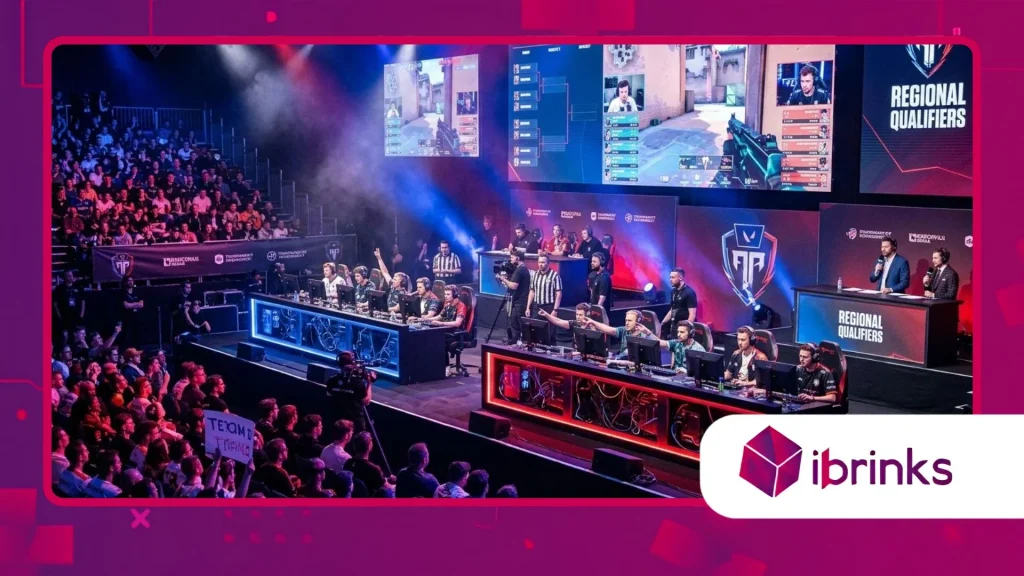
What Competitive Advantages Does Zero-Latency LAN Play Provide to Rosters?
Competing on a true Local Area Network removes the micro-stutters and hit-registration delays that distort timing in fast-paced titles.
In tactical shooters and fighting games, where frame-accurate inputs dictate whether a shot lands or a combo connects, sub-millisecond response times allow players to execute complex strategies with total confidence.
Teams can practice high-risk maneuvers knowing that server lag will not ruin a coordinated utility execution or frame-trap setup.
Consider an aspiring Street Fighter 6 of Tekken 8 competitor training for months on rollback netcode before entering a regional open LAN.
On stage, every parry window and whiff punish responds instantaneously to button presses, rewarding disciplined muscle memory over connection luck.
Roster managers also gain clearer evaluation metrics during live qualifiers, observing how teammates communicate verbally when adrenaline spikes in a noisy hall.
Rather than guessing whether a prospect will freeze under arena lights, organizations see real-time composure before signing long-term contracts.
How Do Regional LAN Events Rebuild Grassroots Talent Pipelines?
Online qualifiers often rewarded “ranked grinders” who thrived in comfortable home environments but struggled when confronted with travel fatigue and live crowds.
Conversely, local LAN centers and regional convention halls act as crucial stepping stones that prepare amateur squads for international stage pressure.
Stepping onto a community stage in Dallas, Birmingham, or São Paulo teaches young rosters how to manage pre-match routines, troubleshoot audio setups, and adapt to unfamiliar seating arrangements.
Think of regional LAN qualifiers like minor league baseball stadiums preparing prospects for the major leagues.
A pitcher might throw blazing fastballs in an empty bullpen, yet until they step onto a mound with spectators cheering behind home plate, coaches cannot trust their poise in the ninth inning.
Live qualifiers function identically for esports athletes, filtering out players who rely on home-field comfort while elevating resilient leaders.
Furthermore, local hubs foster mentorship, allowing amateur players to mingle with veteran coaches and scouts between bracket matches.
++ Hoe toernooi-roadshows esports dichter bij lokale fans brengen
Why Are Endemic and Non-Endemic Brands Returning to Mid-Tier Live Events?
Marketing directors discovered that passionate local audiences convert at much higher rates than passive global stream viewers.
At an in-person qualifier, attendees spend hours exploring vendor booths, participating in side tournaments, and interacting with brand ambassadors face-to-face.
This direct engagement creates memorable brand associations that translate into stronger retail sales and lasting customer loyalty.
Non-endemic sponsors ranging from telecommunications providers to automotive brands also view regional gaming qualifiers as accessible entry points into youth culture.
Sponsoring a global championship requires multi-million-dollar commitments, whereas backing a regional qualifier series offers manageable budgets with high community goodwill.
Omdat in-person qualifiers are returning to competitive gaming, brands can activate across multiple cities, tailoring campaigns to regional dialects, local influencers, and collegiate gaming clubs.
What Challenges Must Organizers Solve to Sustain In-Person Qualifiers?
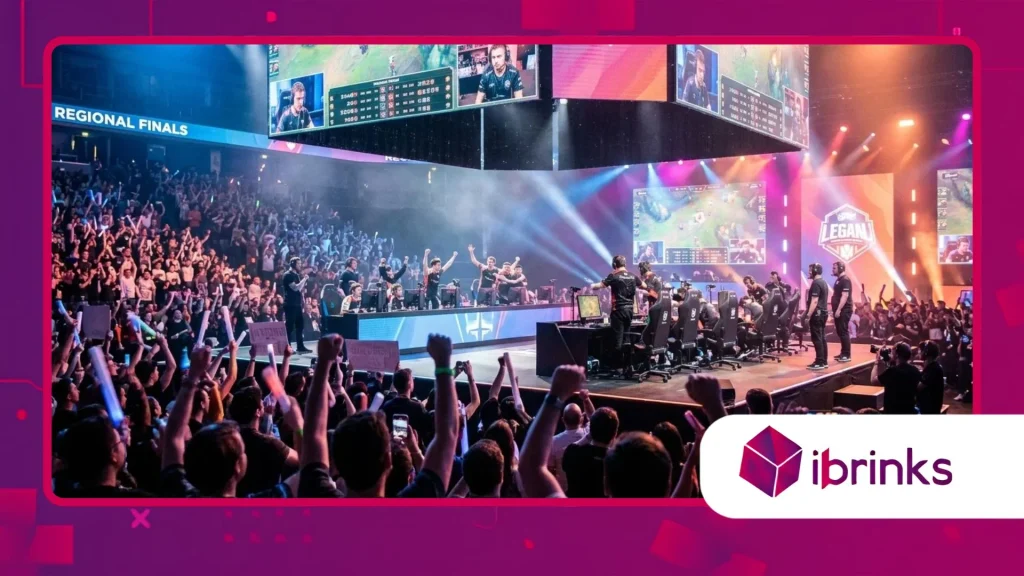
How Can Tournament Directors Keep Travel and Venue Costs Sustainable?
Renting convention space, securing high-speed fiber lines, and flying broadcast crews across regions require substantial upfront capital.
During the economic tightening of recent esports cycles, several mid-sized tournament operators folded after overcommitting to expensive arena rentals without guaranteed ticket revenue.
To avoid repeating past financial missteps, modern organizers rely on modular venue partnerships, partnering with dedicated esports arenas, university campuses, and hotel ballrooms rather than massive stadiums.
Many circuits now utilize a hybrid tiered model where early open sign-ups occur online before narrowing to a top-16 or top-32 live regional LAN.
This structure keeps travel stipends manageable while ensuring that decisive qualification spots are earned face-to-face.
Organizers also offset operational budgets by charging modest team pass fees for open-bracket entrants, a proven model popularized by the Fighting Game Community (FGC) for over two decades.
Lees ook: De opkomst van vrouwenafdelingen in de wereldwijde esports-circuits
What Standard Hardware and Referee Protocols Ensure Fair Play on Stage?
Bringing dozens of competitors into one room introduces logistical risks if tournament hardware varies across stations or if stage security falls short.
Professional organizers enforce strict equipment parity by deploying identical tournament PCs, standardized 240Hz or 360Hz monitors, and sealed peripheral lockers where players store approved mice and keyboards overnight.
Soundproof booths or industrial-grade noise-canceling headsets paired with white-noise generators prevent players from hearing crowd callouts or caster commentary.
Referees stationed directly behind competing rosters monitor screen settings, verify driver installations, and enforce communication rules during tactical timeouts.
Imagine a decisive match where a player attempts to plug an unapproved macro-enabled device into a stage tower; active floor marshals immediately intercept the hardware before the lobby launches.
Transparent rulebooks and rigorous pre-match inspections reinforce trust among fans, bettors, and competing organizations.
Will Hybrid Pathways Permanently Replace Purely Digital Qualification?
Does anyone truly believe that a world championship trophy carries the same prestige if half the finalists qualified from their living rooms without ever facing live opposition?
Industry consensus strongly favors permanent hybrid structures that combine broad online accessibility with mandatory live regional finals.
Online open brackets remain valuable for allowing thousands of players in remote towns to enter without buying expensive plane tickets for round one.
However, the final gateway to major international tournaments is firmly locking back onto physical LAN stages.
Publishers recognize that protecting competitive legitimacy and sponsor confidence outweighs the short-term savings of keeping everything remote.
Als in-person qualifiers are returning to competitive gaming, the industry is establishing a balanced blueprint that respects grassroots accessibility while demanding live proof of excellence.
Online Qualifiers vs. In-Person LAN Qualifiers: A Structural Comparison
| Evaluation Factor | Online-Only Qualifiers | In-Person Regional LAN Qualifiers |
| Network Latency | Variable (15ms to 80ms+ depending on server proximity) | Near-zero (sub-1ms local network parity) |
| Concurrentiële integriteit | Vulnerable to hardware cheats, DDoS, and account sharing | High security with referee oversight and sealed hardware |
| Operational Cost | Low (server hosting and remote broadcast staff) | Moderate to High (venue rental, equipment, travel logistics) |
| Sponsor Activation | Limited to digital overlays and stream commercials | High-value physical booths, product demos, and crowd signage |
| Spelerontwikkeling | Minimal stage pressure; favors home comfort | Builds resilience, live communication, and travel discipline |
| Broadcast Appeal | Lower viewer retention due to lack of crowd energy | Strong storytelling with live reactions and arena atmosphere |
The Future of Championship Pathways in Competitive Gaming
Reclaiming live regional stages marks a decisive maturation point for the global esports industry.
By prioritizing zero-latency fairness, verifiable anti-cheat enforcement, and authentic crowd storytelling, tournament organizers are repairing the competitive foundation that remote brackets weakened.
Players gain a genuine proving ground where mechanical precision and composure under pressure determine who advances, while sponsors recover tangible community touchpoints that justify long-term investment.
Ultimately, the fact that in-person qualifiers are returning to competitive gaming proves that true championship prestige cannot be downloaded it must be earned face-to-face under the stage lights.
What has been your favorite live qualifier upset or LAN moment recently? Share your thoughts and experiences in the comments below.
Veelgestelde vragen
Why did esports tournaments stop hosting in-person qualifiers in the first place?
Most tournament organizers shifted to online qualifiers during global travel restrictions in 2020 and initially kept the format to save money on venue rentals, flights, and hotel accommodations.
Over time, however, competitive integrity issues, DDoS disruptions, and declining sponsor interest forced publishers to reintroduce live regional events.
Are online qualifiers disappearing completely from competitive gaming?
No, online qualifiers still play an important role in the earliest stages of open tournaments where thousands of amateur teams compete.
Most major circuits now use a hybrid model where players battle online to reach the top 16 or 32, before traveling to an in-person LAN venue to fight for final championship spots.
How do in-person qualifiers prevent players from cheating?
At live LAN qualifiers, players compete on tournament-owned PCs or consoles configured by technical staff, eliminating unauthorized software installations.
Referees stand directly behind the competitors to inspect mice, keyboards, and controllers, while network administrators isolate tournament servers from external internet interference.
Which esports genres benefit the most from returning to live qualifiers?
Tactical first-person shooters like Counter-Strike 2 En Valorant, alongside fighting games like Street Fighter 6 En Tekken 8, see the biggest competitive improvements.
Both genres rely on frame-accurate timing and split-second reactions where even minor online ping fluctuations can alter match outcomes.
How can amateur players afford to attend in-person regional qualifiers?
Many regional organizers partner with local esports centers, universities, and convention halls to keep entry fees affordable for open-bracket entrants.
Amateur rosters also reduce travel expenses by competing in regional circuits close to home, sharing hotel accommodations, or securing travel stipends from local gaming sponsors and collegiate programs.
