
Why Game Manuals Have Become Collector’s Items
Anúncios
Game manuals were once the beating heart of physical video game releases, carrying narrative lore, detailed maps, and rich artistic illustrations directly into players’ hands.
Decades ago, opening a fresh plastic case meant breathing in distinct ink aromas while eagerly devouring character backstories and control schemes on the journey home.
Today, digital distribution platforms and day-one patches have virtually eliminated printed booklets, transforming these paper artifacts into highly sought-after treasures among retro gaming enthusiasts.
The sudden scarcity of physical documentation has fundamentally altered how collectors evaluate physical media, turning simple paper booklets into coveted museum-worthy relics.
이 글에서 무엇을 발견하게 될까요?
- Why Printed Booklets Disappeared: Discover how digital shifts and economic factors phased out physical documentation.
- How Preservation and Scarcity Drive Value: Understand the market forces, grading trends, and condition factors boosting prices.
- Which Items Fetch Top Value Today: Explore historical sales data, complete-in-box demand, and iconic collector favorites.
Why Have Physical Game Manuals Disappeared From Modern Releases?
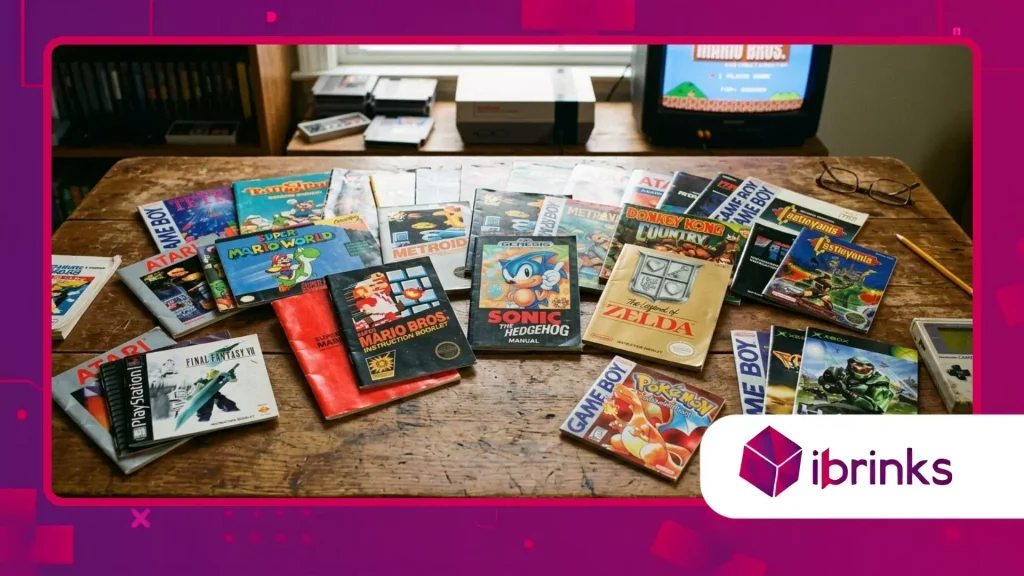
How Did the Transition to Digital Distribution Erase Paper Inserts?
Digital storefronts like Steam, the PlayStation Store, and Nintendo eShop permanently altered physical video game publishing models over the last fifteen years.
Anúncios
Publishers quickly realized that distributing digital software eliminated substantial printing, shipping, and storage expenditures, while downloadable updates allowed developers to adjust game mechanics long after official launch dates.
Consequently, static printed guides became obsolete before games even hit store shelves, leading companies to embed digital tutorials directly into gameplay systems.
This structural industry shift left traditional physical releases stripped of their original artistic charm, leaving cases empty except for minimalist disc inserts.
Modern gamers rarely receive physical booklets today, making vintage game manuals key historical markers of an era when tangible media delivered complete narrative experiences.
Why Did Publishers Stop Printing Booklets inside Software Cases?
Cost efficiency and environmental sustainability initiatives drove major gaming publishers to abandon physical printing altogether around 2010.
High-definition printing required costly paper stock, specialized inks, and additional assembly labor, which compressed profit margins across massive global distribution runs.
Beyond purely financial incentives, major corporations publicly committed to reducing plastic waste and carbon footprints by eliminating paper booklets across all standard retail versions.
While these strategic corporate decisions saved millions in production budgets, they inadvertently created an immediate paper shortage across vintage markets.
As original paper booklets were routinely lost, discarded, or damaged over time, complete retro physical releases became exceedingly rare across global secondary markets.
++ 레트로 게임 모드가 고전 게임들을 어떻게 계속해서 살아있게 하는가
What Role Does Nostalgia Play in the Search for Game Manuals?
Nostalgia functions as a powerful economic catalyst, driving adult collectors to reclaim authentic physical artifacts from their cherished childhood gaming memories.
Reading printed paper guides offered tactile engagement that modern digital downloads simply cannot replicate, establishing deep personal connections to pixelated virtual worlds before powering on consoles.
The sensory experience of leafing through vibrant artwork, detailed character rosters, and hand-drawn maps remains central to retro gaming culture.
As former young gamers attain disposable income, their desire to possess pristine physical media drives competitive bidding across online auction networks.
Consequently, surviving booklets from iconic gaming franchises command substantial price premiums from dedicated collectors worldwide.
How Do Preservation and Scarcity Drive the Collector Market?
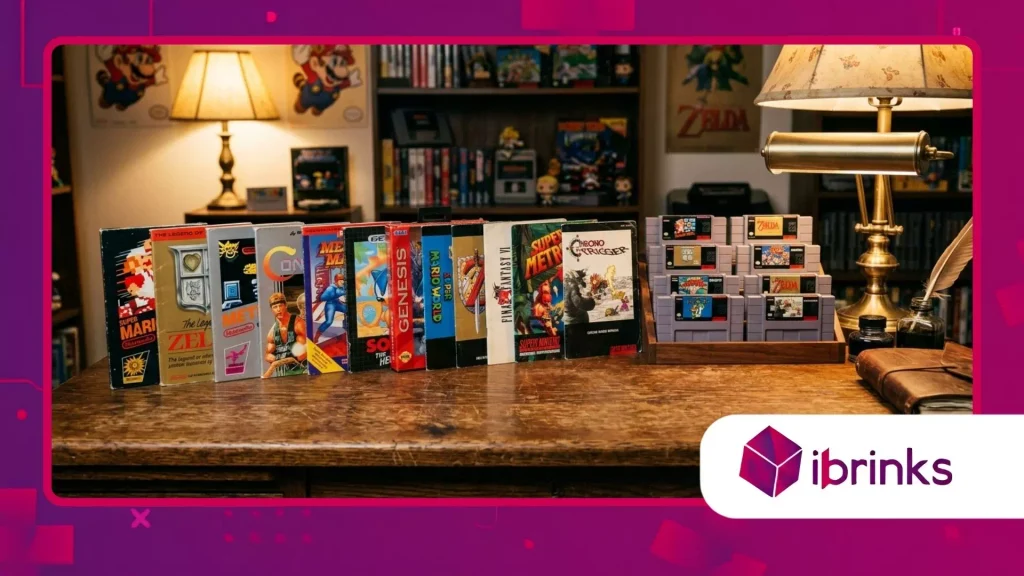
How Does Complete-in-Box Status Impact Market Valuations?
In retro gaming markets, Complete-in-Box status signifies that a title retains its original box, game cart or disc, and paper documentation.
Loose cartridges and unadorned discs are commonplace, but finding intact paper materials dramatically inflates a item’s overall market valuation.
Dedicated collectors routinely pay steep premiums to secure original paper booklets that transform incomplete items into museum-quality display pieces.
Without original paper inserts, even rare software titles lose significant overall financial valuation among serious physical media archivists.
The presence of well-preserved paper documentation often determines whether an item sells for standard retail pricing or record-setting auction totals.
다음 글도 읽어보세요: 지역 게임 잡지가 지역 플레이어 커뮤니티를 형성한 이유는 무엇일까요?
Why Are Rare Paper Inserts Harder to Preserve Than Discs?
Paper materials suffer inherently higher degradation risks than durable plastic discs or sturdy plastic ROM cartridges over extended historical periods.
Moisture exposure, direct sunlight fading, torn staples, dog-eared pages, and accidental child scribbles frequently ruined paper booklets during their original consumer lifespans.
Furthermore, countless players deliberately discarded paper materials to store cartridges inside generic rental cases or carrying pouches during the nineties.
According to statistical market analysis from the 비디오 게임 역사 재단, over 87 percent of classic video games released prior to 2010 are currently out of print, making physical artifacts like game manuals exceptionally scarce original assets.
Because paper degrades easily over time, finding unblemished vintage documentation remains an exceptional rarity today.
더 읽어보기: 레트로 리마스터의 부상 분석: 마케팅과 향수
How Does Professional Grading Affect Vintage Booklet Worth?
Professional third-party grading agencies like Wata and VGA evaluate physical media condition using strict numerical scoring systems that examine wear, creasing, and staple corrosion.
When complete boxed games undergo professional authentication, pristine paper inserts significantly boost the final numerical score awarded to the entire assembly.
High-grade certified copies frequently command thousands of dollars at major international auction houses, attracting high-net-worth investors into the retro gaming sphere.
As condition standards tighten across competitive auction platforms, flawless paper inserts serve as essential validation markers for elite collectible investments.
Collectors view certified paper documentation as tangible proof of authentic, unmolested historical gaming hardware preservation.
Which Classic Game Manuals Fetch the Highest Collector Prices?
What Makes Specific Vintage Booklet Editions Extremely Valuable?
Specific vintage booklets command extraordinary market prices due to limited initial production runs, regional distribution quirks, or unique physical pack-ins.
For instance, early Nintendo Entertainment System manuals featuring black-box artwork, full-color Super Nintendo maps, or detailed instruction booklets for rare RPG titles like 어스바운드 routinely command premium prices on secondary platforms.
Collectors actively seek out first-edition printings that include original registration cards, health warning inserts, and unpeeled promotional stickers.
When original games had restricted production runs, their accompanying paper documentation became exponentially rarer over subsequent decades.
Unearthing pristine paper inserts from obscure Japanese imports or limited Western localizations represents the ultimate prize for hardcore physical archivists.
How Do Misprints and Regional Variants Create Collector Demand?
Typographical errors, altered character artwork, and regional translation differences turn standard booklets into highly sought-after oddities among specialized collectors.
Unique localized releases across PAL, NTSC-U, and NTSC-J territories often featured drastically different manual layouts, paper dimensions, and cover art styles.
Misprinted versions containing missing pages or inverted color schemes attract passionate niche buyers eager to own singular pieces of gaming development history.
These rare regional variants highlight the fascinating evolution of localized international software marketing during the late twentieth century.
Owning alternative print runs allows historians to trace how global publishers tailored iconic video game properties for diverse international audiences.
Why Are Collectors Investing in Vintage Documentation Today?
Is holding physical history in our hands becoming the ultimate luxury in an increasingly ephemeral, cloud-based digital world?
Modern gamers recognize that digital licenses can be revoked or modified at any time, whereas physical paper artifacts remain permanent personal property.
Investing in authentic game manuals allows collectors to secure tangible, non-duplicable historical assets that steadily appreciate as available global supply shrinks.
Beyond pure financial speculation, preserving original paper documentation safeguards the cultural heritage of the interactive entertainment industry for future generations.
As physical gaming media vanishes from retail store shelves worldwide, vintage paper inserts stand as enduring monuments to video gaming’s golden eras.
Historical Valuation Comparison of Rare Physical Documentation
Below is a factual overview comparing loose market values versus complete-in-box valuations featuring original paper documentation across iconic retro titles:
| Video Game Title | 릴리스 플랫폼 | Estimated Loose Game Value | Estimated Complete-in-Box Value | Manual Impact on Overall Value |
| 어스바운드 | Super Nintendo (SNES) | $350 – $450 | $1,800 – $2,500+ | High (Includes Scratch-and-Sniff Cards) |
| 크로노 트리거 | Super Nintendo (SNES) | $200 – $250 | $800 – $1,200+ | High (Includes World Maps & Poster) |
| 판저 드래곤 사가 | 세가 새턴 | $400 – $600 | $1,200 – $1,800+ | Very High (Limited North American Run) |
| 리틀 샘슨 | Nintendo (NES) | $2,000 – $2,500 | $5,000 – $8,000+ | Extremely High (Ultra-Rare Paper Inserts) |
| Suikoden II | Sony PlayStation | $120 – $160 | $350 – $500+ | Moderate (High Demand RPG Booklet) |
Safeguarding Interactive Heritage for the Next Generation
The rise of digital distribution has permanently elevated physical gaming media from standard consumer products into rare, historical artifacts.
Surviving paper documentation represents a bygone era when physical touchpoints enriched virtual worlds through artwork, lore, and physical design.
As intact physical copies become scarcer across global markets, preserving these original materials becomes vital for maintaining interactive media history.
Whether you are an active retro gamer or a dedicated physical archivist, preserving paper inserts safeguards the artistic soul of classic gaming culture.
What was your absolute favorite video game booklet to read as a child? Share your favorite gaming memories and collection highlights in the comments below!
자주 묻는 질문
Why did video game companies stop including physical instruction booklets in cases?
Publishers phased out physical paper guides around 2010 to cut printing, manufacturing, and shipping costs, while simultaneously reducing environmental paper waste.
Additionally, developers shifted to embedding interactive tutorials directly into game software, rendering external paper guides functionally redundant for modern gamers.
How can I safely store and preserve my vintage game booklets?
To protect paper inserts from environmental damage, store them in acid-free archival plastic sleeves kept away from direct sunlight, humidity, and heat sources.
Keep booklets flat within rigid card sleeves or display cases to prevent creasing, page curling, and staple rust over time.
Where can I find authentic replacement booklets for my retro game collection?
Authentic replacement documentation can be sourced through specialized retro video game retailers, online auction sites like eBay, and dedicated gaming collector forums.
Always inspect high-resolution photos carefully to verify genuine paper stock, authentic staple placement, and original print quality before purchasing loose booklets.
How much value does an original manual add to a retro video game?
An original paper insert typically accounts for 20 to 40 percent of a game’s total Complete-in-Box market valuation, though ultra-rare titles see even higher percentage jumps.
Missing paper documentation significantly reduces a title’s financial worth among serious physical media collectors and grading authorities.
Are digital PDF scans of retro manuals considered acceptable substitutes for collectors?
While digital PDF scans are fantastic resources for historical preservation and gameplay reading, they carry zero financial or historical value within physical collecting markets.
True physical collectors seek original, tangible period-accurate paper printings to complete authentic physical releases.
