
Zone spettatori con realtà aumentata: migliorare l'esperienza nell'arena in un importante campionato di gaming
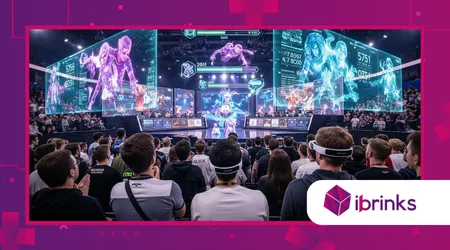
Augmented-reality spectator zones are transforming the live experience at major gaming championships in 2025, bridging the gap between digital action and the physical arena.
Annunci
This integration moves beyond simple screen viewing, plunging fans directly into the high-stakes environment of their favorite esports titles.
By layering dynamic, real-time data and visual effects onto the physical venue, AR technology creates a deeper, more immersive emotional connection for the attending audience.
It turns passive spectatorship into active participation, maximizing excitement.
Why Is Augmented Reality Crucial for Live Esports?
The challenge for live esports events is that the primary action happens on screens, often leaving arena spectators feeling disconnected from the digital battlefield. AR solves this core problem directly.
Augmented-reality spectator zones utilize wearable devices or smart displays to superimpose game elements, statistics, and immersive visual effects onto the stage, the players, and even the audience.
How Do AR Overlays Enhance Game Understanding?
During complex team fights or rapid action sequences, the game can be overwhelming for the casual viewer. AR provides simplified, real-time data overlays.
These overlays highlight crucial information, such as player health bars, ultimate ability cool-downs, or team gold differentials, ensuring clarity during peak chaos.
Leggi anche: Green-esports: organizzare un campionato di gaming a basse emissioni di carbonio
What is the Difference Between AR and VR in Esports?
Virtual Reality (VR) immerses the user completely into a fabricated world, replacing reality. Augmented Reality (AR) keeps the user in the real arena but adds digital information to their view.
AR is superior for live events because it maintains the shared atmosphere and excitement of the physical crowd while adding personalized digital context.
Per saperne di più: Come gli spettatori stanno diventando giocatori nelle trasmissioni dei campionati di gioco interattivi
Sports Commentator in Your Pocket
Traditional viewing is like watching a football game from the top seats.
Augmented-reality spectator zones are like having the commentator and a personalized data analyst whispering relevant stats directly into your ear, perfectly synced with the physical action.
What Types of Experiences Define AR Spectator Zones?
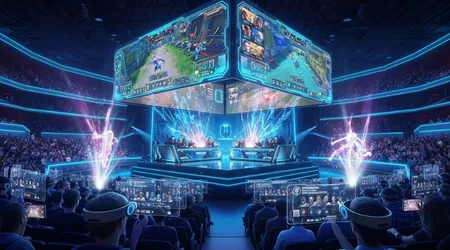
AR zones are defined by highly personalized, location-aware experiences that respond to real-time game events, turning the arena into a responsive, living extension of the digital game.
The best experiences move past static information, incorporating dynamic visual flair that maximizes emotional response and engagement with the match.
How Does In-Arena Gamification Work with AR?
Attendees can participate in simple, real-time prediction games through their AR app. For example, predicting the winner of the next skirmish or the next player to be eliminated.
This gamification of spectatorship keeps the audience locked into the action, rewarding them with digital prizes or exclusive in-game content codes.
What Role Do Real-Time Visual Effects Play?
When a critical moment occurs like a game-winning objective capture or a rare kill streak spectators see dynamic visual effects erupt around the stage or over the players.
Imagine seeing the game’s ultimate spell effects physically radiating from the screen, enhancing the collective “wow” moment for the entire audience.
The Health Bar Overlays
In a popular MOBA title, the Augmented-reality spectator zones could project massive, visually distinct health and mana bars above the actual player booths on stage.
When a player’s health drops critically low in the game, the corresponding AR bar in the arena visibly flashes red, directly communicating the tension to the crowd without looking at the main screen.
How Does AR Drive Community Engagement and Revenue?
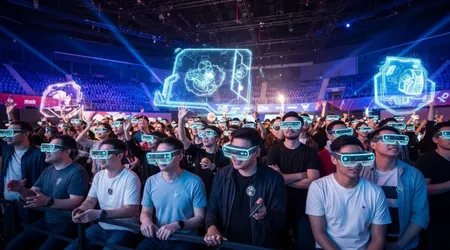
The integration of AR into the live arena experience provides powerful new vectors for community building, personalized fan service, and crucially, substantial revenue generation for tournament organizers.
This creates a self-reinforcing cycle where enhanced immersion justifies higher ticket prices and encourages greater fan spending on exclusive content.
How Are Exclusive Digital Collectibles Used?
AR enables the distribution of location-locked digital collectibles, such as player autographs or limited-edition skins, obtainable only within the physical arena using the AR app.
This exclusivity incentivizes attendance and drives revenue through the scarcity of digital assets, turning a ticket into a passport for unique digital ownership.
What is the Value of Personalized Player Information?
Fans can point their AR device at a player booth and instantly pull up that player’s specific in-game statistics, biography, and social media feeds.
This personalized layer deepens the individual fan-to-player relationship, strengthening team loyalty and increasing merchandise sales immediately after the match.
The AR Sponsorship Showcase
A tournament sponsor could utilize the AR zone to display a 3D hologram of their product mascot or latest gear in an empty section of the arena floor during intermissions.
Fans could then take personalized photos or interact with the digital object. This makes sponsorship integration memorable, trackable, and non-intrusive to the live game viewing.
What Technological Hurdles Must AR Zones Overcome?
The implementation of functional, large-scale Augmented-reality spectator zones requires solving complex technological challenges related to bandwidth, latency, and hardware distribution.
Failure to address these technical bottlenecks results in a frustrating, broken experience that detracts from the event rather than enhancing it.
Why is Ultra-Low Latency Wi-Fi Non-Negotiable?
For AR overlays to sync perfectly with the fast-paced game action, the arena’s Wi-Fi network must support ultra-low latency and massive simultaneous bandwidth demands from thousands of devices.
Any delay between the game state and the AR visual destroys the immersion and the feeling of real-time relevance, making 5G or dedicated local networks essential.
How is Device Compatibility Managed at Scale?
Ensuring that every attendee’s smartphone or purchased AR headset functions flawlessly requires rigorous testing across multiple platforms (iOS, Android, dedicated AR glasses).
Standardization and robust software development kits (SDKs) are crucial to prevent technical issues that could disenfranchise a large portion of the paying audience.
According to a 2024 Esports Venue Technology Report, major championship venues investing in AR are dedicating 40% of their total technology budget to installing proprietary high-density, low-latency Wi-Fi infrastructure, confirming the criticality of network stability for success.
| Technology Feature | Functionality in AR Zone | Benefit for Spectator | Critical Technical Requirement |
| Real-Time Data Overlays | Projects live stats (health, gold) over the arena | Enhances clarity during rapid in-game action | Ultra-low network latency (under 50ms) |
| Location-Based Content | Unlocks exclusive items/holograms based on seat location | Incentivizes physical attendance and unique engagement | Precise indoor GPS/BLE tracking |
| Dynamic Visual Effects | Large-scale virtual animations tied to peak game moments | Maximizes emotional excitement and shared experience | High-performance AR processing/GPU on local devices |
| Player Bio Pop-ups | Displays player info when a phone is pointed at their booth | Deepens personal fan connection and loyalty | Seamless image recognition and data retrieval |
Conclusion: The Future is Fully Interacted
Lo spostamento verso Augmented-reality spectator zones is redefining the value of attending a gaming championship in person.
It transforms the experience from watching a screen to being enveloped by the game itself.
By combining the thrill of live competition with personalized, data-rich digital overlays, organizers create an unparalleled, future-proof entertainment product.
This ensures the live esports experience remains vital in the digital age.
Will AR soon become standard for all major sporting events globally? Share your predictions for the future of interactive spectatorship below!
Domande frequenti
Does AR replace the need for the large main screen?
No. AR complements the main screen by adding personalized, optional information and dynamic effects. The main screen remains essential for the shared, centralized view of the gameplay.
Is this technology limited only to PC games?
No. AR can be applied to any esport, including console and mobile titles. The key is integrating the game’s official data API with the arena’s AR projection system.
Will I need special glasses to experience the AR zones?
Currently, most AR content is delivered via custom smartphone apps. However, dedicated lightweight AR glasses are rapidly becoming more common and will soon offer a hands-free, richer experience.
How do organizers prevent the AR experience from becoming distracting?
The best AR designs are context-aware. Key data highlights flash briefly during critical moments, and visual effects are controlled and timed precisely to enhance the action without obscuring the main view.
What is the biggest revenue driver for AR zones?
The biggest driver is the sale of exclusive digital content and limited-edition items (NFTs, skins, collectibles) that fans can only claim or purchase by being physically present in the AR-enabled venue.
