
Come i giochi di breve durata stanno sfidando la moderna formula AAA
Annunci
Shorter games have become the defining antidote to open-world exhaustion as players increasingly reject artificial fluff and repetitive bloat.
For decades, traditional major publishers operated under a rigid commercial doctrine: larger map sizes, endless side activities, and hundreds of gameplay hours translated directly into higher consumer value.
However, modern adult gamers face a severe time deficit, making vast procedural landscapes feel more like a demanding second job than an engaging form of interactive entertainment.
This shift in audience behavior has forced a major industry pivot where concise design, tight narrative focus, and immediate mechanical gratification regularly outperform bloated blockbusters in critical acclaim and player retention.
To navigate this detailed analysis of modern gaming trends, explore the primary core sections structured below:
Annunci
- Why Are Modern Players Choosing Concise Experiences Over Open-World Fatigue?
- What forces drive the shift toward lean game design?
- How does narrative density replace massive map bloat?
- Why are high completion rates transforming developer priorities?
- How Do Compact Titles Overhaul The Traditional AAA Production Model?
- How do reduced budgets protect creative experimentation?
- Why are major studios adopting compressed scope strategies?
- What economic realities threaten unsustainable mega-budget releases?
- What Business Strategies Guarantee Long-Term Success For Lean Titles?
- How does subscription access alter premium game valuation?
- Why do polished mechanics drive organic digital word-of-mouth?
- What metrics define real player satisfaction today?
- Comparison Breakdown: Traditional AAA Blockbusters vs. Concise Releases
- Il futuro della narrazione interattiva
- Domande frequenti
Why Are Modern Players Choosing Concise Experiences Over Open-World Fatigue?

What forces drive the shift toward lean game design?
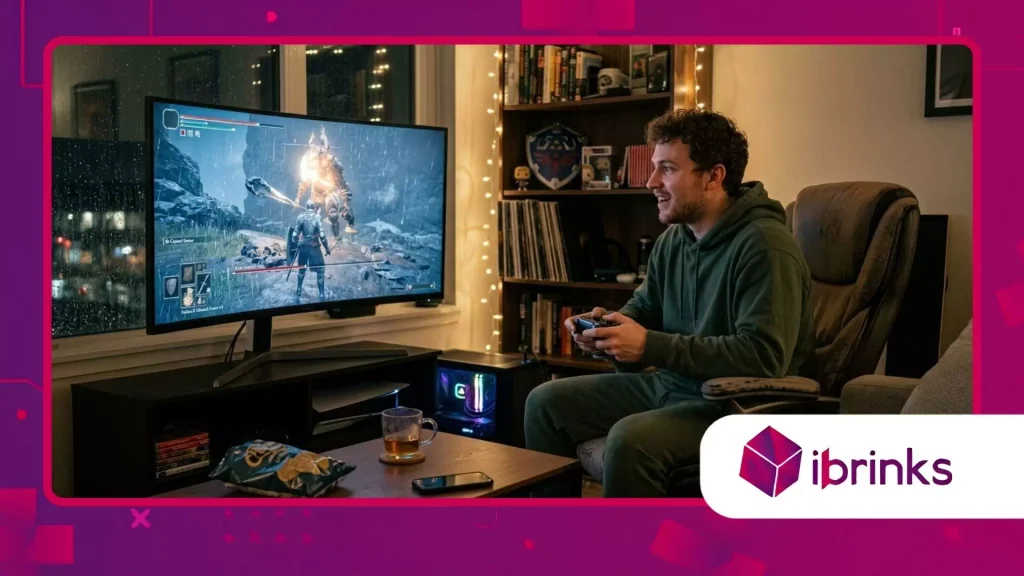
The contemporary gaming audience has aged significantly alongside the medium, with the average player now balancing professional responsibilities, family commitments, and competing digital media formats.
When a big-budget title demands eighty hours to reveal its central plot, it active friction against daily adult routines rather than delivering accessible leisure.
Purchasing shorter games offers a guaranteed return on investment because players can actually reach the end credits without experiencing severe burnout or narrative apathy.
This cultural shift transforms how players measure value, placing time efficiency above raw map dimensions.
Furthermore, mechanical repetition in massive titles has created a pervasive phenomenon known as open-world fatigue, where clearing identical map markers replaces genuine discovery.
Players no longer view thousands of collectible items or artificial level gates as extra value, recognizing them as artificial filler designed to inflate playtime statistics.
Compact experiences respect consumer attention by eliminating dead space, ensuring that every mechanic, dialogue line, and environmental detail serves a clear artistic purpose.
As a result, tight design philosophy creates a far more memorable and emotionally resonant experience from start to finish.
How does narrative density replace massive map bloat?
Narrative density focuses on delivering maximum thematic impact per minute rather than diluting emotional moments across dozens of filler side missions.
In a massive open-world title, crucial plot revelations are often separated by hours of travel across empty terrain, severing dramatic tension and weakening story momentum.
Conversely, focused linear or semi-open titles maintain relentless narrative pacing that keeps players emotionally invested throughout the entire journey.
By eliminating structural padding, developers can craft intricate level designs where every corridor and dialogue sequence contributes directly to character development.
Think of a bloated hundred-hour game as a diluting bucket of water, whereas a tightly crafted ten-hour release is an concentrated espresso shot of pure gameplay.
According to public telemetry data from Steam Achievement statistics, major open-world titles rarely see completion rates above thirty percent among their player base.
In stark contrast, focused experiences frequently maintain completion rates exceeding sixty percent because their pacing never grinds to a halt.
This striking disparity proves that players reward narrative density and momentum far more than sheer geographic volume.
++ Il futuro dei giochi a mondo condiviso oltre la formula MMO
Why are high completion rates transforming developer priorities?
When seven out of ten players abandon a title before reaching its midpoint, studios essentially waste millions of dollars developing late-game assets that remain unseen.
High completion rates provide studios with actionable player metrics, demonstrating that audiences fully digest the visual artistry and narrative arcs built by development teams.
When players actually finish a title, they are significantly more likely to recommend it within active community spaces or purchase future sequels.
Consequently, completion metrics have evolved from mere vanity stats into vital indicators of overall product health and franchise longevity.
Moreover, higher completion rates foster stronger community engagement, driving vibrant discussions, fan art, and critical analysis across digital platforms.
When an entire player base shares a complete, unified narrative journey, word-of-mouth momentum accelerates rapidly across social channels.
This organic enthusiasm creates a lasting cultural footprint that mega-budget titles with high abandonment rates rarely achieve. Studios now recognize that a finished ten-hour experience leaves a deeper impression than an unfinished eighty-hour epic.
How Do Compact Titles Overhaul The Traditional AAA Production Model?
How do reduced budgets protect creative experimentation?
The astronomical inflation of modern AAA production budgets frequently crossing two hundred million dollars forces major publishers into an extremely conservative design mindset.
When a project carries massive financial liability, executives systematically eliminate gameplay risks, relying on proven formulas, identical mechanics, and safe narrative tropes.
Lower production costs in shorter games liberate development teams from corporate risk aversion, granting them absolute freedom to experiment with unique visual styles and original mechanics.
This creative liberty produces innovative titles that push the entire medium forward mechanically and artistically.
By scaling back world size and asset density, smaller teams can focus entirely on refining core gameplay loops until they achieve mechanical perfection.
Instead of spreading budget thin across vast topographies, funding concentrates on polished animations, reactive artificial intelligence, and tight level architecture.
This targeted resource allocation allows compact projects to compete directly with massive blockbusters in visual fidelity and polish.
Consequently, lean production cycles serve as vital laboratories for groundbreaking mechanics that eventually influence the broader industry.
Leggi anche: L'ascesa di piani di sviluppo definiti dalla comunità che sostituiscono i piani di sviluppo fissi.
Why are major studios adopting compressed scope strategies?
Recognizing the unsustainable nature of seven-year development cycles, leading AAA studios are actively adjusting their production pipelines toward smaller, standalone expansions.
Publishing polished spin-offs or focused entries allows studios to reuse existing engine architecture while testing new narrative directions and gameplay systems.
This strategic pivot shortens time-to-market significantly, maintaining studio revenue streams without exhausting development teams through prolonged crunch periods.
Modern players eagerly welcome these focused releases as high-quality entries that do not require massive time commitments.
Furthermore, compressed development schedules directly reduce team burnout, mitigating talent attrition in an increasingly competitive technological landscape.
When developers can ship completed projects every two to three years instead of waiting nearly a decade, morale remains high and creative momentum builds naturally.
This operational stability enables studios to maintain distinct design identities while delivering consistent quality to their audience. Thus, scope compression represents a crucial evolution toward long-term studio sustainability.
Per saperne di più: Come i giochi moderni bilanciano libertà e guida senza essere presi per mano
What economic realities threaten unsustainable mega-budget releases?
The current economic model supporting giant open-world blockbusters is reaching a breaking point due to ballooning labor costs and extended development timelines.
When a single game requires seven years of continuous funding before generating revenue, even minor delays can cause catastrophic financial instability for parent publishers.
Additionally, consumer resistance against rising software prices makes it difficult to recoup extreme expenditures purely through base game sales.
As a result, publishers often resort to aggressive monetization strategies that compromise overall game quality and alienate players.
Focusing on compact scope offers a viable financial alternative that balances production expenditures against realistic market returns.
Shorter development turnarounds cushion studios against market shifts and changing consumer tastes that occur during decade-long production cycles.
By targeting precise scope parameters, developers achieve profitability without resorting to predatory microtransactions or battle passes. This balanced economic approach preserves player trust while securing stable financial health for development studios.
What Business Strategies Guarantee Long-Term Success For Lean Titles?
How does subscription access alter premium game valuation?
The rapid expansion of gaming subscription services has fundamentally reshaped how consumers evaluate the financial worth of interactive software.
On subscription platforms, players explore diverse catalogs without paying individual upfront retail fees, eliminating the traditional mental link between dollar cost and hourly duration.
In this subscription ecosystem, shorter games hold a distinct advantage because players can download, finish, and appreciate them within a single weekend.
This friction-free environment elevates concise titles into prime candidates for high engagement metrics.
In addition, subscription platforms provide developers with steady, predictable revenue streams through direct licensing deals and engagement-based payout structures.
This financial safety net reduces reliance on launch-week retail performance, allowing niche or experimental titles to thrive without mass-market marketing budgets.
Players use these services to discover hidden gems they might otherwise bypass at traditional retail price points.
Consequently, subscription models have democratized access to concise, creative titles while providing developers with sustainable financial support.
Why do polished mechanics drive organic digital word-of-mouth?
In a media landscape dominated by streaming platforms and social sharing, seamless gameplay design creates immediate viral visibility.
Compact titles prioritize mechanical precision and fluid control schemes, yielding satisfying gameplay clips that naturally spread across video platforms.
When players encounter tight mechanics free of technical bugs or pacing drag, they actively champion the product within online communities.
This peer-to-peer amplification generates organic marketing momentum that paid promotional campaigns simply cannot replicate.
Moreover, streamer engagement thrives on focused narrative pacing that holds audience attention without requiring weeks of repetitive gameplay broadcasts.
Content creators prefer games that deliver clear emotional climaxes and high-stakes scenarios within manageable streaming windows.
As influencers showcase complete playthroughs to captive audiences, viewers are inspired to purchase and experience the title firsthand.
Thus, polished mechanical execution combined with swift pacing drives exceptional conversion rates through organic media coverage.
What metrics define real player satisfaction today?
Modern game analytics have evolved beyond raw sales units to track deeper indicators of player fulfillment, emotional resonance, and brand sentiment.
High completion rates, positive user review ratios, and sustained post-launch discussions reflect genuine player satisfaction far better than total hours logged.
When players feel a game respects their limited free time, they form strong positive associations with the developer’s brand. This goodwill translates directly into brand loyalty, ensuring strong customer retention for future studio releases.
Ultimately, player satisfaction stems from memorable experiences rather than passive time investment or artificial map clearance.
A concise title that delivers a flawless eight-hour narrative leaves a lasting positive impression that encourages repeated playthroughs over time.
Conversely, bloated titles often leave players feeling relieved when the experience finally ends, damaging long-term enthusiasm for potential sequels.
prioritizing quality over quantity remains the single most reliable strategy for building enduring gaming franchises.
Comparison Breakdown: Traditional AAA Blockbusters vs. Concise Releases
The structural differences between bloated open-world blockbusters and focused releases highlight why modern player preferences are shifting toward condensed experiences.
| Evaluation Metric | Traditional Open-World AAA | Focused Concise Experience |
| Average Completion Time | 60 – 120+ Hours | 8 – 15 Hours |
| Main Narrative Completion Rate | 20% – 35% | 55% – 75% |
| Average Development Cycle | 5 – 7 Years | 2 – 3 Years |
| Production Cost Range | $150M – $300M+ | $10M – $40M |
| Core Gameplay Focus | Broad exploration, fetch quests, map clearance | Refined mechanics, dense storytelling, tight pacing |
| Player Time Efficiency | Low (heavy travel time, filler content) | High (constant momentum, direct progression) |
Il futuro della narrazione interattiva
The gaming industry stands at a pivotal crossroads where technological capabilities must align with practical human constraints and economic realities.
The persistent belief that bigger always equals better is fading as both consumers and creators grapple with the limits of bloated design paradigms.
By prioritizing narrative density, mechanical depth, and respectful scope management, smaller projects prove that interactive art excels when constrained by intentional boundaries.
Abbracciare shorter games offers a sustainable path forward that protects developer well-being while delivering rich, memorable experiences to players.
As production budgets stabilize and player time becomes increasingly precious, concise game design will remain an essential pillar of modern interactive entertainment.
What are your thoughts on this industry shift? Share your experience in the comments below!
Domande frequenti
Why are modern players shifting away from hundred-hour open-world titles?
Modern players often face severe time constraints due to adult responsibilities, leading to open-world fatigue from artificial padding and repetitive map activities.
Concise titles offer high narrative density and immediate mechanical satisfaction, allowing players to finish complete storylines without experiencing severe burnout.
How do smaller game scopes benefit game development studios economically?
Smaller game scopes reduce production timelines from seven years down to two or three years, lowering financial risk and budget requirements significantly.
This agile development approach protects studios from industry volatility while allowing teams to innovate mechanically without risking corporate insolvency.
Do concise games offer enough financial value compared to full-priced blockbusters?
Financial value in interactive media is increasingly measured by quality, pacing, and emotional impact rather than sheer hourly duration.
A tightly polished ten-hour game provides a superior, memorable experience that respects player time far better than an eighty-hour title filled with repetitive side quests.
How do gaming subscription services impact the success of shorter titles?
Subscription platforms eliminate the traditional friction of upfront retail prices, encouraging subscribers to explore diverse titles regardless of length.
Concise titles thrive in this environment because players can easily download, complete, and fully appreciate them within short gameplay windows.
Will major AAA publishers abandon massive open-world games entirely?
Major publishers will not abandon open-world games completely, but they are actively adopting hybrid strategies, such as releasing smaller standalone expansions alongside core franchises.
This balanced approach allows studios to maintain major brand visibility while testing innovative design ideas within manageable, concise formats.
