
Games that adapt to player mood using biometric and behavioral signals
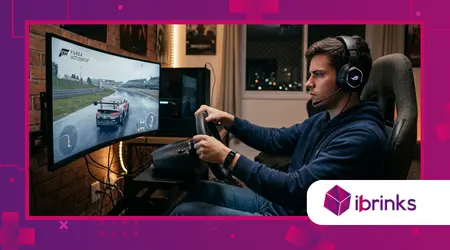
Adapt to player mood using biometric data is the latest frontier in 2026 gaming, transforming how software interacts with our internal emotional states.
Annunci
Developers are now integrating wearable sensors and camera-based heart rate monitoring to create experiences that breathe alongside the user.
This shift moves gaming away from static difficulty sliders toward a fluid, empathetic relationship between the machine and the human player.
By reading skin conductance and facial micro-expressions, modern titles ensure that every session feels personally tailored to your current mental energy.
Innovation Roadmap
- Biometric Integration: Exploring how modern consoles and PCs utilize smartwatches and high-definition cameras to track player physiological responses during gameplay.
- Dynamic Flow State: The science of keeping players in the “zone” by adjusting challenge levels based on detected stress or boredom signals.
- Psychological Immersion: How environmental storytelling, music, and lighting change in real-time to reflect or contrast the player’s internal emotional mood.
- Privacy and Ethics: Addressing the crucial boundaries of data collection and how studios protect sensitive health information in the 2026 digital landscape.
How does biometric feedback change the gaming experience?
The ability to adapt to player mood using biometric signals allows games like Nevermind to detect when you are becoming overwhelmed by fear.
Instead of letting you fail, the game might fog the screen or increase the difficulty to force you to calm down.
This creates a biological feedback loop where you must master your own physical reactions to succeed in the virtual world.
It is no longer just about fast fingers; it is about emotional regulation and physiological awareness in high-stakes environments.
What is the technology behind mood detection?
Smartwatches and headsets now feature photoplethysmography (PPG) sensors that detect blood volume changes to calculate heart rate and variability.
Advanced AI algorithms analyze these metrics alongside your button-mashing frequency to determine if you are frustrated, excited, or entering a state of fatigue.
Camera-based gaze tracking further refines this by seeing exactly where your focus drifts when you lose interest in a specific dialogue path.
This data allows the engine to skip filler content or trigger an event that pulls your attention back into the core narrative.
++ Come il sound design sta diventando il pilastro più sottovalutato dei videogiochi moderni
Why does real-time adaptation matter?
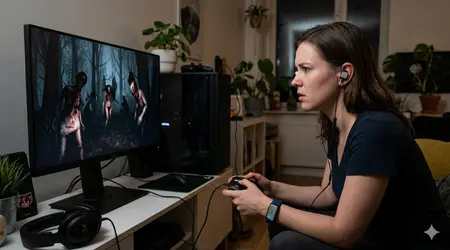
Imagine playing a horror title like The Persistence where the enemies become more aggressive only when the sensors detect your heart rate is too low.
The game “hunts” your complacency, ensuring that the tension remains at a peak level that is safe yet thrilling for your specific biology.
By avoiding the frustration of being “stuck,” these systems maintain a perfect flow state, preventing players from abandoning difficult titles.
It turns the software into a digital coach that knows exactly when to push you and when to offer a moment of rest.
Why are developers focusing on behavioral signals?
Studios have realized that to adapt to player mood using biometric inputs is just one part of a larger, multi-modal psychological profile.
Behavioral signals like how long you hesitate before making a choice in Life is Strange 2026 reveal deep subconscious preferences and personality traits.
These nuances allow the game to craft branching paths that resonate with your moral compass or current level of social patience.
The machine observes your playstyle to predict whether you want a frantic action sequence or a quiet, introspective walk through a digital forest.
Leggi anche: L'impatto ambientale dei giochi che occupano molto spazio sui server
How does behavioral mapping work?
The engine logs thousands of micro-actions, such as your movement speed through non-combat zones or your tendency to explore every corner.
If the system detects “looting fatigue” through erratic camera movements, it might automatically highlight the critical path to reduce your perceived mental load.
This invisible hand guides the experience without breaking immersion, making the game feel like a living entity that truly “gets” you.
It is the ultimate evolution of user-centered design, where the product reshapes itself to fit the user’s immediate psychological needs.
Leggi anche: L'impatto ambientale dei giochi che occupano molto spazio sui server
What are the benefits for mental health?
Games are increasingly used as therapeutic tools, where titles like EndeavorRx adapt to a child’s focus levels to treat ADHD symptoms.
By monitoring engagement in real-time, the game provides the specific cognitive stimulation required to help the brain rewire itself through play and positive reinforcement.
This intersection of medicine and entertainment is only possible because the software can read the body’s silent signals and respond with surgical precision.
It transforms a hobby into a wellness activity that supports emotional balance rather than just providing an escape from reality.
How do these games protect player data?
As we adapt to player mood using biometric data, the question of privacy becomes a central debate for the industry in 2026.
Responsible developers implement edge computing, where your biological data is processed locally on your hardware and never sent to a central server.
Encryption standards now treat heart rate and facial data as “biometric identity,” requiring the same level of security as a banking password.
Players must grant explicit, per-session consent, ensuring they remain the sole owners of their internal biological narrative during their playtime.
What are the risks of emotional manipulation?
There is a fine line between adjusting difficulty for fun and using a player’s vulnerability to push in-game purchases through targeted psychological triggers.
Ethics boards now monitor “dark patterns” that might exploit a player’s detected sadness or loneliness to sell social-based vanity items or shortcuts.
Regulation in 2026 requires transparency, where games must disclose if they are using emotional feedback to influence the marketplace.
Protecting the “sanctity of the mind” is now as important to gamers as protecting their digital wallets from fraudulent transactions.
How can players control their experience?
Most adaptive games include a “biometric toggle,” allowing you to play in a traditional, static mode whenever you feel like staying disconnected.
This gives the user the power to decide when they want an empathetic experience and when they just want to master a fixed challenge.
Are we ready for a future where our games know us better than we know ourselves?
This retorical question stays at the heart of the debate, as we balance the thrill of immersion with the necessity of maintaining our digital boundaries.
2026 Biometric Gaming Tech Standards
| Tech Layer | Data Input | Game Action | Obiettivo | Livello di impatto |
| PPG Sensor | Heart Rate | Adjust Difficulty | Prevent Frustration | Alto |
| GSR Sensor | Skin Conductance | Change Lighting | Enhance Tension | Moderare |
| Tracciamento oculare | Gaze Path | Dynamic Rendering | Optimize Performance | Alto |
| Micro-Face | Emotional State | NPC Reactions | Social Realism | Medio |
| Haptic Heart | BPM Sync | Controller Pulse | Physical Immersion | Moderare |
| EEG Headset | Brain Waves | Menu Navigation | Accessibilità | Estremo |
| Voice Tone | Stress Pitch | Enemy Dialogue | Psychological War | Basso |
| Edge Compute | Local Logic | Privacy Lock | Data Security | Essential |
Uno studio del 2025 condotto da Entertainment Software Association (ESA) showed that 64% of players felt more “satisfied” when games used adaptive difficulty.
This proves that to adapt to player mood using biometric data is not just a gimmick but a significant improvement to the core user experience.
Think of an adaptive game as a dance partner who subtly feels your lead and adjusts their steps to keep the rhythm alive.
It is a harmonious exchange where the software stops being a wall and starts being a bridge to a deeper form of play.
We are moving away from “beating” a game toward “experiencing” it in a way that respects our biological limits and emotional highs.
The future of gaming is not just about more pixels, but about more meaningful, human-centered connections through the power of data.
In the end, the most powerful hardware in any gaming setup remains the human heart, and it is finally being heard by the software.
This silent conversation is rewriting the rules of interaction, making the 2026 gaming landscape more inclusive and responsive than ever before.
Share your thoughts on this new era. Would you let a game read your emotions if it meant you would never get frustrated again? Share your experience in the comments!
The Empathy Engine
The movement to adapt to player mood using biometric signals marks the end of the “one size fits all” era in interactive entertainment.
We are entering a period where our consoles don’t just see us as users, but as living, feeling partners in a digital story.
Domande frequenti
Which games currently use biometric feedback in 2026?
Titoli come Nevermind and several VR horror experiences lead the way, while Forza uses haptic feedback to mimic physiological stress during high-speed races.
Do I need special equipment to play these games?
Most can sync with popular smartwatches (Apple, Garmin) or use standard webcams, but specialized haptic vests and EEG headbands provide the most accurate readings.
Is my heart rate data shared with other players?
No, modern privacy protocols ensure your biometric data remains private, though some competitive games allow you to “opt-in” to show your heart rate on leaderboards.
Does this make games too easy?
Actually, it can make them harder! If the game senses you are bored because the challenge is too low, it will ramp up the difficulty to keep you engaged.
