
Why Old Gaming Accessories Are Becoming Highly Collectible
Pengumuman
Old gaming accessories have transformed from forgotten attic clutter into highly prized historical artifacts that command massive attention from global collectors today.
For decades, players viewed plastic controllers, niche peripheral add-ons, and early cable adapters as mere temporary tools designed solely to facilitate digital entertainment.
However, as the video game industry matures past its half-century mark, a seismic shift in physical media preservation has revalued these tangible hardware pieces as irreplaceable cultural touchstones.
When we examine the broader trajectory of retro gaming, physical software cartridges often capture headlines, yet hardware peripherals actually hold the underlying historical framework together.
Without authentic expansion modules, dedicated light guns, or specialized arcade sticks, original gaming experiences remain fundamentally incomplete or emulationally inaccurate.
Pengumuman
Collectors, preservationists, and financial investors now actively seek out pristine vintage hardware to maintain authentic gameplay loops and safeguard vulnerable physical history.
Dalam Artikel Ini:
- Why collectible peripherals matter today
- How preservation drives market valuation
- What makes specific hardware rare
- Essential peripheral collector comparison
- The future of vintage hardware values
- Frequently asked questions
Why Are Old Gaming Accessories Becoming Highly Collectible Today?
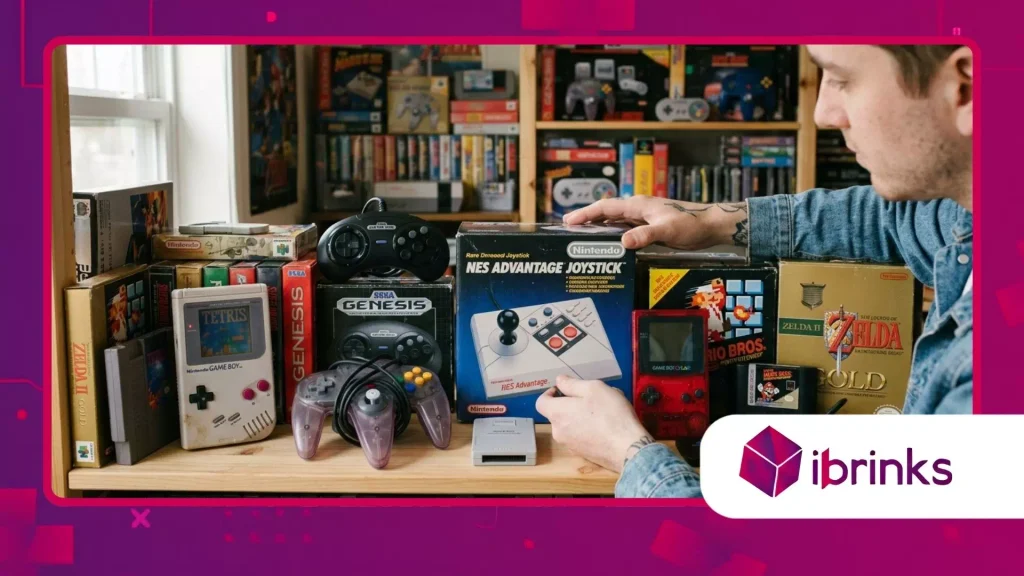
The sudden surge in valuation for vintage hardware stems directly from an acute realization that physical retro gear represents a finite, non-renewable resource.
Unlike modern peripheral manufacturers who produce millions of uniform USB controllers, classic hardware reflected experimental eras of industrial design where companies aggressively tested unique tactile mechanics.
Furthermore, as CRT televisions vanish from households, dedicated hardware solutions like specialized video upscalers and region-free adapters become indispensable tools for playing classic consoles on modern displays.
Collecting vintage peripherals also satisfies a deep psychological connection to tactile gaming history that modern digital distribution simply cannot replicate.
Holding an original Steel Battalion controller or an official Nintendo 64 Controller Pak reconnects players directly to specific mechanical eras of engineering.
A recent study by the Video Game History Foundation highlighted that 87% of classic video games released prior to 2010 are currently out of print and critically endangered, making surrounding hardware hardware ecosystems exponentially more valuable to active preservationists.
What Is Driving the High Demand for Retro Peripherals?
Physical nostalgia acts like a time machine, transforming original plastic gear into tangible anchors of personal hardware history.
Collectors are no longer satisfied with digital ROM files because software emulation rarely captures the exact latency, tactile feedback, and ergonomic weight of authentic original peripherals.
Consequently, enthusiasm for original hardware creates competitive online auction dynamics, pushing prices for sealed or pristine accessories upward at unprecedented annual rates.
Modern display technology creates an urgent technical necessity for specialized retro video accessories and hardware interfaces.
Standard HDMI televisions cannot natively process analog signal outputs from 1990s consoles without severe input lag and muddy image distortion.
Therefore, specialized line doublers, custom RGB cables, and high-end signal converters have transitioned from niche hobbyist tools into highly sought-after collectible assets for serious retro setups.
++ Bagaimana ROM Hacking Menjadi Komunitas Kreatif
How Does Physical Rarity Impact Market Values?
Manufacturing volumes during the 1980s and 1990s were often surprisingly small for specialized third-party peripheral hardware releases.
Manufacturers routinely discontinued accessories after short retail windows if initial sales figures lagged behind corporate projections, creating severe long-term market scarcity today.
When combined with natural plastic degradation, battery leaks, and discarded packaging, finding complete-in-box accessories feels like discovering preserved archaeological artifacts.
Unlike software cartridges, old gaming accessories suffered from remarkably high attrition rates due to intensive physical wear and tear over decades.
Intensive multiplayer sessions frequently destroyed directional pads, strained internal cord wiring, and snapped fragile plastic internal gears.
As functional surviving units dwindle globally, remaining working pieces naturally command significant premium prices among dedicated collectors seeking pristine functionality.
How Do Unique Features and History Drive Accessory Values?
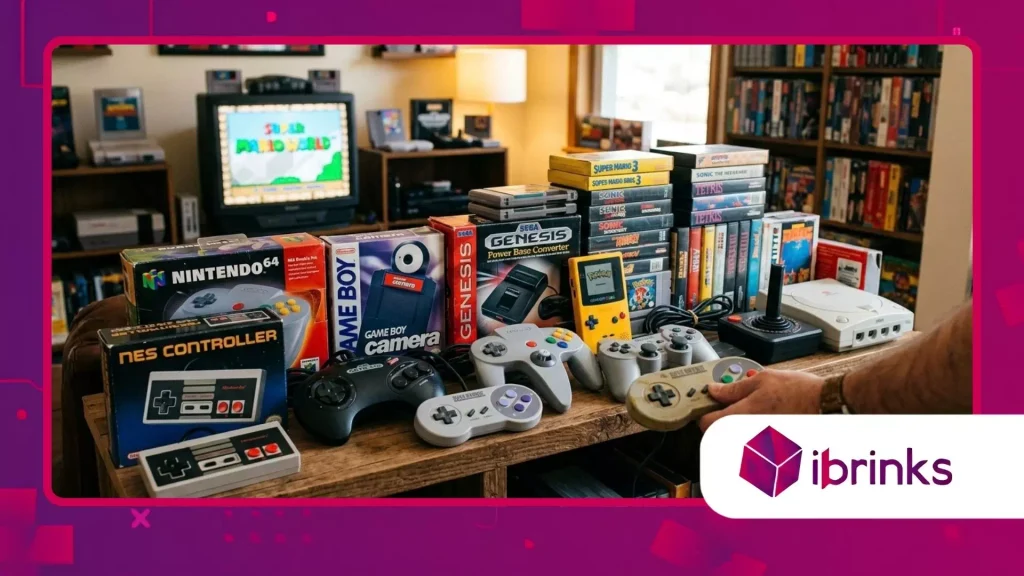
Historical context transforms ordinary gaming peripherals into legendary artifacts that redefine how we understand early hardware development.
Accessories that failed commercially during their initial market launch such as the Nintendo Power Glove or the Sega Activator often become the most prized collectibles decades later due to their ambitious engineering and cultural infamy.
These devices represent fascinating snapshots of corporate risk-taking before standardized twin-analog designs dominated the global games industry.
Analyzing historical accessory values resembles evaluating rare vintage automotive parts, where authentic period-correct components determine total operational value.
A complete collection today requires more than just functional consoles; it demands original memory cards, specialized link cables, and period-appropriate controllers.
Collectors treat these items as physical museum pieces that document the evolutionary lineage of human-computer interaction over five distinct decades.
Baca juga: Mengapa majalah game regional membentuk komunitas pemain lokal?
Why Do Experimental Peripherals Command Premium Prices?
Experimental hardware peripherals represent daring engineering gambles that modern risk-averse gaming corporations rarely attempt in contemporary hardware markets.
The iconic Steel Battalion cockpit controller for the original Xbox, featuring over forty physical switches and dual joysticks, remains a prime example of unapologetic design ambition.
Collectors willingly pay thousands of dollars for complete units because they deliver an unrepeatable physical experience that no modern gamepad can emulate.
Limited edition colorways and regional peripheral exclusives create intense cross-border bidding competition among global hardware enthusiasts.
Japanese gaming markets frequently received specialized controllers, translucent console variants, and unique mechanical arcade sticks that never reached Western retail shelves.
Finding these region-locked accessories preserved in original packaging provides collectors with an exclusive window into international gaming subcultures and regional design trends.
Baca selengkapnya: Menganalisis kebangkitan remaster retro: pemasaran dan nostalgia.
How Does Hardware Functionality Retain Long-Term Value?
Functionality remains the ultimate arbiter of value when assessing surviving vintage video game accessories and hardware.
Accessories engineered with robust arcade-grade components, such as Sanwa microswitches or heavy-duty steel flight sticks, hold up remarkably well against physical wear over time.
Collectors prioritize these durable units because they remain fully operational for competitive retro tournaments and authentic gameplay preservation projects.
Conversely, accessories that utilize early custom microchips or proprietary connectors often require specialized restoration skills to remain functional today.
As skilled retro hardware technicians become scarce, fully restored, recapped, and calibrated original accessories experience rapid price appreciation.
Buying professionally serviced gear guarantees long-term usability, insulating collectors against unexpected internal component failures.
What Are the Most Valuable Types of Vintage Accessories?
Identifying high-value accessories requires understanding which categories offer true utility alongside historical scarcity.
Specialized controllers, high-end video cables, mouse attachments, and memory expansion modules represent the core pillars of hardware collecting.
Collectors evaluate items based on operational necessity, aesthetic appeal, brand authenticity, and physical condition.
To provide clear market clarity, the following comparative table outlines primary accessory categories, their historical purpose, rarity factors, and current collector market positioning.
| Accessory Category | Historical Purpose | Key Rarity Drivers | Collector Market Positioning |
| Specialized Flight/Cockpit Sticks | Immersive simulation control | High production costs, small manufacturing runs | Premium flagship collectibles |
| Light Guns & Optical Sensors | CRT-based targeting games | Incompatibility with modern displays | High niche preservation demand |
| Expansion & RAM Modules | Increasing console memory specs | Essential for specific late-era game titles | Critical functional necessity |
| First-Party Arcade Sticks | Authentic coin-op arcade feel | Wear and tear, heavy component usage | Highly sought by fighting game purists |
| Niche Network/Modem Adapters | Early online multiplayer experiments | Discontinued services, low initial adoption | Rare historical curiosities |
What Is the Future Outlook for Vintage Hardware Collecting?
The future trajectory for collecting classic hardware accessories points toward steady appreciation as original supplies continue to decline globally.
As first-generation gamers reach peak earning years, their desire to reclaim intact physical pieces of their childhood drives robust market demand across auction platforms.
Furthermore, the growing mainstream recognition of video games as legitimate cultural heritage ensures that museums and private archives will compete directly with individual collectors for pristine hardware pieces.
Preserving these physical artifacts requires active maintenance, technical knowledge, and proper environmental storage to prevent irreversible material degradation.
Rubber thumbsticks naturally breakdown, internal capacitors eventually leak corrosive chemicals, and clear plastic shells suffer from severe yellowing when exposed to UV light.
Collectors who master hardware maintenance will safeguard these historic treasures, ensuring that future generations can experience video game history as it was originally designed.
How Can Collectors Preserve Vintage Accessories Safely?
Protecting delicate classic peripherals demands controlled climate conditions and proactive preventive maintenance routines.
Storing gear in UV-shielded containers prevents fragile ABS plastic from yellowing, brittling, and losing structural integrity over decades.
Additionally, removing internal alkaline batteries from vintage rumble packs and wireless receivers is essential to prevent catastrophic chemical leakage from destroying internal circuit boards.
Regular technical servicing ensures that mechanical contact points, potentiometers, and internal rubber conductive pads remain responsive.
Utilizing isopropyl alcohol for cleaning internal contacts and applying silicone grease to mechanical gears restores original tactile responsiveness without damaging vintage housing materials.
Preserving original functionality allows these mechanical marvels to remain active links to gaming’s foundational eras.
Where Is the Vintage Accessory Market Heading Next?
Pasar untuk old gaming accessories is rapidly transitioning from informal garage sale trading into a sophisticated, highly organized global asset market.
Professional third-party grading services now encapsulate pristine boxed accessories in protective acrylic cases, establishing standardized cosmetic ratings that drive significant market liquidity.
While this financialization frustrates some casual hobbyists, it undeniably elevated humble plastic controllers into respected industrial design artifacts.
Ultimately, authentic physical hardware remains the true physical backbone of video game preservation and historical appreciation.
As software shifts entirely toward cloud streams and digital downloads, tangible physical gear provides an irreplaceable connection to interactive media history.
Collecting vintage accessories is no more a simple hobby; it is an active act of preserving human digital culture.
Common Community Questions
Are third-party vintage accessories worth collecting?
First-party accessories made directly by console manufacturers generally command higher long-term value, but specific third-party accessories are exceptionally rare.
Brands like Hudson Soft, HORI, and Asciiware produced legendary specialized controllers that rival first-party quality. Unique third-party items with low production runs often appreciate faster than common official alternatives.
Why do light guns fail to work on modern flat-screen televisions?
Original light guns rely on the precise timing of cathode-ray tube electron beams scanning across phosphors.
Modern LCD, OLED, and QLED displays do not refresh screens using electron beams, rendering traditional optical sensors completely unresponsive.
Collectors must use original CRT displays or specialized modern light gun modifications to play these classic titles.
How can I tell if a rare retro controller is authentic?
Authentic vintage peripherals feature crisp molded manufacturer logos, precise screw placements, and high-quality plastic weight.
Counterfeit or reproduction shells often exhibit rough seam lines, overly shiny plastic finishes, and lightweight internal components.
Checking internal circuit board stamps and serial numbers provides definitive proof of original manufacturing origin.
What causes retro plastic accessories to turn yellow over time?
Vintage electronics utilized flame-retardant bromine additives inside ABS plastic formulas to comply with safety regulations.
When exposed to ultraviolet light and oxygen, bromine molecules react and oxidize, shifting the original gray or white plastic into a distinct yellow tone.
This process can be reversed temporarily using specialized hydrogen peroxide light treatments known as Retrobrighting.
Should I keep original accessory packaging intact?
Original packaging dramatically increases the total market value of vintage gaming hardware, often doubling or tripling its selling price.
Boxes, instruction manuals, twist ties, and internal styrofoam inserts represent scarce fragile paper materials that rarely survived household trash cans.
Preserving original packaging protects the physical hardware while maximizing long-term collector asset value.
