
Bagaimana toko penyewaan game mengubah generasi konsol.
Pengumuman
Toko penyewaan game Membentuk seluruh generasi hiburan interaktif dengan mendemokratisasi akses ke kaset mahal dan rilis perangkat keras baru selama akhir abad kedua puluh.
Dulu, ketika membeli satu gim video saja sudah menghabiskan sebagian besar gaji mingguan, toko-toko kecil milik keluarga dan jaringan besar menyediakan hiburan yang terjangkau.
Setiap Jumat malam, keluarga-keluarga berjalan menyusuri lorong-lorong yang diterangi lampu neon, mencari kotak-kotak plastik terbaru yang dihiasi dengan seni piksel.
Toko-toko fisik tersebut menciptakan pusat komunitas tempat anak-anak mendiskusikan mekanisme permainan dan bertukar kiat jauh sebelum forum berkecepatan tinggi ada.
Meneliti fenomena retro ini mengungkapkan bagaimana akses fisik memicu kreativitas dan eksperimen di antara para pemain yang jika tidak, tidak mampu membeli judul-judul eksperimental.
Pengumuman
Alih-alih mempertaruhkan uang hasil jerih payah pada rilis yang belum terbukti, para penggemar menguji judul-judul tersebut selama akhir pekan, membentuk kesuksesan pengembang melalui volume penyewaan yang besar.
Mengingat kembali papan neon dan kotak plastik berbentuk cangkang itu membangkitkan rasa nostalgia budaya yang mendalam terhadap era analog.
Apakah Anda masih ingat aroma khas buku petunjuk yang dipinjam dari toko di lingkungan Anda?
Menjelajahi Era Retro Media Fisik
- Bagaimana toko-toko lokal mendemokratisasi akses ke pustaka konsol 16-bit dan 32-bit yang mahal.
- Dampak ekonomi dan sosial yang mendalam dari budaya checkout akhir pekan terhadap para pemain.
- Mengapa peredaran kaset fisik mendorong pemasaran dari mulut ke mulut yang sangat penting bagi penerbit.
- Pergeseran teknologi yang pada akhirnya menyebabkan penurunan penyewaan properti fisik.
Apa Dampak Budaya dari Kebijakan Peminjaman Akhir Pekan?
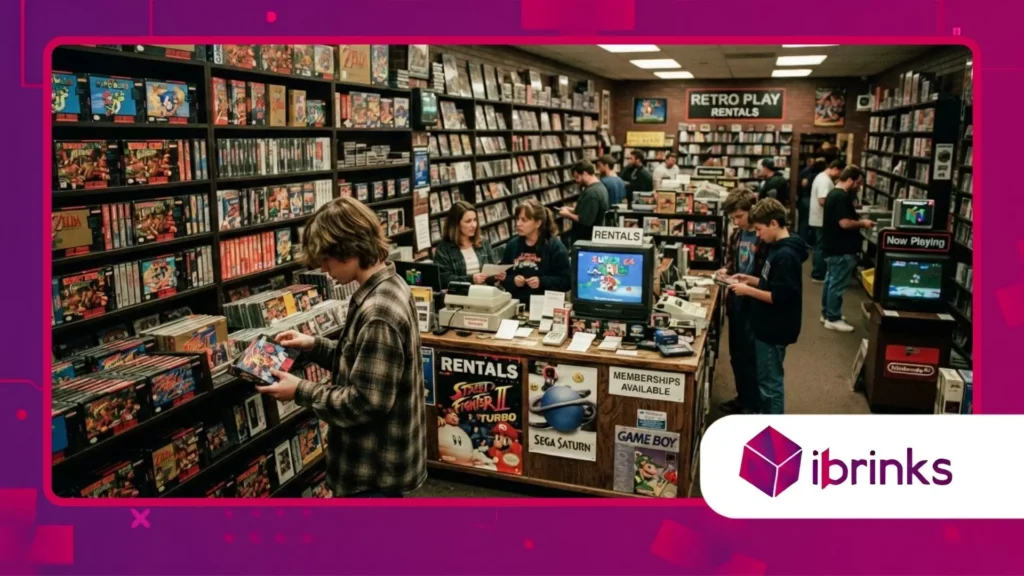
Toko penyewaan game mengubah Jumat malam menjadi ritual sakral bagi jutaan anak yang tumbuh di era keemasan konsol 16-bit.
Untuk mendapatkan rilisan terbaru yang sangat didambakan, diperlukan kedatangan lebih awal sebelum etalase plastik kosong yang dipajang habis sepenuhnya.
Bayangkan Anda memasuki toko yang terang benderang di mana dinding-dindingnya berkilauan dengan sampul buku berwarna-warni yang menjanjikan petualangan fantasi epik.
Antisipasi yang nyata itu membangun kegembiraan kolektif yang tidak dapat ditiru oleh unduhan digital modern dalam lanskap otomatis saat ini.
Selain itu, bisnis-bisnis ini memungkinkan para pemain untuk mencoba puluhan judul game yang tidak akan pernah mereka beli secara langsung karena harga ritelnya yang tinggi.
Jika sebuah permainan terbukti terlalu sulit atau mengecewakan, penyewa cukup mengembalikannya pada Senin pagi tanpa penyesalan finansial.
Eksperimen dengan risiko rendah ini mendorong basis pemain yang lebih berani untuk mencoba genre yang kurang dikenal, mulai dari simulasi strategi yang kompleks hingga platformer yang aneh.
Data industri dari publikasi perdagangan historis menunjukkan bahwa permintaan sewa sering kali menyumbang lebih dari tiga puluh persen dari paparan awal suatu judul melalui dari mulut ke mulut.
Bagaimana Toko-Toko Menangani Permintaan Tinggi untuk Produk Baru?
Para pemilik toko mempertahankan daftar tunggu yang sangat panjang dan menerapkan batasan peminjaman dua malam yang ketat untuk memastikan setiap orang mendapat giliran untuk mencoba film-film laris.
Para karyawan sering menempelkan catatan peringatan pada kaset game populer untuk memberi tahu pelanggan tentang pertarungan bos yang sulit atau bug progres yang diketahui.
Kurasi akar rumput ini membentuk jaringan pengetahuan bersama yang terlokalisasi dan menghubungkan para pemain di lingkungan yang sama persis.
++ Menjelajahi prototipe langka dari judul-judul arcade klasik.
Mengapa Denda Keterlambatan Menjadi Pengalaman yang Begitu Berkesan?
Lupa mengembalikan kartrid tepat waktu mengakibatkan denda kecil yang mengajarkan para remaja pelajaran keras pertama mereka tentang tanggung jawab pribadi.
Mengorek-ngorek bantal sofa untuk mencari uang receh guna membayar denda keterlambatan menjadi ritual universal bagi para penggemar game retro di mana pun.
Biaya-biaya kecil tersebut mendanai persediaan tambahan, membantu toko-toko independen bertahan hidup dengan margin keuntungan yang tipis selama bulan-bulan musiman yang sepi.
Baca juga: Revolusi Arcade di tahun 70-an dijelaskan
Bisakah Langganan Digital Menggantikan Keajaiban Itu?
Layanan berlangganan modern menawarkan perpustakaan tanpa batas secara instan, namun mereka kurang memiliki sensasi taktil dari menjelajahi rak fisik di bawah lampu neon yang berkelap-kelip.
Keberadaan toko fisik memaksa para pemain untuk menentukan pilihan akhir pekan, mengubah proses seleksi menjadi sebuah acara sosial yang disengaja.
Unsur kurasi manusia itu lenyap begitu algoritma mengambil alih toko digital, mengubah cara kita menemukan seni interaktif.
Bagaimana Sirkulasi Fisik Membentuk Pengembangan Game?
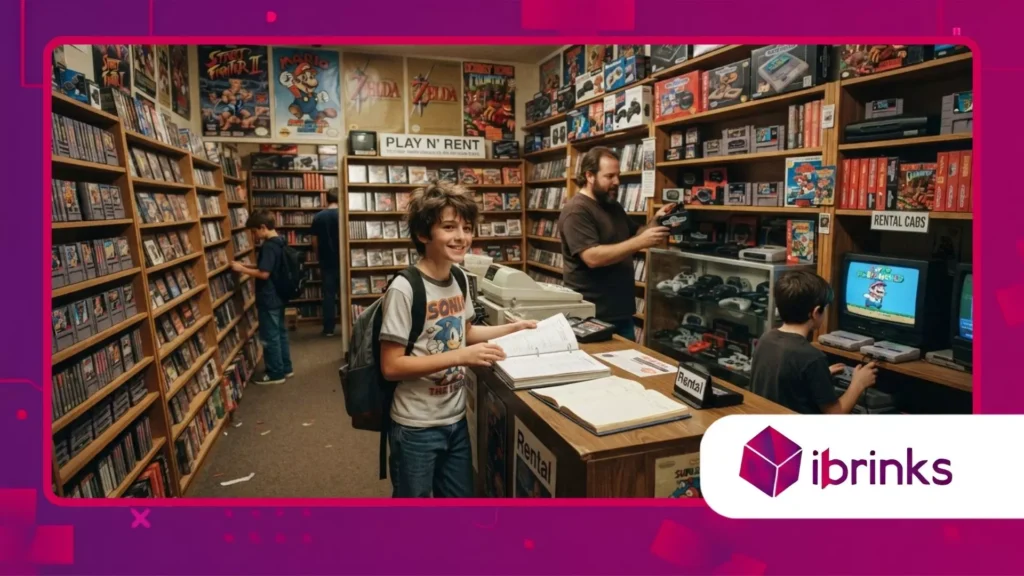
Model operasional dari toko penyewaan game Secara tidak sengaja memaksa para pengembang game untuk menciptakan pengalaman yang langsung menarik perhatian pemain dalam tiga puluh menit pertama.
Karena penyewa akhir pekan dapat dengan mudah menyelesaikan judul yang pendek atau meninggalkan judul yang membosankan, pengembang merancang daya tarik awal yang kuat untuk menjamin kepuasan.
Tekanan desain ini melahirkan kurva kesulitan bergaya arcade yang ikonik dan level pembuka yang tak terlupakan yang tetap melegenda di kalangan komunitas penggemar game retro.
Para penerbit dengan cepat menyadari bahwa ulasan negatif dari mulut ke mulut di kalangan penyewaan lokal dapat langsung menurunkan angka penjualan yang diproyeksikan untuk sekuel tersebut.
Anggaplah hubungan antara toko penyewaan dan penerbit sebagai ekosistem berisiko tinggi yang menyerupai perpustakaan yang dipadukan dengan laboratorium pengujian.
Jika sebuah kartrid tidak disewa selama berminggu-minggu di rak, pemilik toko akan menukarkannya atau menurunkan harganya untuk mengosongkan ruang inventaris yang berharga.
Seleksi alam yang brutal ini mengajarkan studio-studio desain mana yang benar-benar disukai oleh para pemain, bukan hanya departemen pemasaran perusahaan.
Analisis pasar independen dari era tersebut menyoroti bahwa banyak judul film kultus bertahan semata-mata karena popularitas persewaan mendorong permintaan konsumen yang berkelanjutan.
Baca selengkapnya: Menganalisis kebangkitan remaster retro: pemasaran dan nostalgia.
Mengapa Penerbit Awalnya Menentang Pasar Penyewaan?
Perusahaan perangkat lunak besar berpendapat bahwa penyewaan menggerogoti penjualan ritel langsung karena satu kartrid yang dibeli secara teoritis dapat menghibur puluhan rumah tangga.
Beberapa penerbit bahkan mencoba memblokir penyewaan secara hukum atau mengenakan biaya lisensi komersial yang dinaikkan untuk melindungi margin keuntungan mereka dari pemilik toko independen.
Untungnya, permintaan konsumen menang, membuktikan bahwa penyewaan sebenarnya berfungsi sebagai mesin penemuan besar dan gratis untuk seluruh industri.
Apa yang terjadi pada toko-toko kecil milik keluarga yang independen?
Pesatnya perkembangan internet broadband, jaringan distribusi digital, dan jaringan penyewaan korporat besar akhirnya menyingkirkan toko-toko independen dari bisnis sepenuhnya.
Seiring media fisik digantikan oleh penyimpanan cloud dan unduhan instan, toko lingkungan setempat menjadi peninggalan nostalgia masa lalu.
Saat ini, para kolektor barang retro memburu kotak plastik yang sama di berbagai konvensi, membayar harga premium untuk barang-barang yang dulunya disewa dengan harga murah.
Bagaimana Para Kolektor Barang Antik Melestarikan Sejarah Ini?
Para pelestari yang berdedikasi kini mengarsipkan stiker penyewaan, spanduk promosi, dan kotak plastik khusus untuk mendokumentasikan babak unik dalam sejarah video game ini.
Artefak fisik ini menceritakan kisah yang kaya tentang bagaimana orang awam mengakses media digital sebelum internet berkecepatan tinggi mengubah kebiasaan budaya kita selamanya.
Melindungi barang-barang ini memastikan generasi mendatang memahami akar analog dari hiburan interaktif modern.
Mengapa Para Gamer Nostalgia Meromantiskan Era Analog?
Daya tarik abadi terhadap toko penyewaan game Hal ini berakar dari kerinduan kolektif akan masa-masa yang lebih sederhana ketika menemukan dunia baru membutuhkan perjalanan fisik.
Mengunjungi toko lokal adalah sebuah perjalanan pengalaman yang menawarkan interaksi sosial, penemuan tak terduga, dan kegembiraan taktil saat membuka etalase baru.
Di era digital yang sangat terhubung ini, ketersediaan jutaan judul game secara instan menghilangkan sensasi berburu yang menjadi ciri khas pengalaman bermain game di akhir abad ke-20.
Kami mengorbankan misteri dan komunitas fisik demi kenyamanan tanpa batas, sebuah pengorbanan yang masih dipandang oleh banyak pemain veteran dengan perasaan campur aduk.
Secara statistik, pasar perangkat keras game retro dan kaset fisik telah melonjak selama dekade terakhir, didorong oleh orang dewasa yang mencari koneksi otentik dengan masa kecil mereka.
Menurut analisis ritel budaya, penjualan pasar sekunder untuk barang-barang klasik 8-bit dan 16-bit telah tumbuh secara eksponensial karena nostalgia mendorong tren koleksi modern.
Ketahanan ekonomi ini membuktikan bahwa ikatan emosional yang terbentuk di dalam toko-toko lingkungan tersebut meninggalkan jejak abadi pada generasi penggemar.
Kenangan yang tercipta di bawah cahaya lampu neon yang bersinar itu tetap menjadi harta karun abadi dari sejarah interaktif.
Apa Peran Desain Kemasan dalam Proses Seleksi?
Tanpa ulasan daring atau pratinjau video, para pemain menilai permainan sepenuhnya berdasarkan ilustrasi dramatis yang dilukis dengan tangan dan dicetak pada kotak kardus.
Para penyewa sering mempertaruhkan hiburan akhir pekan mereka pada karya seni monster yang mencolok atau desain pesawat ruang angkasa futuristik, yang berujung pada kemenangan tak terduga atau kekecewaan yang menggelikan.
Misteri visual itu menambahkan lapisan petualangan ekstra pada setiap kunjungan Jumat malam.
Bagaimana Budaya Multiplayer Berkembang Melalui Penyewaan?
Menyewa satu kaset permainan untuk empat pemain beserta pengontrol tambahan mengubah acara menginap biasa menjadi turnamen akhir pekan yang legendaris dan kompetitif di antara teman-teman.
Berbagi layar fisik di ruang tamu yang sama memupuk ikatan sosial yang mendalam yang sulit ditiru oleh platform perjodohan daring saat ini.
Momen-momen multiplayer yang dibagikan itu tetap menjadi beberapa kenangan terindah dari generasi konsol tersebut.
Mengapa Arsip Fisik Penting Saat Ini?
Melestarikan artefak fisik dari era penyewaan game melindungi konteks budaya di mana game-game klasik ini awalnya dinikmati dan dikonsumsi.
Tanpa catatan fisik ini, bagian penting dari sejarah game berisiko lenyap ditelan ketidakjelasan korporat seiring dengan penutupan toko digital.
Dengan memelihara arsip fisik, warisan toko-toko lokal akan terus hidup untuk generasi sejarawan mendatang.
Data Retrospektif: Evolusi Distribusi Game
Tabel analitis di bawah ini membandingkan model penyewaan fisik tradisional dengan metode akses digital modern di berbagai era.
| Era Distribusi | Metode Akses Utama | Gaya Penemuan Konsumen | Biaya Rata-Rata Per Judul |
| Era Analog Tahun 1990-an | Pemeriksaan kartrid fisik | Penelusuran gambar sampul kotak & pilihan staf | Rendah (Biaya sewa akhir pekan) |
| Transisi tahun 2000-an | Kios penyewaan cakram optik | Grafik pilihan & rekomendasi dari sesama pengguna | Sedang (Per hari atau tarif tetap) |
| Era Digital 2026 | Pustaka langganan cloud | Umpan algoritmik & streaming instan | Tinggi (Biaya bulanan berulang) |
Kesimpulan
Zaman keemasan toko penyewaan game Telah mengubah selamanya cara masyarakat berinteraksi dengan media digital, membuktikan bahwa ruang fisik bersama dapat membangun komunitas yang erat.
Perjalanan akhir pekan itu membentuk selera kami, menguji kesabaran kami, dan memberikan momen-momen kegembiraan yang tak terlupakan selama masa kejayaan konsol game rumahan.
Meskipun teknologi telah berkembang pesat menuju pengiriman instan melalui cloud, jejak budaya toko penyewaan lokal tetap tak tertandingi.
Luangkan waktu sejenak untuk mengingat film-film favorit masa kecil Anda; judul klasik mana yang sering Anda sewa berulang kali? Bagikan kenangan nostalgia Anda di kolom komentar di bawah!
Pertanyaan yang Sering Diajukan
Apa yang menyebabkan hilangnya toko-toko penyewaan video game fisik secara total?
Pesatnya perkembangan internet broadband berkecepatan tinggi, platform distribusi digital, dan layanan streaming berlangganan membuat toko fisik menjadi tidak layak secara ekonomi bagi sebagian besar operator independen.
Ketika para pemain dapat mengunduh pembaruan dan judul lengkap secara instan dari ruang tamu mereka, kebutuhan untuk meminjam game fisik di akhir pekan pun secara alami menghilang.
Apakah pengembang game benar-benar mendapat keuntungan finansial dari pasar penyewaan?
Ya, terlepas dari skeptisisme awal di industri, penyewaan bertindak sebagai mekanisme coba-sebelum-beli yang ampuh yang meningkatkan penjualan perangkat lunak secara keseluruhan dan memicu pemasaran dari mulut ke mulut yang antusias.
Para pemain yang menemukan judul game bagus selama akhir pekan sering kali langsung membeli salinan permanen untuk koleksi pribadi mereka.
Apakah Anda masih dapat menemukan toko penyewaan fisik yang beroperasi saat ini?
Meskipun jaringan toko besar arus utama telah lenyap sepenuhnya, sejumlah kecil toko retro indie dan arsip penggemar masih menawarkan penyewaan fisik atau perpustakaan game komunitas.
Operasi khusus ini terutama melayani kolektor sejati dan generasi muda yang penasaran dengan mekanisme nyata dari budaya game retro.
