
Gaming Technology Innovations: The Future Is Here
The gaming industry is at a remarkable crossroads, witnessing gaming technology innovations that are poised to redefine the future of gaming.
Anúncios
From ancient board games to today’s engaging digital experiences, the journey has been extensive and transformative. As of 2023, the global gaming market has soared to an impressive revenue of $183.9 billion, with over 3.3 billion gamers worldwide, highlighting the growing importance of immersive experiences.
This advancement isn’t merely confined to numbers; it’s a reflection of technological advancements that have significantly reshaped how we engage with games.
In the upcoming sections, we’ll delve into the current landscape of gaming, explore the innovations driving this evolution, and examine what lies ahead for an industry that continuously pushes the boundaries of entertainment.
The Evolution of Gaming Technology
The history of gaming showcases a remarkable journey that spans over 5,000 years. It began with ancient board games, such as Senet from Egypt, which marked the early days of play and competition.
As societies progressed, the evolution of gaming transformed, leading to the creation of video games, a medium that has since revolutionized entertainment and culture.
In 1977, the launch of the Atari 2600 initiated the second generation of video game consoles. This marked a significant evolution, although the market faced a downturn with the video game crash of 1983, causing several companies to go bankrupt.
Nonetheless, the introduction of the Nintendo Entertainment System (NES) in 1985 revived the industry, featuring advanced 8-bit graphics and improved gameplay.
By 1989, handheld gaming gained traction with the release of the Game Boy, which became a major success, selling 118 million units. The competition heated up during the same year as the Sega Genesis arrived, sparking the first true console war against Nintendo’s Super NES.
This landmark period set the stage for future innovations and advancements in video gaming.
The turn of the millennium brought the launch of Sony’s Playstation 2 in 2000, which solidified its position as the best-selling game console of all time. Following this, in the mid-2000s, Microsoft’s Xbox 360, Sony’s Playstation 3, and Nintendo’s Wii ushered in the modern age of high-definition gaming.
The Wii stood out due to its motion-sensitive remotes, expanding the gaming audience significantly.
The success of gaming further expanded with the introduction of alternative revenue models. The rise of the free-to-play mobile games by 2010 validated new approaches to monetization in the industry. Educational games, like Minecraft: Education Edition, emerged, offering innovative ways to engage students in learning complex subjects.
The evolution of gaming technology illustrates a dynamic landscape, evolving from simple board games to interactive video experiences that integrate business innovations, artistic expression, and social connections. This journey not only reflects human creativity but also paves the way for future advancements in the gaming sector.
Understanding Gaming’s Current Landscape
The gaming industry has significantly transformed over the last several decades, showcasing its remarkable resilience and adaptability. Current gaming trends reflect a considerable shift in the demographics of gamers, who now range widely in age.
This evolution has been fueled by the introduction of innovative technologies such as virtual reality and augmented reality, which enhance user immersion beyond mere entertainment.
Esports have emerged as a formidable force, drawing massive audiences and rivaling traditional sports in viewership. The rise of cloud gaming has reshaped competitive gaming by allowing players to access high-quality games without the need for expensive hardware. Streaming platforms like Twitch and YouTube Gaming have further accelerated this phenomenon, creating robust online communities.
Major tech companies continue to invest heavily in VR and AR, reflecting the market’s shifting focus. These technologies not only cater to gamers’ demands for immersive experiences but also drive advancements in display and data visualization.
As the gaming industry leads in the adoption of AI, it has positioned itself as a crucial player in tech innovation across various sectors, including insights on procedural generation and environment design.
With an eye toward the future, gamers act as tech-savvy consumers eager to embrace the latest advancements while shunning outdated technologies.
The industry’s commitment to pushing realistic graphics has benefited not only gaming but sectors like scientific visualization and telecommunications. Emerging concepts such as play-to-earn models, where players earn real-world assets through in-game activities, are redefining economic participation within gaming.
Overall, the gaming landscape continues to evolve, largely driven by players’ relentless quest for innovation and enhanced experiences. Game developers are prioritizing inclusivity, ensuring diverse character representation and accessibility features that cater to all players.
As the industry advances, its influence is anticipated to extend well beyond gaming itself, shaping technology development in myriad ways. For a deeper dive into how gaming impacts technological progress, check out this article.
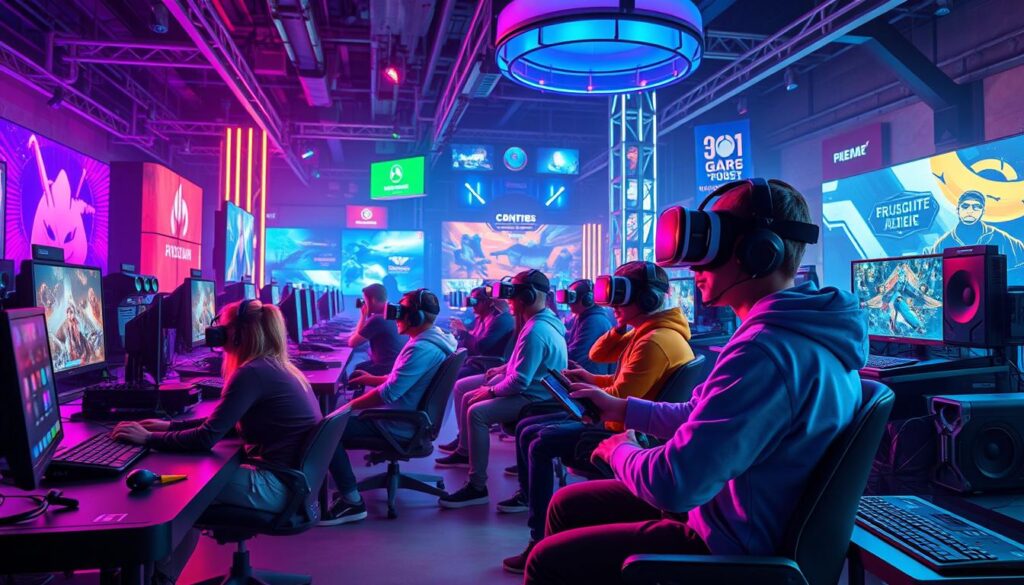
Modern Gaming Technology Innovations
The gaming landscape continues to evolve rapidly, showcasing remarkable innovations that reflect modern gaming trends.
In 2022, several companies introduced groundbreaking devices aimed at enhancing accessibility and portability. Notable examples include the Steam Deck, Logitech G Cloud Gaming Handheld, and Playdate, each designed to meet gamers’ diverse needs.
The Steam Deck allows users to access their entire Steam library on the go, paired with customization options typically found in PC gaming. This device is pivotal for players seeking flexibility and high-fidelity graphics while traveling. On the other hand, the Logitech G Cloud Gaming Handheld provides nearly 12 hours of battery life, catering to those who enjoy cloud gaming and mobile experiences without frequent interruptions.
Playdate stands out with its unique control mechanism and a subscription-based game model. Its titles, such as Hyper Meteor, Pick Pack Pup, and Flipper Lifter, have garnered positive feedback for their innovative gameplay.
These models exemplify the changing dynamics in game development, driven largely by mobile gaming’s rise, powerful consoles, and the increasing popularity of PC gaming.
The emergence of cross-platform gaming signifies a shift towards inclusivity, as players can enjoy games on various devices without losing progress.
As developers focus on making games accessible for those with disabilities, the industry reflects diverse gaming community demographics. Cloud gaming is another key player in this transformation, allowing users to experience high-quality games across multiple devices without hardware limitations.
| Device | Notable Features | Target Audience |
|---|---|---|
| Steam Deck | Access to entire Steam library, PC-like customization | Portable gamers, PC enthusiasts |
| Logitech G Cloud Gaming Handheld | 12-hour battery life, cloud gaming focused | Mobile gamers, cloud gaming enthusiasts |
| Playdate | Unique control mechanism, subscription game model | Creative gamers, indie game enthusiasts |
As the gaming sector anticipates significant changes in 2024, the commitment to eco-friendly practices is reshaping game development methodologies. Game monetization strategies like free-to-play models, in-game purchases, and subscription services are proving effective in fostering long-term player engagement. The continued emphasis on social gaming and mobile platforms illustrates the industry’s adaptability to cater to casual players and virtual communities alike.
The Gaming Technology Innovations: AI’s Influence on Gameplay
AI in gaming significantly reshapes how players interact with their virtual environments. The introduction of advanced NPC behavior plays a crucial role, allowing non-player characters to exhibit increasingly complex actions and reactions.
This shift enhances engagement and creates more immersive gameplay experiences.
Generative AI offers developers innovative ways to implement procedural content generation. This methodology enables the creation of expansive worlds and unique narratives, tailoring experiences to the players’ choices and actions.
As a result, games become less predictable and more dynamic, keeping players invested and eager to explore.
Utilization of AI-driven features like “Dynamic Difficulty Adjustment” seen in games such as FIFA enhances player experience by adapting challenges based on individual performance. This ensures that gameplay remains engaging, balancing difficulty with the player’s skill level. Similarly, the “Player Personality System” introduces distinct identities to virtual players, reflecting real-world behaviors and enriching the strategic landscape.
The rise of machine learning techniques marks a pivotal evolution in how NPC behavior is developed. Techniques such as behavior trees and reinforcement learning contribute to creating lifelike interactions, making games feel more responsive and intelligent. This blend of technology and artistry enriches the gameplay experience, offering players deeper connections to the game world.
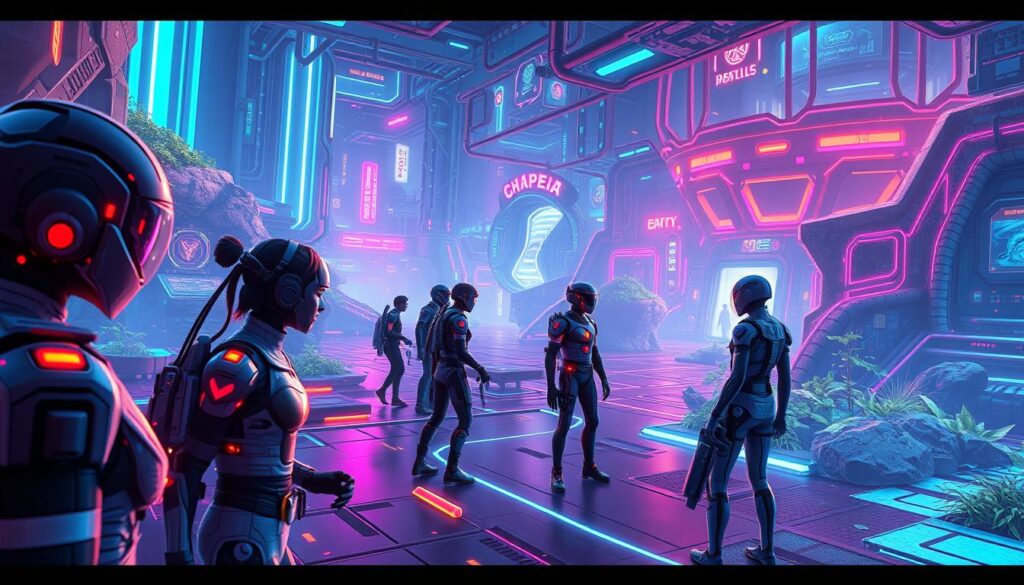
As the gaming industry adapts to trends, such as the increasing preference for interactive digital experiences among millennials and Gen Z, the market anticipates a surge in AI integration. With over 2.5 billion active gamers and projections indicating growth, the demand for innovative gameplay experiences will only continue to rise. AI serves as a cornerstone in this transformation, bringing creativity and efficiency to game design.
The Metaverse: The New Frontier of Gaming
The metaverse represents an exciting evolution in the world of interconnected gaming, providing a rich landscape for immersive experiences and community engagement. As the digital frontier expands, players find opportunities to seamlessly transition between varied gaming environments while safeguarding their digital ownership.
This shift is bolstered by advancements in blockchain technology, which facilitate true ownership of in-game assets through NFTs.
Virtual goods and services have become vital in this space, with 74% of online purchases last year attributed to digital products.
Companies recognize the immense potential of the digital goods market, leading to increased revenue through the development and promotion of exclusive digital-only items. This trend has sparked significant interest as businesses explore the metaverse for innovative ways to engage customers.
- Interactive 3D marketing campaigns enhance user experience.
- Small businesses can network effectively in virtual spaces.
- Virtual goods enable varied revenue streams through the use of virtual currency.
- Community building through virtual events fosters loyalty and engagement.
Prominent examples include NFT art galleries like Bored Ape Yacht Club and fashion brands like Gucci hosting virtual shows. These ventures illustrate that the metaverse not only caters to gamers but also to diverse industries seeking novel interactions with their audiences.
“The gaming industry serves as a crucial driving force, pioneering the growth of the metaverse, which extends its influence beyond traditional gaming to encompass a wide array of applications, including virtual workspaces and online education.”
Continual integration of technological advancements in augmented and virtual reality greatly enhances the metaverse experience. As businesses refine their strategies within this digital ecosystem, they encounter both challenges and opportunities that shape the future of gaming and beyond.
| Opportunity | Description | Examples |
|---|---|---|
| Transforming Retail | Create engaging shopping experiences in virtual spaces. | Virtual stores by major brands. |
| Employee Training | Utilize immersive simulations for better learning. | Training programs using VR for skill development. |
| Virtual Networking | Facilitate connections through shared experiences. | Conferences held in metaverse venues. |
As the metaverse continues to evolve, businesses and players alike must embrace its potential, fostering an interconnected gaming landscape rich with possibilities for interaction and collaboration.
The Rise of Web3 and Decentralized Gaming
The emergence of Web3 gaming marks a revolutionary shift in the gaming industry, valued at $26 billion and projected to soar to $125 billion by 2030. This transition towards decentralized games empowers players through true ownership of digital assets, significantly influenced by NFT usage.
Platforms leveraging blockchain technology not only enhance security but also foster player-driven economies that introduce real-world value for gamers.
A notable example is Gunzilla’s “Off the Grid,” the first Web3 game available on PlayStation 5. As major players like Sony and Epic Games cautiously explore this space, the annual industry growth highlights a significant trend towards mainstream adoption of decentralized games.
Challenges do persist, including scalability issues and a skeptical traditional gamer base regarding NFT integration. Focus is shifting to enhancing player experience rather than solely emphasizing monetary benefits for sustainable growth.
Tools like the Faraway Creator Suite aim to break down barriers in blockchain-based game development, facilitating efficient creation and deployment. Increased player engagement has been observed, largely due to the interoperability offered by blockchain technology, which allows for seamless cross-platform experiences.
As players engage in play-to-earn models, the reduction of transaction fees due to the tokenization of in-game economies presents an appealing prospect.
| Key Factor | Current Status | Future Outlook |
|---|---|---|
| Market Value | $26 billion | Projected $125 billion by 2030 |
| Notable Game | Gunzilla’s “Off the Grid” | Expanding through PlayStation 5 |
| Mainstream Acceptance | Initial cautious ventures by Sony and Epic Games | Potential for wider integration |
| Player Engagement | Surge from decentralized economies | Enhancements in play-to-earn models |
| Challenges | Scalability and skepticism from traditional gamers | Focus on player experience needed for adoption |
| Blockchain Benefits | Improved security, reduced fraud | Continued expansion of content ownership |
The landscape of gaming continues to evolve, and the rise of Web3 and decentralized gaming represents a compelling future that lies ahead. As challenges are addressed and innovation thrives, the potential for transformative experiences in gaming remains vast.
Future Innovations on the Horizon
The gaming industry stands on the brink of significant change with future gaming technology about to reshape experiences. Innovations such as augmented reality advancements and enhanced virtual reality are expected to blur the lines between the digital and physical realms. Players will find themselves immersed in environments that feel remarkably real, transforming the way they engage with games.
AI development plays a crucial role in these transformations. Emerging trends highlight AI’s potential in creating adaptive gameplay mechanics. Gamers can look forward to systems that personalize experiences, adjusting based on individual preferences and playing styles. Incorporating AI will lead to more interactive and dynamic worlds, enhancing user engagement.
- Blockchain technology allows ownership of digital assets through Non-Fungible Tokens (NFTs).
- The concept of play-to-earn (P2E) is facilitated by blockchain, enabling players to earn real-world value.
- Gesture controls promote immersion and innovation in gameplay mechanics.
- Cloud gaming provides accessibility to high-end games across various devices without needing downloads.
- Nanotechnology advancements may offer novel experiences in gaming interfaces and environments.
These future innovations promise a remarkable evolution in how games are created and played. As technology advances, gaming will expand its reach, creating opportunities for diverse global communities. By harnessing these tools, companies can foster richer interactions in their gaming ecosystems, ensuring the industry remains at the forefront of entertainment.
| Innovation | Description | Impact on Gaming |
|---|---|---|
| Augmented Reality | Integrates digital content into the real world | Enhances user interaction and engagement |
| Blockchain | Enables ownership through NFTs | Creates real-world value for gamers |
| AI Development | Personalizes gameplay and mechanics | Improves dynamic interactions in games |
| Cloud Gaming | Streams games without installations | Increases access to high-quality gaming |
| Gesture Controls | Promotes physical interaction in games | Enhances immersive experiences |
Conclusion
The journey of gaming technology innovations reveals a dynamic industry that is continuously reshaping itself through emerging technologies. With the global games market projected to generate revenues of $187.7 billion in 2024, reflecting a growth of +2.1% year-on-year, it is clear that the sector remains robust. This summary of gaming innovations highlights how AI, VR, and blockchain technological advancements are transforming the player experience, fostering deeper game engagement and economic opportunities.
As we look towards the future outlook of gaming, the expectations are equally promising. The global player base is set to reach 3.42 billion in 2024, driven primarily by the surge in PC gaming.
This increase will not only enhance the competitive landscape but also usher in more innovative gameplay experiences that appeal to an even broader audience, especially as we see outlined trends like increased in-game microtransactions and hybrid entertainment experiences.
Ultimately, the interplay of these technologies creates an exhilarating gaming environment that promises to redefine our social interactions in the digital age.
The community’s eagerness for continuous innovation, combined with the rising prestige of esports and increased revenues, points towards an exhilarating era ahead. The gaming industry is not only a form of entertainment—it is poised to become a central feature of our economy and society, driving connectivity and engagement like never before.
FAQ
What are the key technological innovations in gaming today?
How has the gaming industry evolved over the years?
What role does AI play in gaming?
What is the Metaverse in relation to gaming?
How does Web3 technology impact the gaming landscape?
What are future trends to expect in gaming technology?
