
The Future of Digital Game Preservation Beyond Emulation
إعلانات
حفظ الألعاب الرقمية faces an unprecedented existential turning point in 2026 as cloud servers shutdown and digital rights management encryption systems expire permanently.
Classic media formats deteriorate rapidly across museum vaults, leaving historical software titles completely inaccessible without legitimate, modern restoration protocols.
Industry experts and independent archivists recognize that traditional emulation binaries alone cannot safeguard our shared interactive culture against impending server migrations.
As online infrastructure evolves continuously, game studios quietly decommission authentication services, turning legally purchased software into unplayable local code overnight.
Institutional archives struggle against strict copyright constraints while attempting to safeguard interactive art for future generations of digital historians.
إعلانات
The preservation ecosystem urgently requires comprehensive structural transformation that merges decentralized hardware recreation, legal exemptions, and advanced cloud infrastructure.
What to Expect in This Article
- Why Traditional Emulation Falls Short in 2026 Understanding the limitations of software simulation.
- How Field-Programmable Gate Arrays Revolutionize Hardware Archives Silicon-level circuit cloning explained.
- Which Legal Frameworks Protect Interactive Media Preservation Modern copyright exemptions and institutional rights.
- Why Source Code and Server Infrastructure Migration Matter Saving online ecosystems beyond simple client binaries.
- What Role Modern Museums and Cloud Vaults Play Today Infrastructure scaling for interactive media history.
- How Community Crowdsourcing and Open-Source Initiatives Help Decentralized efforts securing classic software titles.
- Essential Technologies Comparison Matrix Complete breakdown of archival preservation methods.
- The Path Ahead for Interactive Heritage Strategic vision for long-term media survival.
- الأسئلة الشائعة Crucial answers regarding digital archival rights and techniques.
What Is the Current Crisis in Digital Game Preservation Beyond Emulation?
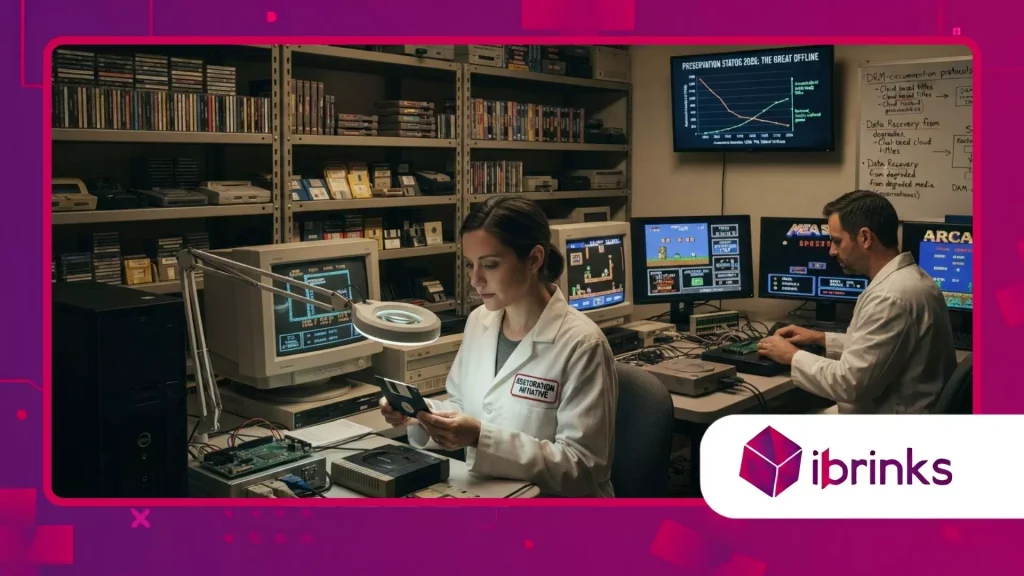
Why Are Software Emulators No Longer Enough for Interactive Media?
Software simulation tools struggle continuously against increasingly complex multi-core modern hardware architectures, proprietary graphics processors, and continuous network server checks.
Early platform emulation succeeded because vintage systems operated on simple, single-threaded instructions that modern desktop processors could easily simulate through sheer processing power.
Modern games rely heavily on intricate microarchitectural quirks, custom coprocessors, and continuous server-side calculations that software wrappers simply cannot reproduce accurately over extended timeframes.
When live-service infrastructure goes dark, standard client-side software emulation fails entirely because half of the title’s functional code resided on remote cloud clusters.
Preserving interactive media today requires capturing dynamic network protocols, dynamic server responses, and encrypted micro-transactions rather than just dumping local read-only memory chips.
Without comprehensive server recreation, simulated clients remain nothing more than non-functional title screens stuck in perpetual loading loops.
++ استخدام وسائل التواصل الاجتماعي لتعزيز جلسات اللعب الجماعي
How Does Physical Media Decay Threaten Historical Gaming Artifacts?
Compact discs, DVD ROMs, magnetic tapes, and optical media formats suffer from inevitable chemical degradation commonly known across archival circles as bit rot.
According to a landmark 2023 study by the Video Game History Foundation, an alarming 87 percent of classic video games released in the United States remain critically endangered and commercially unavailable.
Optical disc layers oxidize silently inside storage facilities, while magnetic charge leakage slowly wipes retro ROM chips clean of their original instruction binaries.
Physical storage media was never manufactured to survive across multiple centuries without direct hardware intervention and continuous data migration pipelines.
Treating retro cartridges like static paper books inside traditional library shelves guarantees catastrophic data loss over coming decades.
Specialized digital archival initiatives must extract raw binary bitstreams directly from silicon wafers before physical decay permanently destroys irreplaceable master copies.
How Are Emerging Hardware and Software Technologies Transforming Archival Practices?
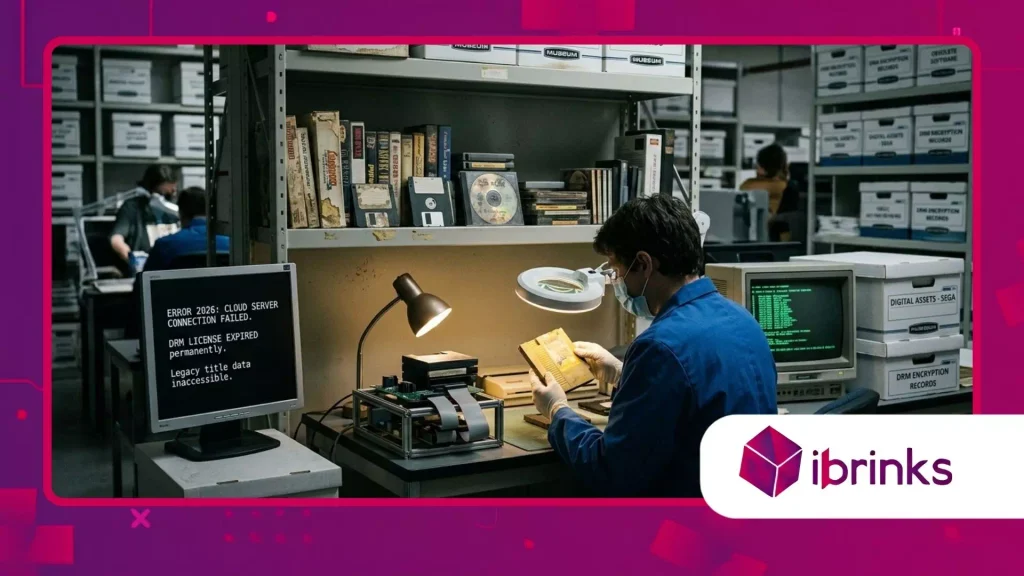
What Role Do Field-Programmable Gate Arrays Play in Hardware Recreation?
Field-programmable gate arrays reconstruct original gaming console logic directly at the physical silicon level rather than running software simulation wrappers on top of modern operating systems.
By mapping every single logic gate, timing instruction, and bus interface of vintage microprocessors, these specialized chips replicate original hardware behavior with microsecond accuracy.
This hardware-level recreation eliminates execution lag, audio timing discrepancies, and graphic rendering glitches that routinely plague traditional software wrappers.
Archivists now utilize cycle-accurate hardware recreation chips to preserve original console behavior permanently before aging physical silicon chips succumb to thermal degradation.
Modern field-programmable chips easily load open-source hardware description language files, allowing researchers to study physical chip behavior directly without wearing out fragile vintage electronics.
This technological shift shifts preservation strategies away from temporary software patches toward permanent, hardware-accurate silicon reconstruction.
اقرأ أيضاً: نمو تقاليد اللعب الجماعي خارج نطاق الأحداث الرسمية
How Does Source Code Archiving Save Complex Online Software Ecosystems?
Accessing original source code repositories represents the ultimate goal for digital preservationists seeking to understand complex interactive software development histories.
Compiled binary files offer limited visibility into underlying system architecture, whereas raw source code contains original programmer comments, modular build instructions, and uncompressed artwork.
Possessing source code enables software engineers to rebuild titles natively for modern operating systems, bypassing compatibility layers entirely.
When developer studios preserve raw source code alongside network protocol specifications, community archivists can build custom server emulators to revive defunct online ecosystems.
Private corporate repositories often seal these crucial assets behind non-disclosure agreements, leading to permanent loss when parent companies undergo liquidation.
Establishing secure, institutional source code vaults remains essential for ensuring that future software historians can inspect, recompile, and preserve digital culture authentically.
Which Legal Frameworks and Institutional Vaults Protect Interactive History?
How Can Copyright Reforms Enable Legal Digital Game Preservation?
Current legal frameworks like the Digital Millennium Copyright Act frequently impede legitimate archival work by prohibiting the circumvention of digital rights management locks.
Institutional archivists face severe legal penalties when breaking software encryption to back up delicate optical media or preserve offline copies of unlisted titles.
Copyright exemptions granted to libraries and research universities remain extremely narrow, preventing remote access to preserved digital software archives for academic researchers.
Advocates continuously lobby international legislative bodies to grant certified digital archives explicit legal authority to preserve and distribute abandoned interactive software.
Without modernized copyright laws, thousands of historically significant digital games will vanish permanently behind expired server keys and abandoned corporate patents.
Establishing legal safe harbors ensures that qualified archivists can bypass encryption mechanisms safely to protect our shared digital heritage.
اقرأ المزيد: نمو تقاليد اللعب الجماعي خارج نطاق الأحداث الرسمية
Why Are Cloud Infrastructure Vaults Essential for Long-Term Storage?
حديث digital game preservation demands enterprise-grade cloud storage solutions capable of maintaining petabytes of uncompressed disk images, raw ROM dumps, and full-motion video files.
Institutional archives deploy multi-region storage clusters featuring automated checksum verification routines that continuously detect and repair silent bit rot anomalies across distributed server drives.
Cloud-native preservation vaults ensure that historical media remains instantly accessible to verified researchers around the globe without risking fragile physical originals.
High-density archival storage facilities utilize cold-storage magnetic tape systems alongside active cloud servers to establish redundant, geodetically isolated data backups.
By automating integrity checks through cryptographic hashing algorithms, archivists instantly identify corrupted storage blocks and restore clean copies from redundant network nodes.
Building scalable cloud infrastructure provides a resilient digital foundation capable of storing massive contemporary game installations for centuries to come.
Comparing Modern Interactive Software Archival Strategies
| Archival Strategy | الآلية الأساسية | Hardware Accuracy | Network/Server Support | Long-Term Viability | Legal Accessibility |
| محاكاة البرمجيات | CPU simulation wrappers running on host OS | Variable (60%–90%) | Limited (Requires custom server hacks) | Moderate (Requires OS updates) | Highly Restricted |
| FPGA Silicon Cloning | Hardware Description Language (HDL) circuit recreation | Microsecond Perfect (99%+) | High (Can clone coprocessors) | High (Open-source HDL logic) | Moderately Restricted |
| Source Code Archiving | Recompiling raw source assets natively | Native Execution | Complete (Includes server logic) | Maximum (Infinitely port-able) | Strictly Restricted |
| Cloud Virtualization | Server-side containerized remote execution | Dependent on host specs | Full (Recreates live environments) | Very High (Hardware agnostic) | Institutional Only |
What Lies Ahead for the Survival of Interactive Heritage?
Preserving interactive media requires an aggressive, multi-faceted approach combining cutting-edge silicon recreation, updated copyright legislation, and robust cloud storage infrastructure.
Relying solely on local software emulation wrappers leaves vast swaths of online gaming history vulnerable to immediate loss when corporate servers shut down permanently.
By establishing collaborative global networks between museum archivists, academic institutions, and passionate fan communities, we can build resilient digital vaults that safeguard vintage software code forever.
Preserving dynamic software ecosystems represents a crucial responsibility toward future generations who will study twenty-first-century interactive art forms.
Integrating modern digital game preservation protocols into global cultural policies ensures that classic video games remain living, playable historical artifacts rather than forgotten static code.
الأسئلة الشائعة
What is the main difference between software emulation and FPGA hardware cloning?
Software emulation uses software wrappers on modern processors to simulate vintage console logic, often causing performance overhead or timing inaccuracies.
FPGA hardware cloning programs programmable chips to replicate original console circuits directly at the physical silicon level with microsecond precision.
Why is physical media decay such a critical threat to classic video games?
Physical media like optical discs and magnetic cartridges degrade over time due to chemical breakdown, oxidation, and charge leakage, a process called bit rot.
Without direct digital extraction to secure archival vaults, original game data becomes unreadable and lost forever.
How do copyright laws impact interactive software preservation?
Laws like the DMCA restrict archivists from breaking digital rights management encryption to back up games or provide remote access to unlisted software.
Modernizing copyright exemptions is essential to allow certified museums and libraries to legally preserve abandoned digital titles.
Can live-service online games be preserved after their official servers shut down?
Preserving live-service games requires capturing network protocols and obtaining or recreating server-side source code alongside client software.
Without functional server architecture, preserved client software cannot execute properly or load past title screens.
How do open-source community initiatives contribute to software preservation?
Independent open-source developers create reverse-engineered server software, dump rare ROM variants, and document obscure hardware quirks that corporate entities often abandon.
These grass-roots efforts provide crucial technical foundations for institutional archives worldwide.
