
كيف تُغيّر ألعاب المحتوى الذي ينشئه المستخدمون ما يتوقعه اللاعبون من إنشاء
إعلانات
UGC games are completely redefining how players interact with digital worlds, transforming passive consumers into active worldbuilders and game designers.
Modern audiences no longer accept static storylines, preferring platforms where they shape mechanics, environments, and economies directly. This fundamental shift forces studios to build open ecosystems rather than closed experiences.
As game creation tools become intuitive, millions of gamers launch custom levels and entire game modes daily.
Modern creation suites empower players to turn creative ideas into playable experiences within minutes. This democratized design pipeline keeps player engagement high across major gaming platforms.
Key Points Covered
- Player Expectations: How user creation changes player demand.
- Creator Engines: Powerful tools driving modern UGC platforms.
- Economic Models: How players monetize original digital experiences.
- Industry Metrics: Comparative performance of top creation platforms.
- Future Evolution: What lies ahead for community-driven games.
How Do UGC Games Transform Player Creative Expectations?
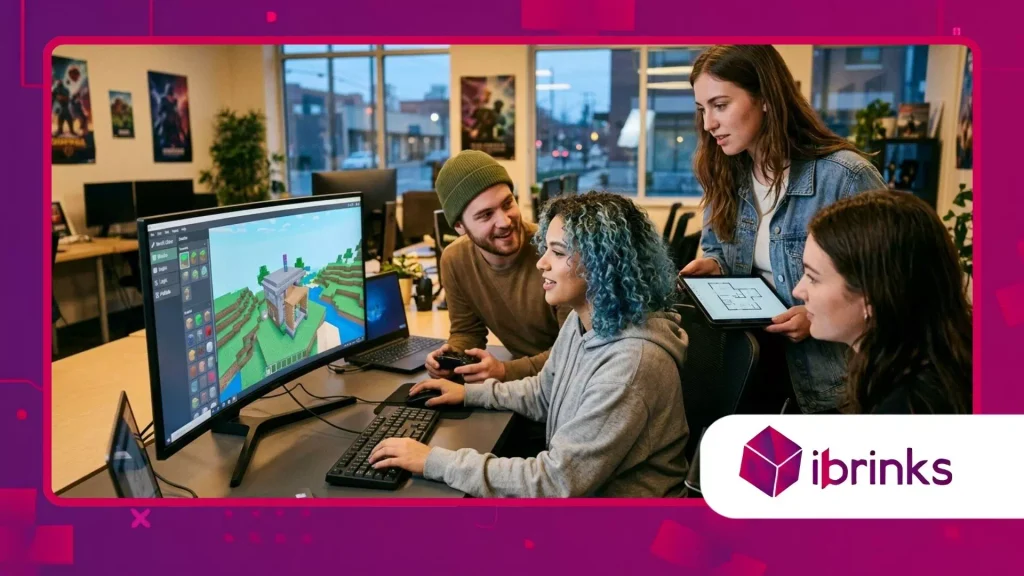
UGC games eliminate traditional barriers between players and game developers by granting immediate access to advanced creation suites.
إعلانات
Players now expect every major virtual title to feature sandbox mechanics, customizable assets, and shareable game modes.
When games restrict player expression, modern audiences quickly migrate to platforms offering full creative autonomy.
This shift transforms gaming from pure entertainment into an interactive canvas for personal expression and community collaboration.
Players build digital theme parks, design complex obstacle courses, and script custom multiplayer rulesets without writing code.
Consequently, user agency forms the absolute core of modern player retention and platform longevity.
Why Are Players Demanding Built-in Creation Tools?
Gamers desire immediate agency to alter their virtual environments and share custom scenarios directly with global online communities.
Built-in engines turn complex asset placing and logic scripting into intuitive drag-and-drop actions for all skill levels.
This constant accessibility keeps gaming experiences fresh, unpredictable, and endlessly replayable across all genres.
Interactive sandbox elements give communities the exact power to address content gaps faster than traditional development studios.
When players want new game modes, they build them directly within their favorite virtual platforms. This collaborative ecosystem ensures continuous content flow without waiting for official developer expansion packs.
++ مستقبل ألعاب العالم المشترك خارج نطاق صيغة ألعاب تقمص الأدوار الجماعية عبر الإنترنت (MMO)
How Does Community Creation Extend Game Lifespans?
Community-generated content keeps titles relevant for decades, far outlasting standard triple-A story campaigns or linear multiplayer maps.
When players continuously publish original maps, custom quests, and fresh challenges, the core experience stays remarkably dynamic.
This endless content cycle protects games from player burnout and sudden activity drops.
A single popular user-made mode can spawn entirely new subgenres and attract millions of active monthly users.
Think of custom levels acting like infinite digital lego blocks assembled by millions of creators worldwide. This perpetual creation pipeline transforms individual software titles into long-lasting social platforms.
اقرأ أيضاً: ظهور خرائط الطريق التي يقودها المجتمع لتحل محل خطط التنمية الثابتة
What Role Does Social Sharing Play in Creator Growth?
Social platforms amplify player creations by showcasing viral custom maps, speedrun challenges, and intricate digital architecture daily.
Creators share video clips of unique gameplay mechanics, driving massive traffic back into the underlying game engine.
This organic discovery loop rewards innovative builders with instant global recognition and active player bases.
Multiplayer environments turn player creations into shared social hubs where friends collaborate, compete, and stream live events.
Shared building projects foster tight-knit communities centered around specific genres, art styles, or game mechanics.
As social connections strengthen within these virtual spaces, player commitment to the platform deepens.
Why Is the UGC Gaming Economy Expanding So Rapidly?
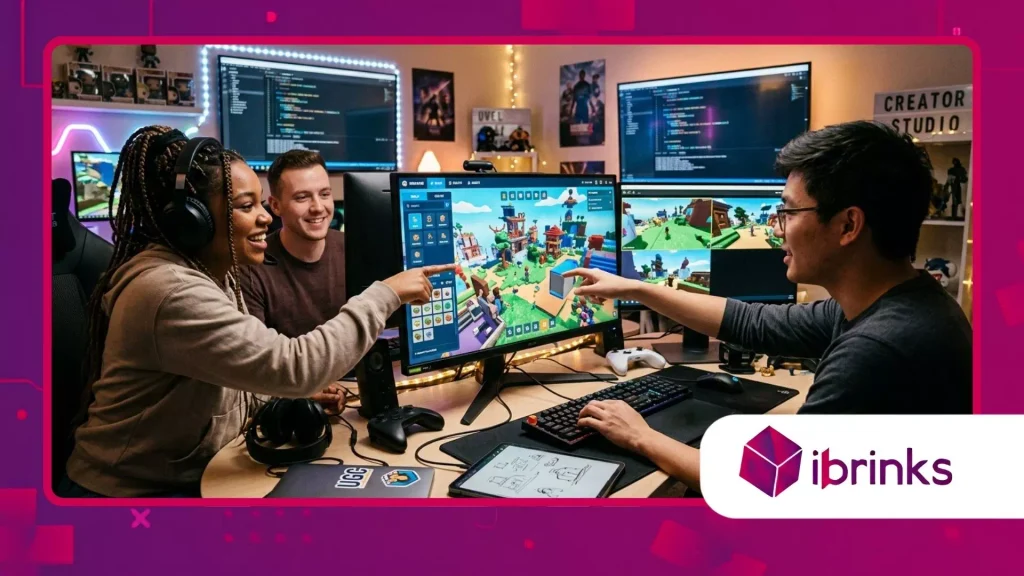
UGC games generate massive financial ecosystems by allowing dedicated creators to monetize custom assets, scripts, and full games directly.
Platforms offer robust developer payouts, turning amateur hobbyists into full-time digital entrepreneurs and independent studio founders.
This economic incentive drives creator technical quality higher, attracting even larger global player audiences.
Roblox reported paying over $740 million to its creator community in 2023 alone, demonstrating the scale of user-driven economies.
This massive financial engine proves that player-created content drives genuine commercial success across modern gaming markets.
Financial rewards motivate creators to push engine boundaries, building increasingly complex virtual worlds.
اقرأ المزيد: كيف توازن الألعاب الحديثة بين الحرية والتوجيه دون مساعدة مباشرة؟
How Do Creators Monetize Their Digital Content?
Creators earn direct revenue through premium map access, custom avatar cosmetics, and in-experience microtransactions using native platform currencies.
Platform operators handle payment processing and server hosting, allowing builders to focus entirely on game design. This streamlined revenue model lowers business barriers for aspiring game developers globally.
Successful creators re-invest earnings to hire 3D artists, sound designers, and programmers to expand their virtual projects.
This professionalization elevates overall experience quality across the platform, rivaling traditional indie game studios.
Micro-economies flourish as players buy, trade, and collect exclusive user-made digital items.
How Do Platforms Support Independent Worldbuilders?
Leading platforms provide free cloud hosting, automated matchmaking, real-time analytics, and integrated marketing tools to every registered creator.
These built-in backend services eliminate traditional server infrastructure costs that usually stall independent game development.
Free enterprise-grade infrastructure allows creative talent to thrive regardless of financial backing.
Advanced creator dashboards deliver detailed player retention stats, revenue tracking, and live bug reporting tools.
Real-time feedback helps builders update experiences rapidly based on actual player behavior and community requests.
Continuous platform support turns solo developers into managers of thriving virtual worlds.
Why Do Brands Invest in User-Created Worlds?
Global brands partner directly with top platform creators to build immersive branded experiences rather than traditional banner ads.
Virtual concerts, interactive stores, and branded mini-games engage younger audiences within their favorite social gaming hubs.
These interactive campaigns yield far higher engagement metrics than static video advertisements or social posts.
Branded virtual spaces offer persistent marketing environments where players interact with products through gamified activities.
Creators profit by designing these custom brand experiences, while platforms gain commercial credibility and mainstream media exposure.
Integrated brand worlds demonstrate the expanding cultural authority of creator-driven gaming.
What Technologies Drive Next-Generation Creator Engines?
UGC games leverage artificial intelligence, cloud computing, and real-time physics engines to simplify complex game development workflows.
Modern tools automate tedious technical tasks, allowing creators to generate complex terrain, lighting, and code scripts using simple inputs.
These technological advances ensure high-quality visual performance while maintaining accessible creation workflows for non-programmers.
Could simplified creation engines eventually render traditional game development workflows completely obsolete for indie teams?
As generative AI tools mature inside creation suites, natural language prompts will generate complex 3D assets instantly.
This technological leap democratizes game design further, enabling anyone with a compelling idea to build games.
How Is AI Simplifying Complex Game Design?
Artificial intelligence plugins generate custom textures, natural terrain, and basic logic scripts through conversational text prompts within engines.
Creators describe desired game assets, and intelligent algorithms render fully functional 3D models directly into scenes.
This rapid prototyping capability dramatically reduces development timelines for complex virtual environments.
AI-driven non-player characters respond dynamically to voice input and player actions, creating hyper-realistic interactive stories.
Creators deploy intelligent NPCs without manually programming complex conversation trees or behavior systems.
Machine learning tools continue to eliminate technical friction across every phase of game creation.
How Does Cloud Infrastructure Support Massive Virtual Worlds?
Cloud rendering servers handle heavy physics computations and asset streaming, ensuring smooth performance across mobile devices and high-end PCs alike.
Cross-platform sync allows players to build on desktops and instantly test experiences on mobile phones seamlessly.
Cloud stability guarantees that millions of concurrent players experience user-made worlds without lag.
Instant cloud publishing lets creators deploy game updates globally in seconds without requiring massive client-side file downloads.
Real-time updates keep communities synchronized, allowing immediate live balance tweaks and event deployments.
Dependable cloud architecture forms the invisible backbone supporting massive user-created metaverses.
Why Is Cross-Platform Access Essential for UGC Growth?
Cross-platform compatibility allows creators to reach audiences spanning consoles, mobile phones, virtual reality headsets, and personal computers simultaneously.
Single-click publishing across multiple devices maximizes potential player reach and revenue generation for worldbuilders.
Unified account systems let players maintain progress and purchases across any hardware platform.
Broad hardware support prevents community fragmentation, keeping friend groups connected inside the same user-created experiences.
Mobile accessibility proves especially vital in emerging markets where smartphones serve as primary gaming devices. Universal access drives steady traffic into user-created worlds around the clock.
Market Comparison of Leading Creation Platforms
Evaluating top user-generated content platforms highlights key differences in engine capabilities, target demographics, and creator payout structures across the current market.
| منصة | Core Target Audience | Primary Creation Tool | Monetization Model | الميزة الرئيسية |
| روبلوكس | All Ages / Gen Z & Alpha | Roblox Studio (Lua Scripting) | Developer Exchange (DevEx) | Massive built-in audience & native social layer |
| Fortnite Creative / UEFN | Competitive / Action Gamers | Unreal Editor for Fortnite | Engagement Payouts 2.0 | High-end Unreal Engine 5 graphics & mechanics |
| ماين كرافت | Sandbox / Survival Players | Java / Bedrock Modding & Blocks | Marketplace & Server Sales | Universal brand recognition & infinite block building |
The Endless Horizon of Player-Led Game Design
The evolution of user-driven platforms proves that UGC games represent the permanent future of interactive entertainment and digital community building.
Granting players complete creative control unlocks unprecedented innovation, continuous content streams, and resilient virtual economies that traditional studio development cannot match.
As artificial intelligence and cloud computing lower technical barriers further, the line between player and developer will vanish completely.
Explore these powerful creation suites today, test custom community maps, and share your thoughts in the comments what virtual world will you build first?
الأسئلة الشائعة
What are user-generated content games?
These video games provide built-in editors, assets, and logic tools allowing players to build custom levels, game modes, and virtual worlds.
Instead of only playing developer-made content, players actively shape gameplay experiences and share them online with global gaming communities.
Do I need programming skills to create games in these platforms?
No advanced coding skills are required to start building games in most creation suites today.
Intuitive visual scripting, drag-and-drop interfaces, and pre-built asset libraries allow beginners to construct functional game mechanics, while advanced users can utilize programming languages like Lua or Verse.
How do players earn real money from building custom games?
Creators earn real-world income through official platform developer payout programs, selling virtual items, map access, and cosmetic microtransactions.
Platforms convert native virtual currencies earned from players into fiat currency through automated developer exchange systems once eligibility thresholds are met.
Which platform is best for beginner game creators?
Roblox Studio and Fortnite Creative offer extremely beginner-friendly tools backed by extensive documentation, video tutorials, and active support forums.
Both platforms handle server hosting, account management, and player matchmaking automatically, making them ideal starting points for novice worldbuilders.
What is Unreal Editor for Fortnite (UEFN)?
UEFN is an advanced desktop application that brings professional Unreal Engine 5 development tools directly into the Fortnite ecosystem.
It allows creators to import custom 3D models, write advanced Verse code, craft custom animations, and build AAA-quality visual experiences within Fortnite.
