
Why retro aesthetic is trending in indie game art
Anúncios
Retro aesthetic styles dominate contemporary independent game development, offering an emotional antidote to hyper-realistic yet soulless corporate blockbusters.
Modern players increasingly crave tactile pixel grids and nostalgic chiptune soundtracks that evoke simpler gaming eras.
Indie developers leverage these classic visual frameworks to maximize creative freedom without requiring multimillion-dollar studio budgets.
Independent creators prove that imaginative design consistently triumphs over raw graphical horsepower.
Nostalgia acts as a powerful psychological bridge, connecting adult gamers back to their formative childhood living room experiences.
Anúncios
Pixel art and low-poly graphics stimulate active imagination, requiring players to fill in visual blanks left by minimalist hardware limitations.
This active engagement creates deep emotional bonds that modern photorealistic engines rarely achieve. Are you ready to explore why vintage pixels continue conquering the modern digital marketplace?
Navigating the Independent Pixel Revival
- Uncovering psychological drivers behind modern gamer nostalgia and pixel art demand.
- Analyzing how technical hardware limitations spark exceptional indie creative ingenuity.
- Evaluating economic advantages of low-poly and 16-bit development pipelines today.
- Examining community-driven platform movements celebrating retro game preservation.
What Defines the Modern Appeal of Pixel Art?
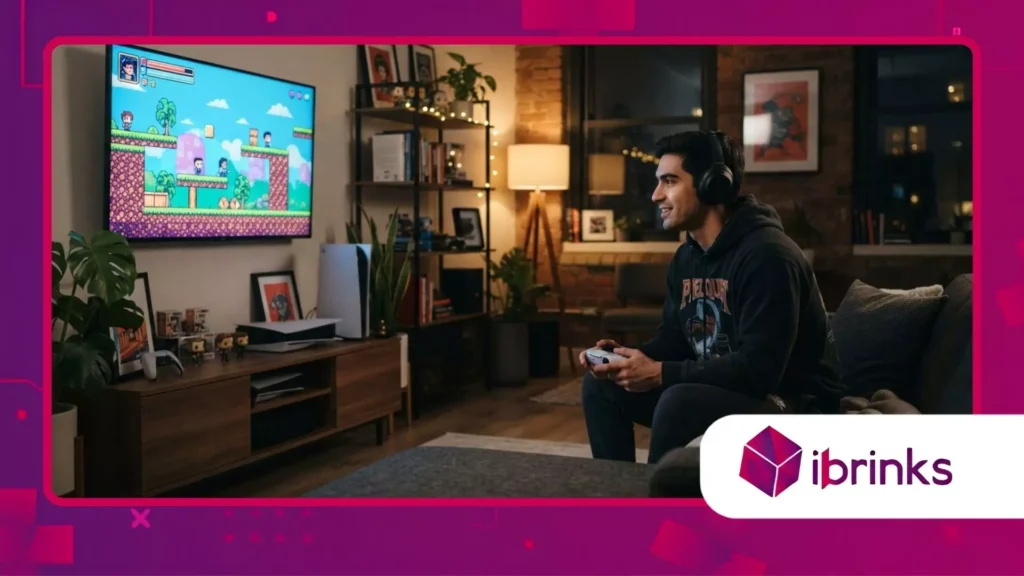
Retro aesthetic choices thrive in independent video games because constrained color palettes force developers to prioritize gameplay clarity and mechanical depth.
When visual fidelity takes a back seat, tight controls and innovative core loops become the absolute center of attention.
Think of minimalist pixel graphics as a haiku poetry format, expressing profound emotional resonance through rigorous structural discipline.
Modern players grow exhausted by endless gigabyte downloads and photorealistic textures that hide repetitive gameplay loops.
Market research published by the Entertainment Software Association confirms that indie titles represent over forty percent of total digital storefront sales.
This staggering economic shift proves that audiences actively prefer stylistic charm over bleeding-edge graphical polygons and ray-traced lighting.
Developers utilizing classic aesthetics bypass the endless hardware race, focusing entirely on memorable storytelling and responsive player mechanics. Nostalgia transforms simple colored squares into breathtaking emotional masterpieces.
Why Do Restricted Palettes Enhance Focus?
Restricted color palettes eliminate visual clutter, allowing players to instantly identify interactable objects and dangerous enemies on screen.
This clean optical hierarchy improves reaction times and creates seamless arcade-style pacing that modern titles often lack. Simplicity in design breeds absolute mastery in player execution.
++ Exploring rare prototypes of classic arcade titles
How Does Nostalgia Trigger Emotional Bonds?
Childhood memories associated with classic 16-bit consoles create immediate psychological comfort when players boot up modern indie releases.
This emotional resonance dissolves skepticism instantly, welcoming players into unfamiliar game worlds with a comforting blanket of warmth. Sentimentality remains the industry’s most potent marketing asset.
Also read: The Arcade revolution in the ’70s explained
Can Low-Resolution Art Age Gracefully?
Detailed photorealistic textures inevitably look dated within five years as hardware rendering standards continue advancing exponentially.
Classic pixel art remains eternally timeless, looking just as gorgeous on modern OLED screens as it did on old CRT monitors. Timeless execution defies the cruel march of technological obsolescence.
How Do Technological Limitations Foster Creative Ingenuity?
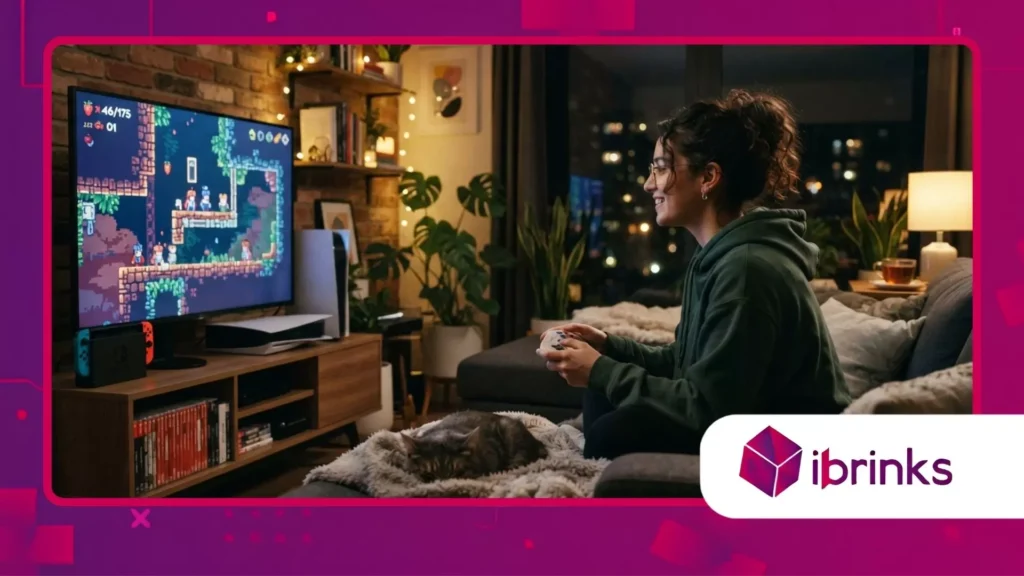
Retro aesthetic constraints compel modern solo developers to solve complex design challenges through brilliant artistic shortcuts rather than brute-force computing power.
Working within historical RAM and color restrictions forces programmers to invent clever tile-mapping and procedural generation algorithms.
Imagine an architect building a compact tiny home; spatial limits demand ingenious multi-purpose furniture and clever storage solutions.
These self-imposed technical boundaries frequently produce revolutionary game mechanics that triple-A studios never attempt.
Consider the breakout indie success of games like Celeste or Undertale, which rely on vintage design paradigms to deliver monumental narratives.
These titles prove that raw emotional storytelling requires precise writing and evocative chiptune scores rather than expensive motion-capture animation rigs.
Independent creators use historical hardware emulation not as a limitation, but as a liberating canvas for pure expression. Creativity flourishes brightest inside well-defined structural cages.
Read more: Analyzing the rise of retro remasters: marketing and nostalgia
Why Do Developers Embrace Constraints?
Infinite choices often paralyze creative teams, leading to bloated game scopes and endless development delays known as feature creep.
Enforcing strict retro limitations forces programmers to finish core mechanics and ship polished experiences on schedule. Discipline is the ultimate engine of creative completion.
How Do Chiptune Soundtracks Evoke Emotion?
Synthesized audio chips from early sound cards produce catchy, melodic earworms that linger in player minds long after shutting down the console.
The absence of complex orchestral arrangements highlights pure songwriting craftsmanship and memorable compositional hooks. Sound design becomes an unforgettable signature element.
What Role Do CRT Filters Play?
Modern developers incorporate optional CRT scanline shaders to replicate the warm, blended light bleed of vintage cathode-ray tube television sets.
This visual nostalgia enhances the tactile illusion of playing physical hardware cartridges from decades past. Authenticity in presentation deepens total player immersion.
Why Are Low-Poly 3D Worlds Experiencing a Renaissance?
Retro aesthetic movements have expanded beyond 2D pixels into the early 3D polygon era of the late nineteen-nineties and early PlayStation architecture.
Players are falling in love with untextured vertices, low-polygon character models, and deliberately jittery texture mapping techniques.
Think of early 3D graphics like impressionist paintings; chunky polygons suggest form and atmosphere rather than spelling out every microscopic detail.
This stylistic abstraction allows horror and mystery indie titles to build suffocating psychological tension effortlessly.
Statistical data from digital distribution platforms indicates a massive surge in wishlists for psychological horror games utilizing vintage 3D aesthetics.
Independent developers harness these retro technical glitches and atmospheric fog effects to terrify players without high-end rendering budgets.
Nostalgia for the dawn of home 3D gaming taps directly into teenage memories of midnight gaming sessions. The past becomes an inexhaustible goldmine for fresh artistic innovation.
How Do Low-Polygon Models Spark Imagination?
Unrefined character models with minimal facial rigging encourage players to project their own emotional interpretations onto digital avatars.
This psychological projection creates a powerful collaborative storytelling bond between the player and the software creator. Imagination completes what rendering hardware leaves undone.
Why Is Retro Horror So Effective?
Grainy textures, limited draw distances, and claustrophobic camera angles mimic human night vision impairment, naturally spiking biological fear responses.
Modern high-resolution lighting ruins horror by exposing monsters in crystal clarity, whereas retro obscurity conceals terror. Fear feeds entirely on what the human eye cannot clearly see.
Can Classic Physics Engines Be Modernized?
Developers combine vintage aesthetic presentations with modern, responsive physics engines to eliminate the frustrating control stiffness of historical hardware.
This clever hybrid approach gives players the nostalgic look they crave paired with modern quality-of-life responsiveness. Best-of-both-worlds design keeps players returning for more.
Indie Retro Art Style Comparison Matrix
The structured table below contrasts various historical eras of retro game art styles based on technical constraints and emotional impact.
| Art Style Era | Technical Constraints | Primary Visual Characteristic | Emotional Impact |
| 8-Bit Pixel Art | 16-color limit, small tile sizes | Bold sprites, high contrast | Pure arcade simplicity |
| 16-Bit Pixel Art | Expanded palettes, layered backgrounds | Rich gradients, detailed animation | Warm nostalgic comfort |
| Low-Poly 3D | Untextured vertices, low draw distance | Chunky polygons, atmospheric fog | Mysterious psychological tension |
Embracing the Timeless Magic of Classic Design
Exploring retro aesthetic trends reveals that great game design transcends temporary technological revolutions and focuses on human connection.
By combining vintage visual charm with modern game design sensibilities, independent creators continue shaping the future of interactive entertainment. Take a moment to dust off an old classic or try an innovative new indie title tonight.
What is your all-time favorite vintage art style in gaming history? Share your experience in the comments below!
Frequently Asked Questions
Why do modern indie games still use pixel art in 2026?
Pixel art allows small independent development teams to create visually cohesive, highly polished game worlds without requiring massive art department budgets.
It prioritizes timeless style and smooth gameplay mechanics over expensive graphical horsepower.
Are retro-style games cheaper to develop than realistic 3D games?
While art asset creation can be faster, indie game development requires immense talent regardless of style.
The primary advantage lies in controlled project scope and avoiding the financial trap of endless graphical updates.
Do young gamers who missed the 90s enjoy retro aesthetics?
Yes, younger generations appreciate retro styles for their unique artistic charm, readability, and distinct identity compared to hyper-realistic corporate releases. Aesthetic quality transcends chronological age entirely.
