
Inside the Rise of Regional Gaming Championship Circuits
Anúncios
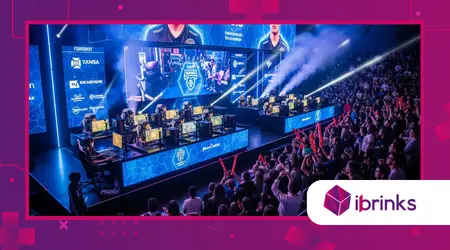
Inside the Rise of Regional gaming championship circuits, we find a story of survival, cultural identity, and a radical departure from the “Global-or-Bust” mentality of the early 2020s.
For years, the esports industry was obsessed with building a singular, worldwide stage that often ignored the logistical and financial realities of local grassroots communities.
Today, in early 2026, the landscape has shifted toward a more sustainable and deeply rooted model that prioritizes regional relevance over monolithic global dominance.
This evolution is not just about downsizing; it is about localizing the thrill of the win and ensuring that competitive gaming belongs to the people who play it every day in their own neighborhoods.
Key Takeaways on Regional Growth
- Sustainability: Moving away from hyper-inflated global budgets to localized, profitable league structures.
- Talent Pathways: Clearer “Tier 2” and “Tier 3” systems that feed local heroes into professional pipelines.
- Cultural Identity: Tournaments designed around regional game preferences, such as mobile gaming in Southeast Asia or tactical shooters in Europe.
- Economic Impact: Increased sponsorship from regional brands that previously felt priced out of the global market.
What is the driving force behind the regional esports pivot?
The core motivation Inside the Rise of Regional leagues is a desperate need for financial sustainability after the “esports winter” of previous years.
Anúncios
By focusing on specific geographic zones, organizers can drastically reduce travel costs and logistical overhead while catering to a concentrated, loyal fan base that advertisers can easily target.
Furthermore, the “one-size-fits-all” approach to global broadcasting failed to capture the unique nuances of local gaming cultures.
A tournament in São Paulo requires a different energy and presentation style than one in Seoul, and regional circuits allow these distinct identities to flourish without being diluted for a generic global audience.
++ The Tech Stack Behind a Modern Gaming Championship
Why did global leagues struggle to maintain momentum?
Global leagues often suffered from massive “burn rates” as they tried to maintain physical presence across multiple continents simultaneously.
The cost of flying teams, equipment, and broadcast talent across the world created a financial burden that most sponsorship deals simply could not cover in the long term.
Additionally, the time-zone barrier frequently alienated core audiences who couldn’t stay up until 3:00 AM to watch their favorite teams.
Regional circuits solve this by ensuring that the most important matches happen during “prime time” for the people who actually live in those territories.
How does local fandom impact sponsorship revenue?
Regional circuits attract “hyper-local” sponsors brands that may not have global recognition but are household names in specific countries.
These companies are often more willing to invest in esports when they see their logos displayed in front of a passionate, culturally relevant audience that they already understand.
In my analysis, this shift has democratized the sponsorship landscape, allowing mid-sized firms to enter the arena.
When a local beverage company sponsors a tournament in Jakarta, the ROI is often clearer and more immediate than a global tech giant sponsoring a worldwide tour.
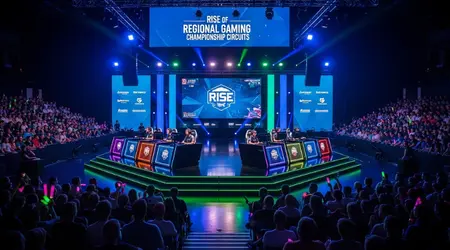
How does the 2026 circuit structure benefit aspiring players?
For many years, the path to becoming a professional gamer felt like a lottery, but Inside the Rise of Regional circuits, we see a more structured ladder.
Aspiring athletes now have accessible “entry-level” championships in their own cities, providing a clear pathway from amateur play to semi-pro and, eventually, the international stage.
This “grassroots-first” approach ensures that talent is scouted and nurtured within its own ecosystem before being thrust into the high-pressure environment of global majors.
It is a system that mimics traditional sports, where local academies and regional leagues act as the primary engines for professional growth.
What are the “Tier 2” pathways looking like in 2026?
In 2026, Tier 2 leagues are no longer “forgotten” divisions; they are the backbone of the entire competitive ecosystem.
Organizations like Riot Games and Moonton have integrated their regional “Challenger” series directly into the top-tier broadcast schedule, giving upcoming players significant exposure.
This structure prevents the “starvation” of talent, as smaller teams can now survive on regional prize pools and local sponsorships.
It creates a safety net that encourages young players to pursue esports as a viable career without needing to move to a different country immediately.
Why is mobile gaming leading the regional charge?
The rise of regional championships is most visible in the mobile sector, particularly in regions like Southeast Asia, Latin America, and India.
Inside the Rise of Regional mobile circuits, we see massive viewership numbers because the barrier to entry a smartphone is much lower than a high-end gaming PC.
Mobile Legends: Bang Bang (MLBB), for example, has successfully transitioned to a five-region structure in 2026, unifying its ecosystem while empowering each zone.
This model allows mobile esports to dominate local markets where PC infrastructure is still catching up, proving that accessibility is the ultimate driver of regional success.
Which regions are currently dominating the new circuit model?
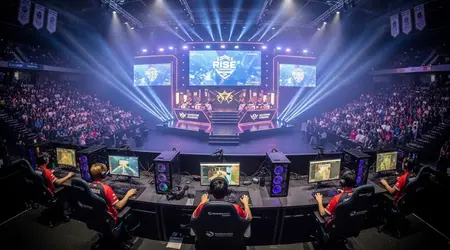
While North America and Europe remain high-revenue zones, the real innovation Inside the Rise of Regional circuits is happening in the Asia-Pacific and Middle East sectors.
These regions have embraced government-backed initiatives and large-scale infrastructure projects that treat esports as a legitimate pillar of modern entertainment and culture.
The Middle East, in particular, has used its immense financial resources to create a bridge between regional play and global nation-based events.
This “hub” model allows them to host localized championships that feel international in scale, attracting talent from surrounding territories and boosting the local economy through tourism and tech investment.
What are the long-term impacts on the global ecosystem?
The move toward regionalization doesn’t mean the end of global tournaments; rather, it makes the global events more meaningful and “earned.”
In 2026, a “World Championship” feels like a true clash of champions who have survived the rigors of their local circuits, rather than a curated list of popular organizations.
Think of it as a pyramid: the broad base is composed of thousands of local, regional events that feed upward into a singular, prestigious pinnacle.
This analogical “Pyramid Model” creates a healthier balance between the local community and the global spectacle, ensuring that even if a global league fails, the regional roots remain intact.
Why is “Regional Identity” the new currency in esports?
In my reading of this scenario, fans are increasingly looking for players who represent their specific heritage and values.
Inside the Rise of Regional championships, we see teams using local languages, cultural symbols, and regional rivalries to build a deeper emotional connection with their viewers.
This identity-driven fandom is more resilient than the “bandwagon” fan bases typical of global super-teams.
When a fan supports a team from their own city or region, they are more likely to stay engaged through losses, creating a more stable and predictable viewership model for broadcasters and advertisers alike.
2026 Regional Esports Engagement & Market Share
| Region | Primary Device | Top Genre | Projected 2026 Audience | Key Circuit Feature |
| Asia-Pacific | Mobile | MOBA (MLBB/HoK) | 365.2 Million | Highest local gov. support |
| North America | PC/Console | Tactical FPS / Sports | 61.8 Million | Franchise stability focus |
| Europe/EMEA | PC | Tactical FPS (CS2) | 102.5 Million | Strongest Tier 2 integration |
| Latin America | Mobile/PC | Battle Royale (Free Fire) | 58.4 Million | Fastest growing fan passion |
| Middle East | PC/Console | Multi-title / Sports | 35.1 Million | Nation-based “Hub” model |
How are publishers adapting their game development for regions?
Publishers are no longer just making games for “the world”; they are building features that cater to regional hardware and internet constraints.
Whether it’s optimizing for lower-end smartphones or adding region-specific server locations, the development process is now intrinsically linked to the needs of the regional circuit.
This tightening relationship between pro-player feedback and game development ensures that the competitive meta stays fresh and relevant for local audiences.
It is a virtuous cycle: better regional support leads to better play, which in turn leads to a more polished game that resonates with the local community.
The evolution we see Inside the Rise of Regional circuits is a sign that esports has finally matured into a sustainable industry.
By embracing the local, the industry has found a way to survive the volatility of global markets and build a foundation that is truly “world-connected” from the ground up.
As we look toward the rest of 2026, the success of competitive gaming will be measured not by the size of a single stage, but by the number of stages built in every corner of the globe.
This decentralized future is not just a safety net; it is the most exciting era esports has ever seen.
How do you feel about the shift toward local circuits do you prefer supporting a team from your own backyard or a global “super-team”? Share your experience in the comments!
Frequently Asked Questions
Are regional circuits less “prestigious” than global leagues?
Not anymore. In 2026, winning a major regional circuit like the MPL or the VCT Americas is considered a massive achievement that serves as the only legitimate gateway to the World Finals.
Can I still watch regional tournaments if I live in a different time zone?
Yes, most circuits have adopted “Simulcasting” and “Co-streaming” models that allow influencers in your time zone to re-broadcast and commentate on matches, making them accessible to a global audience.
Why is there such a big focus on mobile gaming in these circuits?
Mobile devices account for over 56% of esports viewership in 2026. Their accessibility in regions like Asia and Latin America makes them the perfect vehicle for massive regional championship circuits.
How do regional sponsors benefit more than global ones?
Regional sponsors deal with lower entry costs and get to reach a “warm” audience that already recognizes their brand in daily life, leading to much higher conversion rates compared to global ads.
Will global championships like “The International” eventually disappear?
No, but they are becoming the “peak” of a very large regional mountain. The focus has shifted from having many global events to having one or two highly significant ones that conclude the regional seasons.
